
Conifer borer
Ernobius
Description
How to identify
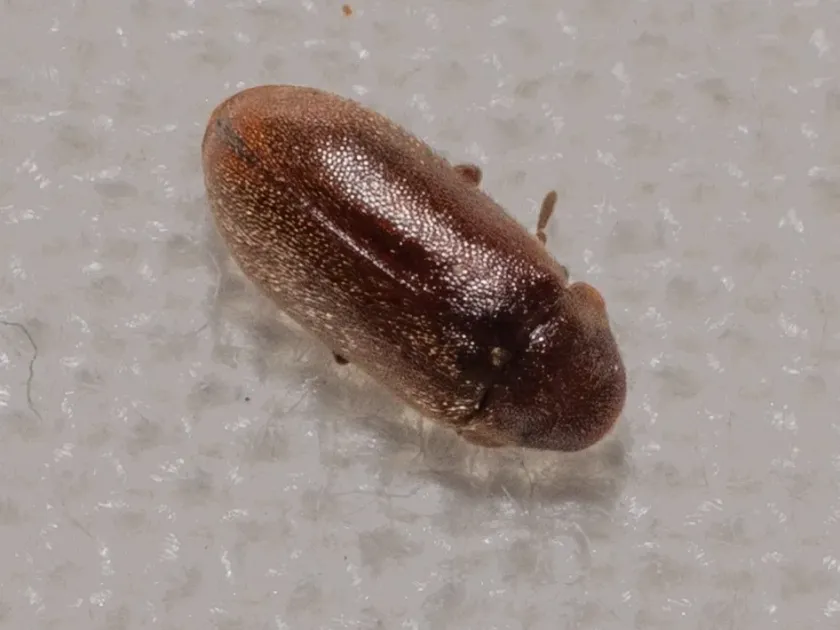
The Conifer borer (genus Ernobius) is a member of the Anobiidae family within the order Coleoptera. These beetles are small, typically measuring 3 to 6 mm, with a cylindrical body covered in fine, short hairs and a dark brown color.
The larvae are white, curved in shape, and possess strong mandibles adapted for burrowing into the bark and wood of coniferous trees. The head capsule is dark and distinct from the softer, pale body.
Adult beetles are often cryptic, hiding in bark crevices or deep within the tree canopy, making visual detection difficult during the early stages of an infestation.
Species identification within the genus Ernobius can be complex due to the morphological similarities between different species, necessitating careful observation of their galleries and associated tree species.
The life cycle is closely linked to the physiological status of the host tree, as these beetles frequently target stressed or dying conifers to complete their development.
What it damages
The primary hosts for these borers include various members of the Pinaceae family, such as spruce, pine, and larch. They impact both young saplings in nurseries and mature trees in forest environments.
The larvae feed on the bark, phloem, and surface sapwood. This feeding behavior creates intricate tunnels that disrupt the transport of nutrients and water, ultimately weakening the host tree's overall structure.
Massive infestations can result in the premature death of branches or, in the case of younger trees, the entire plant. The disruption of vascular tissue makes the tree highly susceptible to environmental stress.
The tunnels created by larvae also act as entry points for secondary pathogens, including fungi and decay-causing bacteria, which exacerbate the damage caused by the physical burrowing.
In ornamental landscapes, the presence of these borers leads to crown thinning, needle loss, and branch deformity, which significantly impacts the aesthetic value of the coniferous plants.
When it appears
The flight period for adult beetles generally occurs between May and June, when temperatures are sufficiently warm to support mating and the colonization of new host trees.
Following mating, females deposit eggs in cracks in the bark or near bud bases. The emerging larvae immediately begin boring into the plant tissue, where they spend the remainder of their development.
The pest overwinters in the larval stage, residing within the tunnels protected by the thick bark of the host tree, which allows them to survive cold winter conditions effectively.
In early spring, as temperatures rise, the larvae resume active feeding and move towards the pupal stage. Pupation occurs within the wood, often inside specifically constructed pupal chambers.
The duration of the life cycle can vary from one to two years, depending on regional climate conditions and the nutritional quality of the host wood available to the developing larvae.
Signs of infestation
One of the earliest indicators of an infestation is the presence of fine wood dust or "frass" accumulating at the base of the tree or in branch crotches, pushed out by larvae during tunneling.
Small, perfectly round exit holes appearing on the surface of the bark indicate that adult beetles have recently emerged, signifying a well-established generation within the tree.
Needle yellowing or branch tip dieback in specific sections of the canopy is a strong indicator that larvae are disrupting the vascular system of the affected branch.
Peeling away a section of bark on a suspected tree may reveal a complex network of tunnels tightly packed with sawdust and waste material, a hallmark of Ernobius activity.
Increased bird activity, particularly woodpeckers visiting specific branches, can serve as a natural diagnostic sign that the tree is currently infested with wood-boring larvae.
Control measures
The most effective management strategy involves rigorous sanitation, including the removal and destruction of infested branches or entire trees to prevent the spread of the beetle population.
Maintaining high tree vigor through proper irrigation and fertilization is crucial, as healthy trees are better equipped to withstand potential attacks by producing resin to deter larvae.
Chemical control, if necessary, should be timed with the adult flight period. Systemic insecticides can be applied to the canopy and trunks to target emerging beetles before they lay eggs.
Biological control options include the use of entomopathogenic fungi, which can be applied to the bark to infect larvae within their tunnels without harming the surrounding beneficial insects.
- Sanitary pruning to remove infested plant material.
- Monitoring with pheromone traps during the flight season.
- Targeted insecticide applications to high-value ornamental conifers.
Taxonomy
- Latin name
- Ernobius
- Order
- Coleoptera (beetles)
- Family
- Anobiidae
- EPPO code
- ERNOSP
Discussion
No discussions yet — be the first.