
Brown spider beetle
Epauloecus unicolor
Description
How to identify
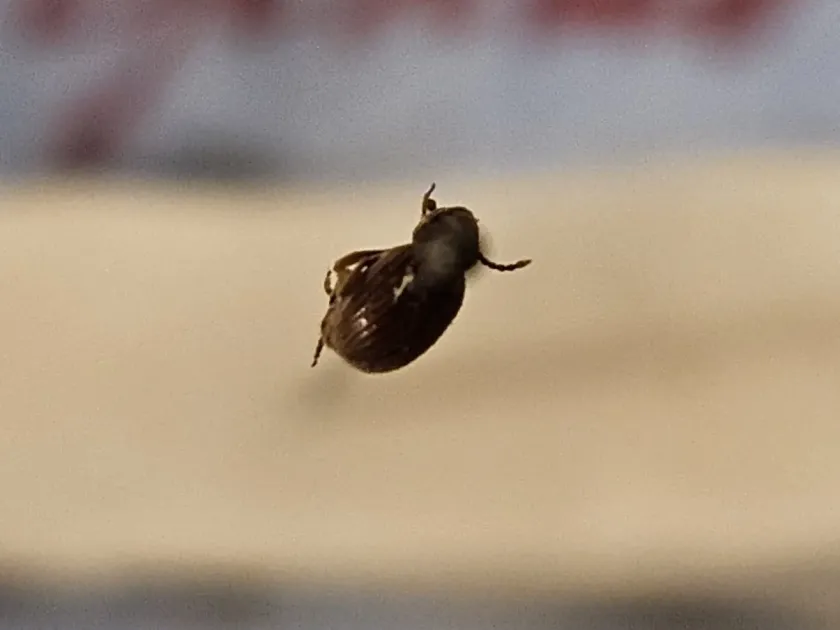
The brown spider beetle (Epauloecus unicolor) is a small insect belonging to the family Ptinidae. These beetles are typically 2 to 3 mm in length and are known for their compact, oval-shaped bodies.
Their bodies are covered with fine hairs, and their color ranges from dark brown to black. This coloration serves as effective camouflage when crawling across dark wooden surfaces.
The larvae of this species are C-shaped, creamy white, and possess a well-developed head with strong mandibles designed for boring into solid substrates such as wood or seeds.
These beetles are nocturnal and highly elusive, which is why infestations often go unnoticed until the damage to wooden structures or stored products becomes quite extensive.
While they are common in human habitations and storage facilities, identifying the exact species often requires entomological expertise due to their resemblance to other members of the Ptinidae family.
What it damages
The primary damage is caused by the larvae, which feed on dry, seasoned wood. This includes structural timber, antique furniture, and wooden flooring within buildings.
In agricultural settings, these beetles are known to infest stored grain products, dried plants, and even animal feed, making them significant pests in both domestic and industrial environments.
As the larvae bore through the material, they create complex networks of tunnels that severely compromise the structural integrity of the wood, leading to weakening and eventual collapse.
Beyond structural harm, the presence of these beetles leads to contamination of stored goods with frass (larval excrement) and dust, rendering food products unsuitable for use.
The rate of wood destruction depends on environmental humidity; higher moisture content in the timber generally accelerates the development of the larvae and the spread of the infestation.
Signs of infestation
The most recognizable sign of an infestation is the appearance of small, circular exit holes on the surface of the wood, created by emerging adult beetles.
Fine, powdery frass falling from these holes and accumulating on surfaces below indicates active larval boring within the structure of the furniture or timber.
In quiet environments, one might detect a faint clicking or rasping sound, produced by the larvae as they grind away at the wood fibers inside the material.
Structural weakness, such as boards that give way under pressure or wood that feels hollow when tapped, often points to long-term infestation that has degraded the interior.
A musty or dusty odor in an enclosed space often accompanies a heavy infestation, especially when the beetles are breeding within damp, decaying organic matter.
Control measures
Controlling the environment is crucial. Keeping indoor humidity low prevents the wood from becoming attractive to these beetles, as they thrive in damp conditions.
Preventative measures include treating wooden surfaces with wood preservatives and insecticides that deter beetles from laying eggs on the treated material.
For existing infestations, localized injection of insecticides into the exit holes or professional whole-building fumigation may be necessary to eradicate the larvae hidden deep inside.
Sanitation is vital in storage areas: all infested grain, seeds, or organic refuse must be removed and destroyed to break the life cycle of the pest.
- Reducing ambient humidity levels in buildings.
- Sealing cracks in timber to prevent egg-laying.
- Regular inspection of structural wood and stored items.
Taxonomy
- Latin name
- Epauloecus unicolor
- Order
- Coleoptera (beetles)
- Family
- Anobiidae
- EPPO code
- EPAUUN
Discussion
No discussions yet — be the first.