
Deathwatch beetle
Anobium pertinax
Description
How to identify
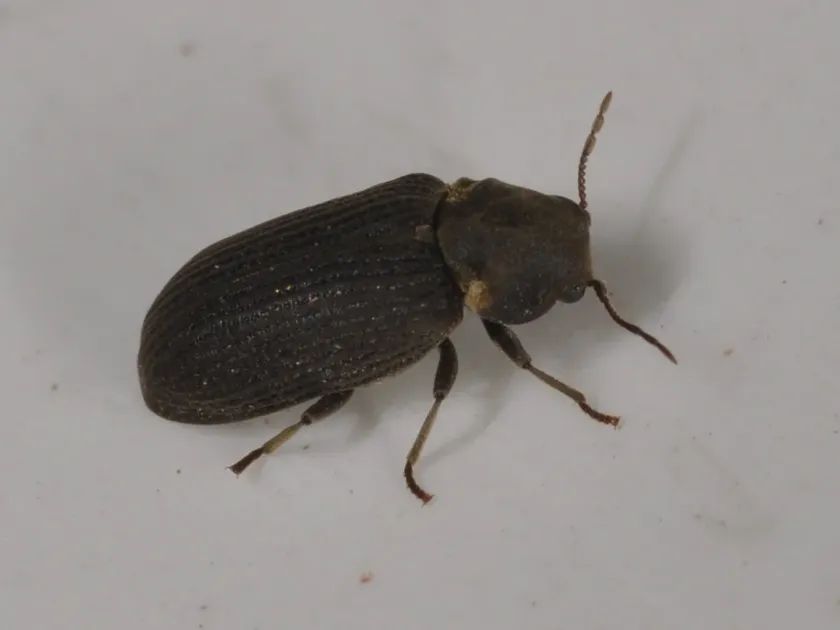
The deathwatch beetle Anobium pertinax is a member of the Ptinidae (formerly Anobiidae) family within the order Coleoptera. Adult beetles typically measure between 3 to 5 mm in length and exhibit a dark brown to nearly black coloration.
A distinctive feature for identification is the pair of small, light-colored patches of hair located at the rear corners of the pronotum. This unique appearance helps distinguish them from other common wood-boring beetles found in homes.
The larvae are white, C-shaped, and possess strong, well-developed mouthparts capable of excavating intricate tunnels through tough structural timber. They spend the vast majority of their life cycle hidden deep within the wood.
Biological development is highly sensitive to environmental factors. Under ideal conditions of moisture and temperature, the life cycle completes in about one to two years, though it can span longer periods if the wood is dry.
The species is named for the tapping sound the males make. They strike their heads against the wood to signal to females, a sound that was traditionally associated with ominous foreboding in quiet houses at night.
What it damages
The beetle primarily infests coniferous and deciduous timber used in construction, including structural beams, floorboards, joists, and rafters. It is a major threat to historic buildings and heritage wooden structures.
The larvae are responsible for the structural damage, as they continuously consume wood fibers while creating a network of tunnels. This activity hollows out internal structures, often leaving only a thin veneer of sound wood.
Over time, these activities significantly compromise the structural integrity of the timber, potentially leading to building failure. Structural elements can lose their bearing capacity, requiring expensive repairs or replacement.
The deathwatch beetle shows a strong preference for damp wood, especially timber that has been affected by fungal decay. This makes wet rot conditions a high-risk factor for new infestations in older buildings.
Besides structural damage, the pest also attacks antique furniture, fine interior paneling, and wood carvings, causing irreparable harm to valuable wooden objects if left unchecked for several years.
Signs of infestation
The most visible sign of an infestation is the presence of small, circular exit holes, approximately 2 mm in diameter, on the surface of the timber. These holes appear when adult beetles emerge from the wood.
Frass, or fine wood powder, accumulates near the infested area, falling from exit holes or cracks. This material is a mixture of chewed wood fibers and larval excrement, signaling active tunneling within the structure.
In very quiet environments, a distinct rhythmic tapping sound can be heard. This is the mating call of the adult beetle, often mistaken for a ticking clock, occurring primarily during the spring and early summer.
Structural weakness can be detected by tapping on the wood; a hollow, dull, or muffled sound indicates significant internal tunneling. In extreme cases, the wood may crumble under physical pressure.
- Circular exit holes (1.5–2 mm diameter);
- Fine, granular frass or dust piles;
- Rhythmic tapping sounds during the night;
- Reduced structural strength of timber beams;
- Evidence of tunnels when damaged wood is broken open.
Control measures
Preventative measures involve treating timber with approved wood preservatives and insecticides during the initial construction or restoration phase. This provides a long-lasting deterrent against female beetles seeking egg-laying sites.
For existing infestations, injection treatments are standard. Insecticide solutions are injected directly into the flight holes or onto the wood surface to ensure the chemicals penetrate deep into the larval tunnels.
Controlling moisture is critical. By repairing leaks, improving ventilation, and drying out infested areas to a moisture content below 15%, the environment becomes unsuitable for both the beetle and associated decay fungi.
For heavily infested structural beams, removal and replacement of the timber is often the only safe solution. New wood used for repair must be pre-treated to prevent any risk of secondary infestation.
In cases of severe, widespread infestation, professional whole-building fumigation using gas treatments may be necessary to eradicate the pest completely from all wooden components within the affected area.
Taxonomy
- Latin name
- Anobium pertinax
- Order
- Coleoptera (beetles)
- Family
- Anobiidae
- EPPO code
- ANOBPE
Discussion
No discussions yet — be the first.