
Woodboring beetles
Anobium
Description
How to identify
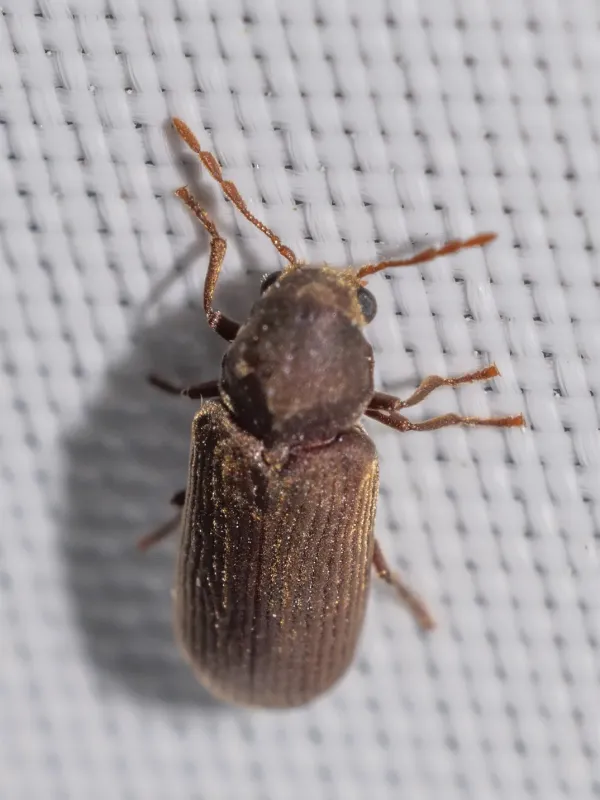
Woodboring beetles (Anobiidae) are a family of beetles within the order Coleoptera, known for their ability to bore into and feed on wood. Adult beetles are generally small, measuring between 2 to 10 millimeters in length.
They possess a cylindrical body shape, often with a pronotum that hides the head, giving the insect a distinct hooded appearance. Their color ranges from reddish-brown to almost black.
The larvae are typically C-shaped, creamy white in color, and possess well-developed mandibles specifically adapted for chewing through solid woody tissues.
Their life cycle consists of complete metamorphosis: egg, larva, pupa, and adult. The duration of the cycle varies greatly depending on the species and environmental conditions.
Adult females lay their eggs in bark crevices or existing wounds in the wood. Upon hatching, the larvae immediately begin tunneling into the tree, where they spend most of their development.
What it damages
The damage is primarily caused by the larvae, which create complex, winding galleries within the wood. This tunneling activity disrupts the plant's nutrient and water transport system.
These pests affect a variety of fruit trees, such as apple and pear, especially those already weakened by environmental stress, frost, or other primary diseases.
As the larvae feed, they weaken the structural integrity of the branches and trunks. This leads to reduced yield, stunted growth, and eventually the dieback of infected limbs.
In addition to living trees, woodboring beetles can infest timber in garden structures, creating a reservoir of pests that can easily spread to nearby fruit trees.
Severe infestations can lead to the total collapse of the wood structure, making the tree susceptible to breakage during high winds or heavy snowfall.
Signs of infestation
The most noticeable sign of an infestation is the presence of small, round exit holes on the bark, about 1-2 mm in diameter, created by adults emerging from the wood.
Accumulations of frass, a fine, powder-like sawdust expelled by the larvae, are often visible on the bark or at the base of the tree beneath the exit holes.
During the mating season, some species produce rhythmic ticking sounds by tapping their heads against the wood, which can sometimes be heard in very quiet conditions.
Sudden yellowing of leaves or premature leaf drop on specific branches often indicates that the woodboring larvae have severed the vascular tissue of those limbs.
Inspection of the trunk may reveal loose or peeling bark, uncovering the intricate network of galleries and the dense accumulation of frass within the wood.
Control measures
Pruning is the primary management tool. All infested branches must be removed promptly and destroyed by burning to prevent the adult beetles from emerging and spreading.
Preventative care is crucial: maintaining tree health through proper fertilization and watering makes trees less attractive to egg-laying females.
- Applying systemic or contact insecticides directly into larval galleries using specialized equipment or needles.
- Encouraging natural predators, such as insectivorous birds and parasitic wasps, to help regulate the beetle population.
- Setting up pheromone traps to monitor flight activity and capture adults before they can reproduce.
Sealing mechanical wounds, pruning cuts, or frost cracks with horticultural paste helps prevent beetles from accessing the vulnerable inner wood of the tree.
In cases of severe, widespread infestation, it is often necessary to remove and destroy the entire tree to protect the rest of the orchard from infestation.
Taxonomy
- Latin name
- Anobium
- Order
- Coleoptera (beetles)
- Family
- Anobiidae
- EPPO code
- ANOBSP
Discussion
No discussions yet — be the first.