
Caddisflies
Trichoptera
Description
How to identify
Caddisflies (Trichoptera) are an order of insects with complete metamorphosis, closely related to moths but distinguished by the fine hairs on their wings.
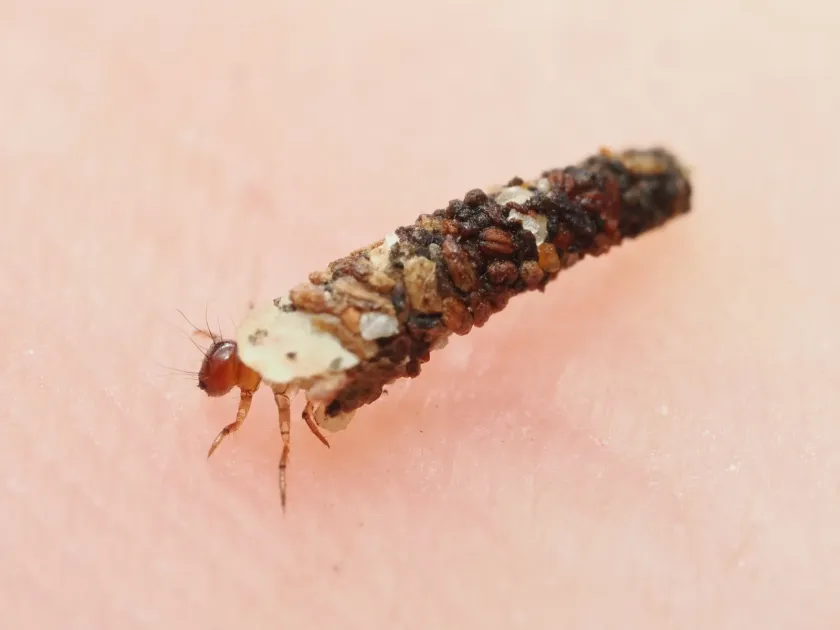
The larval stage is aquatic and is known for the elaborate cases they construct from sand, twigs, or leaf debris bound together with silk.
Adult caddisflies typically have a short lifespan and, in many species, possess vestigial mouthparts, focusing entirely on reproduction.
While they are vital components of many aquatic ecosystems, some species inhabit irrigation systems or agricultural water bodies.
Taxonomically, they comprise numerous families, but their interaction with agriculture is largely limited to specific environments like rice paddies.
What it damages
The primary concern for agriculture involves the larvae that inhabit rice fields, where they can cause direct mechanical damage to submerged tissues.
Larvae feed on seedlings and young roots of rice, weakening the plants and creating pathways for subsequent fungal or bacterial infections.
In high concentrations, they can cause significant stand thinning, especially during the early growth stages of the crop.
The construction of protective cases can also interfere with irrigation infrastructure, causing clogging in screens, filters, and water intake pipes.
This physical disruption of irrigation systems often results in suboptimal water delivery, indirectly affecting overall crop vigor and yield.
When it appears
Adult caddisflies are most active during the warmer months, with peak emergence often occurring between late spring and early autumn.
Larvae remain active in the water throughout the growing season, with their feeding habits closely tracking the development of aquatic crops.
Wintering usually occurs in the larval stage, often within the shelter of their cases deep in the sediment or protected aquatic vegetation.
The life cycle typically spans one year, although in tropical or warmer temperate zones, some species may have multiple generations.
Monitoring for adults near fields is most effective during twilight hours, as most species are phototactic and active at night.
Signs of infestation
A key indicator of infestation is the discovery of larval cases attached to the submerged parts of rice stems or root systems.
Irregular, ragged edges on submerged leaves and signs of early-season seedling loss in flooded areas suggest larval activity.
Increased density of adult caddisflies near field edges or irrigation channels during the evening indicates a developing population.
Clogging of irrigation equipment with small debris structures resembling tunnels or cases is a common symptom of high populations.
Visible thinning of crops in patches with slow-moving or stagnant water is a classic spatial pattern of their damaging activity.
Control measures
The most effective strategy is the periodic draining of flooded fields to disrupt the aquatic cycle necessary for larval survival.
Mechanical maintenance, including cleaning irrigation canals and removing excessive aquatic vegetation, significantly reduces breeding habitats.
Biological controls such as selective microbial insecticides can be used if population densities exceed economic damage thresholds.
Improving water circulation and flow in irrigation systems prevents the stagnation that favors larval settlement and feeding.
- Periodic field drainage to kill aquatic larvae.
- Regular cleaning of irrigation networks.
- Selective use of biological control agents.
Discussion
No discussions yet — be the first.