
Carmine spider mite
Tetranychus cinnabarinus
Description
How to identify
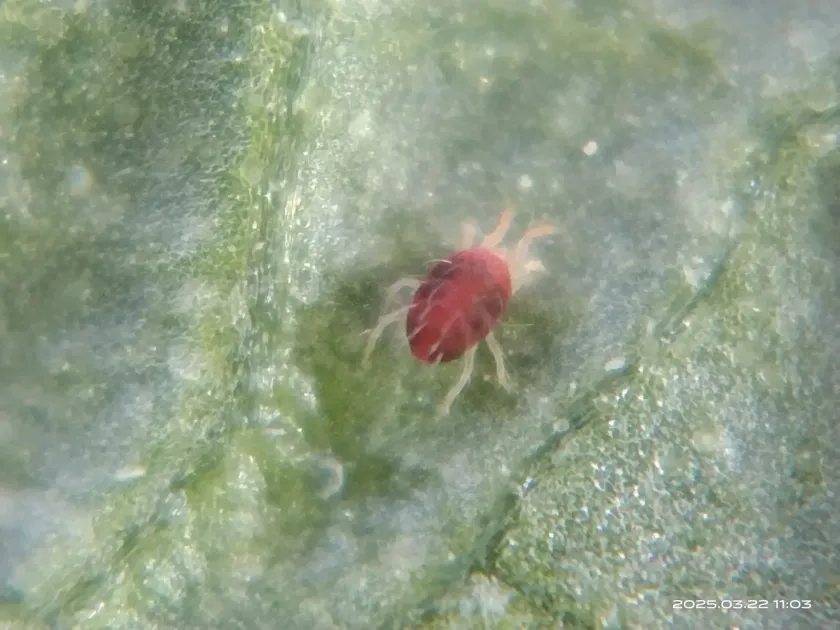
The Carmine spider mite is a species within the Tetranychidae family, order Acariformes. Adult females are distinguished by their dark carmine or reddish body, measuring approximately 0.5 mm in length.
The life cycle progresses through the stages of egg, larva, protonymph, deutonymph, and adult. Under favorable conditions with temperatures between 25°C and 30°C, a generation can complete its development in as little as one week.
Fertilized females overwinter in soil, debris, or greenhouse structures. As temperatures rise, they emerge and migrate to host plants to begin feeding and reproduction.
This species is highly prolific, with females capable of laying over 100 eggs. Their ability to reproduce rapidly under optimal conditions creates high pressure on susceptible crops.
In greenhouses, these mites can maintain continuous development throughout the year, requiring vigilant monitoring and sanitation practices.
What it damages
As a polyphagous pest, the Carmine spider mite attacks a vast range of plants, including vegetables such as cucumbers and tomatoes, ornamental flowers, and various fruit trees.
In protected cultivation, the mite is particularly devastating. The enclosed environment allows populations to build up rapidly, causing widespread damage if left unchecked.
They feed by piercing the plant epidermis and extracting sap. This process leads to the destruction of chlorophyll and a significant decline in the plant's photosynthetic capacity.
Chronic infestation results in leaf senescence, stunted plant growth, and a drastic reduction in harvest yield and overall crop quality.
Damaged plants show signs of severe stress, including leaf yellowing and shedding, which complicates plant recovery even after the pest population is reduced.
Signs of infestation
The earliest symptom is the appearance of tiny chlorotic spots on the upper leaf surface, corresponding to individual feeding sites on the underside of the leaf.
As the infestation progresses, these spots coalesce, giving the foliage a mottled, marble-like appearance before turning yellow and necrotic.
A fine, delicate webbing often becomes visible on the undersides of leaves and around stems, which serves as a protective structure for the mite colony.
Heavily infested plants show leaf curling, drying, and premature leaf drop. The plant exhibits signs of severe dehydration and loss of vigor despite regular irrigation.
Observing the undersides of the leaves often reveals active colonies of mites and small, spherical eggs, confirming the presence of an active infestation.
Control measures
Successful management of Carmine spider mite populations relies on an integrated pest management (IPM) strategy that combines physical and chemical solutions.
- Maintaining higher relative humidity in greenhouses to inhibit mite development.
- Strict sanitation, including the removal of weeds and crop residues.
- Introduction of biological control agents, such as predatory mites (e.g., Phytoseiulus persimilis).
- Regular monitoring to identify hotspots before widespread outbreak occurs.
- Application of selective acaricides, ensuring rotation of chemical classes to prevent resistance.
When applying pesticides, it is crucial to achieve thorough coverage of the underside of the leaves where the mites reside to ensure maximum efficacy.
Strategic timing of control measures is essential, as the mites' rapid life cycle allows them to recover quickly if treatments are not comprehensive.
Discussion
No discussions yet — be the first.