
Coffee berry borer
Stephanoderes largipennis
Description
How to identify
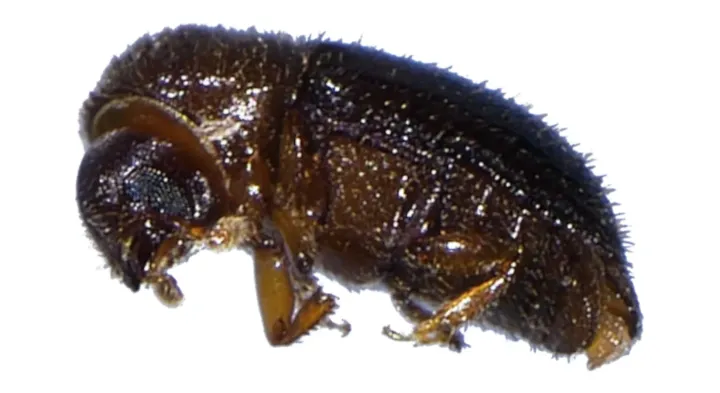
The coffee berry borer, scientifically known as Stephanoderes largipennis (synonym Hypothenemus hampei), is a small beetle belonging to the Curculionidae family and the Scolytinae subfamily.
Adult beetles are extremely small, typically measuring between 1.2 to 1.8 millimeters in length. Their bodies are cylindrical, hard, and exhibit a dark brown to black coloration.
Females are the primary agents of colonization; they are capable of flight and seek out coffee berries to bore into and lay their eggs.
Males are significantly smaller and wingless, spending their entire life cycle inside the coffee berry where they mate with sisters.
The entire life cycle of the insect, including the larval, pupal, and adult stages, takes place within the fruit of the coffee plant.
What it damages
The coffee berry borer is considered one of the most destructive pests of coffee worldwide, causing massive yield losses in almost every major producing country.
The larvae feed on the coffee bean endosperm, creating tunnels that destroy the structure of the bean and facilitate secondary fungal infections.
Infested berries may drop prematurely, resulting in total crop loss for the affected coffee cherries and significantly reducing the quality of the harvest.
Because the larvae and adults feed inside the seed, they are protected from many environmental factors and standard insecticide applications.
Market value is severely impacted as damaged beans are characterized by a bitter flavor and are often rejected during the quality sorting process.
Signs of infestation
The most visible sign of infestation is the presence of small circular boreholes, usually found on the discal (top) area of the coffee cherry.
Brownish dust, known as frass, can often be seen accumulating around the entrance holes, indicating active drilling by the female beetle.
Internally, the bean will show extensive tunneling and the presence of eggs, larvae, or adult insects if the berry is split open.
Premature ripening and the unexpected shedding of cherries are clear indicators that the fruit has been colonized by the borer.
In high infestation areas, growers may notice clusters of berries that look deformed or withered due to internal damage to the developing seed.
Control measures
The core of control strategies is "clean harvesting," which ensures no berries remain on the tree or on the ground after the season ends to break the pest's cycle.
Sanitation practices involving the removal and destruction of all infested berries are essential to prevent the pest population from rebounding.
Biological control, particularly the use of the entomopathogenic fungus Beauveria bassiana, has proven to be a successful strategy for managing borer populations.
Monitoring using traps baited with ethanol and methanol lures is recommended to track pest activity and time intervention efforts effectively.
- Regular pruning to improve air circulation and pest visibility.
- Strategic timing of harvest to remove berries before beetles emerge.
- Use of sustainable integrated pest management (IPM) practices.
Discussion
No discussions yet — be the first.