
Sciopus
Sciopus
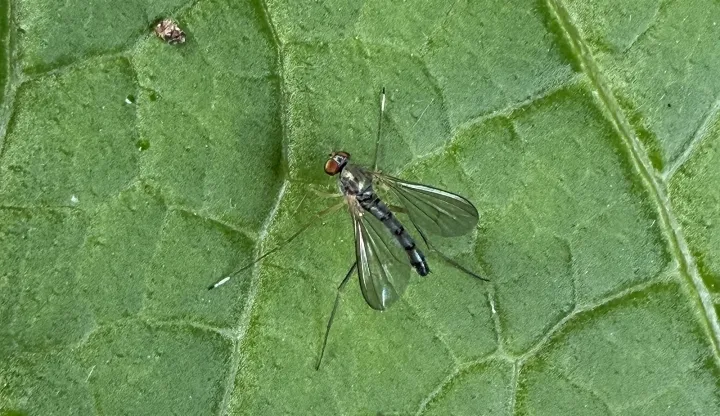
Description
How to identify
The genus Sciopus belongs to the family Dolichopodidae, commonly known as long-legged flies, within the order Diptera. These are small, slender insects frequently recognized by their brilliant metallic coloration, which can range from emerald green to bronze.
Adult flies are characterized by their elongated, delicate legs and high agility. They are often seen moving rapidly over the surface of leaves, displaying a distinctive fluttering flight pattern when disturbed by external factors.
The larval stage of Sciopus is typically found within soil profiles or decaying organic matter. Unlike the adults, the larvae are legless, maggot-like creatures that remain concealed, making them difficult to detect without careful soil examination.
Given the high species diversity within the Sciopus genus, morphological identification to the species level usually requires expert entomological analysis. However, they share similar ecological niches that allow agronomists to manage them as a unified group.
These flies prefer humid microclimates, which often leads them to congregate in damp agricultural fields or areas with dense vegetation where moisture levels remain consistent throughout the growing season.
What it damages
Sciopus can become a significant pest in various agricultural systems, particularly when targeting cereal crops and specific vegetable species during their early growth phases. The larval feeding is the primary cause of concern.
By attacking the root systems of young seedlings, the larvae compromise the plant's ability to uptake water and essential minerals. This nutrient deficiency manifests as stunted growth and reduced overall vigor of the crop.
Beyond root damage, the activity of adults can occasionally facilitate the entry of pathogens into plant tissues. The tiny punctures made during their feeding or oviposition cycles can serve as entry points for secondary bacterial or fungal infections.
Economic damage is most pronounced in seasons with high moisture, which favors the reproductive success of the pest. Large populations can cause uneven crop stands and significant yield losses if left unmanaged.
Because the larvae reside in the soil, the damage is often systemic and gradual. Agronomists should be aware that unexplained patches of weak growth in a field may be linked to root-feeding dipteran larvae like those of Sciopus.
When it appears
The activity of adult Sciopus flies spans the warmer months, typically beginning in late spring and extending through early autumn. Their population dynamics are tightly regulated by soil temperature and moisture levels.
Larvae are known to overwinter in the upper soil layers, entering a state of dormancy until spring warmth triggers their development into pupae. This emergence coincides with the peak vegetative growth of many staple crops.
The number of generations per year is highly dependent on local climatic conditions. In warmer regions with long summers, multiple cycles can occur, potentially leading to rapid population surges if environmental conditions remain favorable.
The peak flight periods often align with the crucial early development phases of crops, making these stages the most important time for monitoring and intervention to prevent egg-laying.
For effective pest management, maintaining historical data on rainfall and soil temperature helps in predicting the arrival of adult flies, allowing farmers to prepare timely protective measures.
Signs of infestation
The initial signs of a Sciopus infestation are often the visual presence of small, metallic-green flies on the foliage. They are particularly active during the morning and evening hours when humidity is higher.
Affected plants show clear symptoms of distress, such as leaf chlorosis, thinning of the stems, and an overall decrease in height compared to healthy plants. In severe cases, wilting occurs even when soil moisture appears adequate.
Upon inspecting the roots, one may find subtle tunneling or tissue necrosis caused by larval feeding. These feeding marks weaken the root structure, making the plant prone to lodging or toppling over during high winds.
Patches of poor development across the field are another key indicator. These areas often correlate with soil conditions that remain damp, providing an ideal environment for the larvae to thrive.
- Stunted plant growth and reduced vigor;
- Yellowing of lower leaves;
- Thin or uneven crop stands in damp areas;
- Presence of larvae in the soil around the root zone.
Control measures
Crop rotation is a fundamental strategy for managing Sciopus populations. By switching between crops with different root structures, farmers can disrupt the pest’s lifecycle and reduce larval survival rates.
Proper soil management, including deep autumn tillage, is highly effective. Exposing the soil to winter conditions helps to reduce the survival rate of overwintering larvae, significantly lowering the initial population for the next spring.
Providing balanced fertilization supports the plant's natural resilience. Strong, well-nourished plants are better equipped to compensate for minor root damage caused by pests compared to those under nutrient stress.
When monitoring confirms that population levels exceed economic thresholds, systemic insecticides can be applied. Treatment is most effective during the early larval development stage, before significant root destruction occurs.
Biological control, which involves fostering populations of natural predators like ground beetles and birds, plays an essential role in long-term management. Reducing broad-spectrum pesticide use helps maintain these natural checks on the pest.
Discussion
No discussions yet — be the first.