
Scaptomyza disticha
Scaptomyza disticha
Description
How to identify
Scaptomyza disticha belongs to the Drosophilidae family within the order Diptera. It is a small fly that has evolved to become a specialized pest of agricultural crops, particularly within the Brassicaceae family.
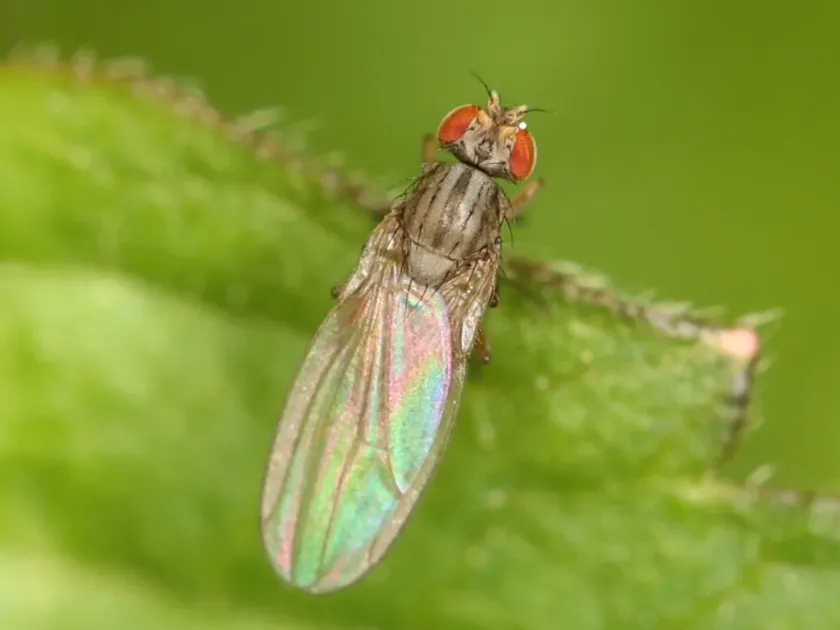
Adult flies typically measure between 2 and 3 mm in length. Their coloration ranges from yellowish-brown to greyish, and they possess transparent wings with characteristic venation patterns common to drosophilids.
The larvae are small, legless, and white or cream-colored, typically reaching about 3–4 mm when fully grown. Their morphology is perfectly adapted for living and feeding within the tissue of leaves.
Eggs are minute and laid by females directly into the leaf tissue or onto the epidermis. Due to their small size, they are often overlooked during routine field scouting until the symptoms become visible.
Pupation occurs within a puparium, which is often found inside the leaf mines or within the upper layer of the soil, making both foliage and soil management crucial for control.
What it damages
The primary hosts of Scaptomyza disticha are cruciferous plants (Brassicaceae), including cabbages, radishes, turnips, and mustard. It also utilizes wild cruciferous weeds as alternative food sources.
The larvae are leaf miners, meaning they feed on the mesophyll tissue between the upper and lower leaf surfaces. This activity creates irregular, winding tunnels or "mines" that weaken the plant significantly.
Severe infestations can lead to a drastic reduction in photosynthetic efficiency, causing stunted growth and a considerable decrease in both yield and the aesthetic quality of the produce.
Greenhouse environments are particularly susceptible to heavy outbreaks, as the stable temperatures allow the pest to cycle through generations rapidly, leading to high population densities.
Beyond direct feeding damage, the tunnels created by the larvae provide entry points for pathogenic bacteria, leading to secondary rotting of the leaves and premature senescence of the foliage.
When it appears
Adult activity usually begins in the spring as temperatures rise. The fly is highly adapted to warm, dry conditions, which often lead to explosive population growth during mid-summer.
The life cycle is relatively short, allowing for multiple overlapping generations within a single growing season, which makes it challenging to time interventions effectively without constant monitoring.
The pest overwinters primarily in the pupal stage, hidden in soil or remaining plant debris. Field sanitation during the post-harvest period is therefore an essential strategy for breaking the life cycle.
Peak infestation periods typically coincide with the rapid growth stages of brassica crops, necessitating vigilant scouting during the vegetative growth phase to prevent damage to the harvestable parts.
Migration of adults from surrounding wild host weeds to agricultural crops is a common phenomenon, often driven by the maturation or flowering of the weeds, which pushes the pest population toward fresher crops.
Signs of infestation
The first indicator of an infestation is the appearance of tiny, discolored stippling or pinpricks on the leaf surface, created by female flies when inserting their ovipositor for egg-laying.
As larvae hatch and begin to feed, winding, translucent galleries or "mines" appear on the leaves. These mines often contain small black specks, which are the fecal droppings of the larvae.
As damage progresses, the leaves turn yellow, wilt, and eventually wither. In susceptible crops, the damage may manifest as extensive necrosis, making the produce unsellable for fresh markets.
Adult flies can often be seen resting on or flying near the foliage, particularly on sunny days or in shaded parts of the greenhouse, acting as an early warning sign for the grower.
Severe mining can cause leaf distortion, where the leaf surface becomes crinkled or puckered, a common observation in sensitive cultivars like radish or bok choy.
Control measures
Integrated Pest Management (IPM) for this species begins with the aggressive removal of cruciferous weeds from the field margins to eliminate primary breeding sites.
Crop rotation and spatial isolation are highly recommended practices to prevent the migration of flies from previous crop locations to newly planted areas.
Deep plowing or soil cultivation after the harvest is an effective mechanical method to disrupt the pupal stage, significantly reducing the overwintering population and the pressure for the next season.
When chemical control is necessary, systemic or contact insecticides registered for brassica crops should be applied, ensuring compliance with pre-harvest intervals to ensure food safety.
Yellow sticky traps are an effective tool for monitoring adult flight activity and can serve as a simple mechanical control method to reduce the number of egg-laying females in greenhouses.
Discussion
No discussions yet — be the first.