
Rhogogaster
Rhogogaster
Description
How to identify
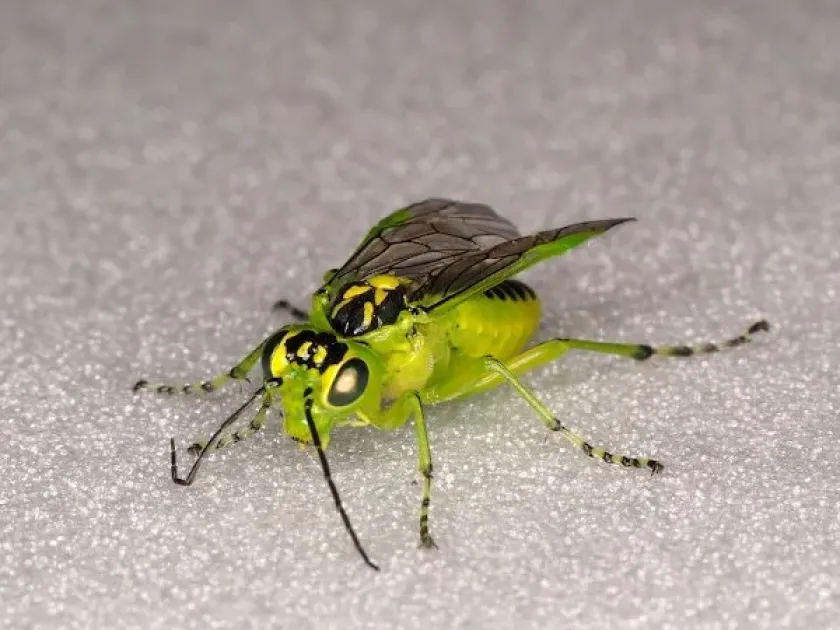
Rhogogaster is a genus of sawflies belonging to the Tenthredinidae family within the order Hymenoptera. Adult insects typically feature a slender body with a characteristic greenish or yellowish coloration, often marked with dark spots on the abdomen and thorax.
The wings of these insects are transparent with well-defined venation, which serves as a key diagnostic feature for species identification. Adult specimens usually range from 8 to 15 millimeters in length.
Rhogogaster larvae resemble moth caterpillars but can be distinguished by the number of their abdominal prolegs. They possess six to eight pairs of prolegs, which allow them to cling tightly to the leaf surface.
The larva’s head is clearly defined, dark-colored, and equipped with powerful chewing mouthparts. The body is often covered with fine bristles or has a smooth, shiny appearance.
The life cycle involves complete metamorphosis: egg, larva, pupa, and adult. Adults are active during the day and are commonly found feeding on flowers and leaves in garden environments.
What it damages
While adult Rhogogaster sawflies feed mainly on nectar and pollen, it is the larvae that cause significant agricultural damage. They are active phytophages that feed on the foliage of a wide range of plants.
The host range includes ornamental shrubs, fruit trees, and several herbaceous plant species. In particular, members of the Rosaceae and Salicaceae families are frequent targets for infestation.
The larvae are highly voracious. They consume leaf blades, often starting from the edges or creating large holes in the center of the leaf, which substantially reduces the plant's photosynthetic capacity.
During heavy infestations, the pest can cause extensive leaf skeletonization, leaving only the larger veins intact. This leads to weakened plants, stunted shoot growth, and a significant decline in aesthetic value.
Severe early-season damage can result in leaf deformation and premature leaf drop, which negatively impacts the winter hardiness of perennial garden crops.
When it appears
The emergence of adult Rhogogaster typically occurs in late spring and early summer, coinciding with the onset of stable, warm weather conditions necessary for successful reproduction.
Females deposit eggs into the leaf tissues by making small incisions with their ovipositors. This period often aligns with the phase of active vegetative growth for most garden species.
Larval development takes place throughout the summer months. This is when feeding activity peaks, requiring gardeners to maintain close surveillance of their plantings.
Pupation generally occurs in the soil or within dense cocoons attached to the lower parts of plants or plant debris, where the insect overwinters until the following spring.
Climate factors such as humidity and temperature directly influence the developmental rate of each generation, potentially leading to multiple population surges during favorable growing seasons.
Signs of infestation
The first indicator of the pest's presence is the appearance of specific, ragged holes in the foliage. Larvae often rest on the underside of leaves, curling into a characteristic spiral shape when disturbed.
Accumulations of larval frass, appearing as dark, fine granules, can often be found on the leaf surfaces or scattered on the ground beneath the affected plant.
Damaged leaf areas quickly yellow and wither along the margins, creating a distinct "eaten" appearance. Visual inspection of the canopy during morning hours easily reveals larvae on the undersides of leaves.
Adults can be spotted during the flowering period of garden shrubs, as they move actively in search of food, their bright coloration contrasting against the green foliage.
Neglecting control measures leads to mass defoliation of branches, leaving the plant highly susceptible to secondary fungal infections and other pests that target weakened plant tissues.
Control measures
Biological control strategies include attracting natural predators to the garden, such as predatory bugs, parasitic wasps, and insectivorous birds, all of which actively consume sawfly larvae.
Manual removal of infested leaves containing larval colonies is effective for small gardens. It is crucial to collect and destroy the larvae by hand to prevent them from spreading to healthy foliage.
Cultural practices, such as deep autumn tillage of soil around the base of plants, disrupt the pupation process and significantly reduce the overwintering population for the following year.
In cases of high infestation, the application of systemic or contact insecticides, approved for home garden use, is recommended to manage the population effectively.
Spraying should be conducted during early morning or late evening hours, ensuring thorough coverage of the leaf surfaces to maximize the protective efficiency of the treatment.
Discussion
No discussions yet — be the first.