
Pear fruit moth
Rhodophaea pirivorella
Description
How to identify
The pear fruit moth (lat. Rhodophaea pirivorella) is a specialized pest belonging to the Pyralidae family. It is a small moth, with a wingspan ranging from 20 to 22 mm, primarily active during the twilight and nighttime.
The forewings are grayish-brown with distinct transverse stripes, providing excellent camouflage against tree bark. The hindwings are noticeably lighter, usually grayish-white with a darker border along the margins.
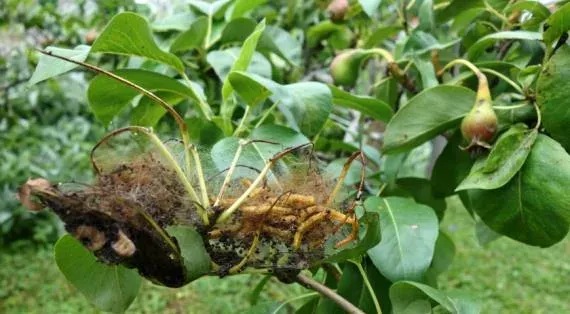
The larvae, which cause the damage, grow up to 15 mm in length. Their bodies vary from dirty green to brownish, featuring a dark, well-defined head. The body is covered with sparse, fine hairs.
Pupae are found within small, dense brown cocoons. These are typically hidden inside infested fruits, under loose bark, or within bark cracks, acting as the primary overwintering stage for the species.
As an obligate pear pest, its life cycle is perfectly tuned to the tree's growth stages. This high level of synchronization makes it a persistent threat in pear-growing regions across the temperate zone.
What it damages
Larvae feed exclusively on pears, showing a strong preference for fruits and ovaries. Upon hatching, they bore into the fruit, feeding on the pulp and seeds, which causes immediate and long-term damage.
A single larva can destroy multiple fruits if they are touching in clusters, as the pest moves between them by webbing them together. This behavior leads to a significant loss of potential fruit yield.
Infested fruits stop growing, become deformed, and drop prematurely. The internal tunnels created by the larvae provide easy entry points for secondary infections like fruit rot, rendering the fruit unsellable.
In high-pressure years, infestation rates can exceed 70% if left unmanaged. This loss is critical for commercial growers, as it affects both the quantity and quality of the harvested produce.
Furthermore, the damage to the reproductive organs of the tree can stress the pear tree, potentially affecting its overall health and development over subsequent growing seasons.
When it appears
The flight of the adults begins during the pear blossom period. This is the time when monitoring for adult activity becomes essential for the timing of subsequent protective measures.
Females lay eggs individually or in small clusters on the young ovaries. The incubation period for eggs typically lasts between 7 to 12 days, depending on local temperature conditions.
Larvae are most active during late spring and early summer. The feeding period inside the fruit lasts about 30 to 40 days before the larvae search for a site to pupate.
A second generation can develop in warmer climates, extending the damage period into late summer and affecting mid- to late-season pear varieties.
Overwintering occurs at the larval stage within cocoons hidden in tree bark crevices or beneath debris near the base of the trunk, ensuring survival during the cold months.
Signs of infestation
The most reliable sign of an infestation is the presence of brown frass (excrement) on the surface of young pears, ejected from the entry holes by feeding larvae.
Stunted growth and premature yellowing of developing fruitlets are clear indicators of internal damage. Affected fruits often show small, dark entry holes on the skin.
When cutting into an infested pear, one will find internal galleries filled with larvae waste. The presence of these tunnels is a definitive confirmation of the pest's activity.
Visible webbing between touching fruits is a common sight in late spring, as the larvae secure their feeding sites to protect themselves from predators and environmental stress.
Small, circular exit holes on the fruit surface signal that the larva has completed its feeding cycle and exited to locate a site for pupation.
Control measures
Effective management requires a combination of chemical and non-chemical strategies, with chemical applications focused on the peak egg-laying and larval hatching periods.
- Regular removal and disposal of fallen, infested fruits to eliminate larvae.
- Scraping off loose, old bark from trunks to destroy overwintering cocoons.
- Using pheromone traps to monitor adult flight and time insecticide treatments.
- Encouraging natural predators such as birds and parasitic wasps in the orchard.
- Applying biological insecticides (e.g., Bt-based products) to target young larvae.
Integrated Pest Management (IPM) is highly recommended. It balances the use of selective insecticides with cultural practices, such as tilling the soil around the tree base to disrupt pupation sites.
Treatment timing must be precise to be effective, focusing on the window before the larvae penetrate the fruit. Late applications are significantly less successful once the larvae are inside.
Maintaining orchard hygiene by clearing out debris and monitoring regularly can substantially reduce the population density, ensuring a healthier and more profitable harvest.
Discussion
No discussions yet — be the first.