
Oriental mealybug
Pseudococcus citriculus
Description
How to identify
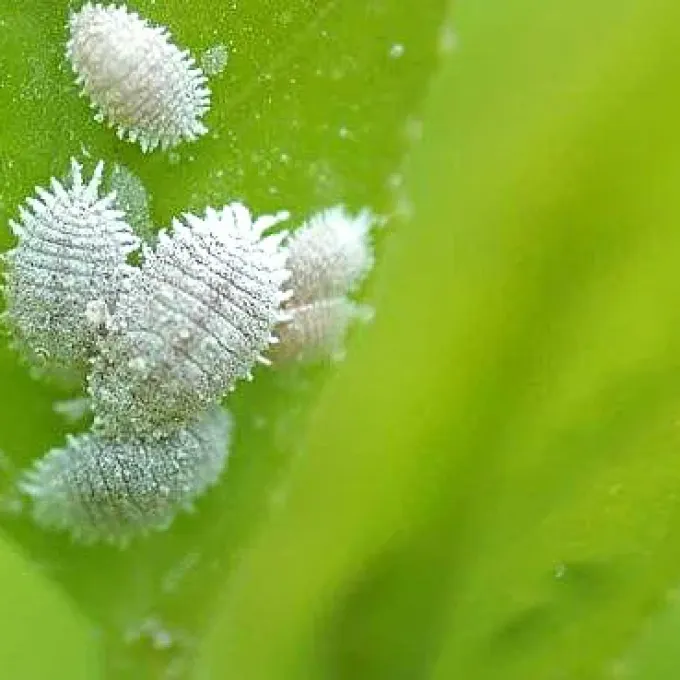
The Oriental mealybug (Pseudococcus citriculus) belongs to the Pseudococcidae family within the order Hemiptera. Adult females are oval-shaped, measuring 2–3 mm in length, and are covered with a white, powdery waxy secretion.
The body is soft and fringed with short waxy filaments along the margins. Males are rarely observed; they are winged and short-lived, serving only for reproduction, while females are the primary life stage found on host plants.
The immature stages, known as crawlers, are highly mobile and yellowish, lacking the thick waxy coating of the adults. This stage is primarily responsible for the dispersal of the pest throughout the canopy.
These insects tend to aggregate in concealed areas, such as leaf axils, underneath bark flakes, near fruit peduncles, or where fruits touch, providing protection from natural enemies and environmental stressors.
Accurate identification of this species usually requires microscopic examination of morphological characteristics, as it closely resembles other Pseudococcus species that infest citrus.
What it damages
The Oriental mealybug primarily attacks citrus trees, including lemon, orange, mandarin, and grapefruit. By feeding on plant sap, they deplete nutrients essential for development.
Heavy infestations result in the weakening of the tree, stunted growth of new shoots, and deformation of leaves. When feeding occurs on developing fruit, it causes significant cosmetic damage and may lead to premature fruit drop.
A major indirect impact is the production of honeydew, a sticky substance excreted during feeding. This honeydew serves as a substrate for sooty mold growth, which inhibits photosynthesis and reduces the overall vigor of the host plant.
The stress caused by persistent feeding makes trees more susceptible to secondary pathogens and environmental fluctuations, significantly reducing the commercial yield of the orchard.
In cases of severe damage, the cumulative impact of nutrient loss and sooty mold coverage can lead to significant branch dieback and an overall decline in tree health.
When it appears
In subtropical climates and greenhouses, the Oriental mealybug can reproduce throughout the year, with multiple generations overlapping depending on temperature and host availability.
Optimal conditions for development occur during the spring and summer months, when temperatures range between +20°C and +28°C and humidity levels remain favorable for crawler activity.
During cooler periods, the development rate decreases significantly, yet the population persists, often moving into more sheltered locations on the bark or roots to survive unfavorable conditions.
The number of generations per year is highly dependent on the local climate, with potential for up to 6–8 generations annually in favorable conditions, necessitating continuous monitoring.
Crawler activity is most pronounced during periods of active plant growth, when tender new tissues provide the highest nutritional value for the developing colonies.
Signs of infestation
The most recognizable sign is the presence of white, cottony masses or "fluffy" waxy deposits on the leaves, stems, and especially in the fruit calyx area.
Leaves often develop a sticky, shiny surface caused by the accumulation of honeydew, which is frequently the first indicator of a mealybug presence before insects themselves are noticed.
The emergence of a black, powdery sooty mold on the foliage is a secondary sign, indicating that the mealybug colony has been established for a considerable duration.
Visual symptoms on the plant include leaf yellowing, loss of turgor, and distortion or curling of tender young leaves as a reaction to the toxic saliva injected during feeding.
The presence of ants patrolling the branches is a strong indicator of an infestation, as ants are known to tend and protect mealybugs in exchange for honeydew.
Control measures
Integrated pest management begins with cultural practices, such as maintaining proper tree canopy structure through pruning to ensure good airflow and light penetration.
Chemical control is often necessary for significant infestations, focusing on systemic insecticides that translocate through the plant, as well as horticultural oils that act by smothering the insects under their waxy layers.
Biological control plays a crucial role, utilizing natural enemies like predatory lady beetles (e.g., Cryptolaemus montrouzieri) or parasitic wasps that can effectively regulate populations in protected environments.
- Mechanical removal of localized colonies during initial stages of detection.
- Implementation of strict quarantine protocols for new plant materials entering the nursery or orchard.
- Control of associated ant populations to allow natural enemies to access the mealybug colonies.
- Regular monitoring with sticky traps to track crawler activity and timing of interventions.
Discussion
No discussions yet — be the first.