
Pnigalio flavipes
Pnigalio flavipes
Description
How to identify
Pnigalio flavipes belongs to the family Eulophidae within the order Hymenoptera. This species is widely recognized in agronomic studies for its complex relationship with leaf-mining insects, acting both as a parasitoid and occasionally exhibiting phytophagous behavior.
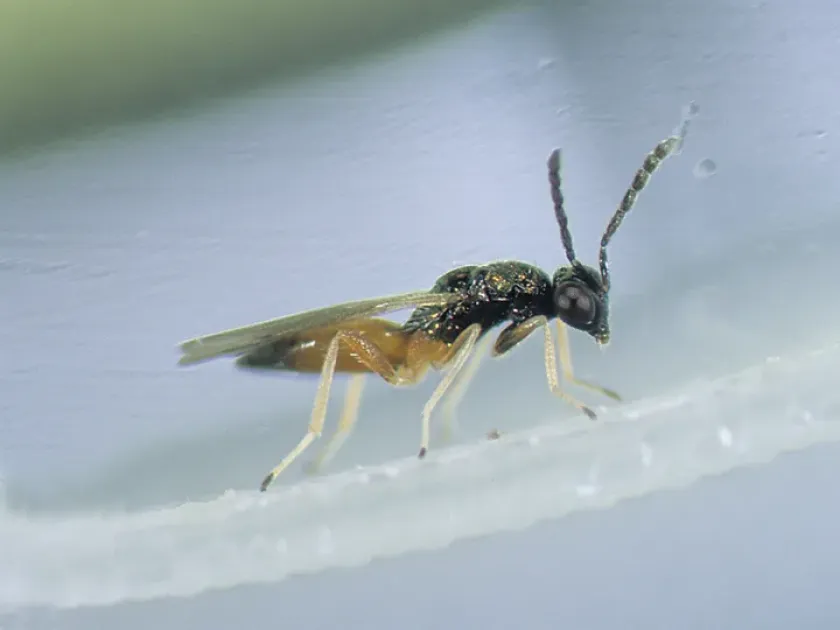
The adult is a tiny wasp, generally measuring a few millimeters in length. It is distinguished by a metallic luster on its body and characteristic yellow-colored legs, which provides a simple visual identification trait in field conditions.
The life cycle encompasses four main stages: egg, larva, pupa, and adult. The female typically oviposits near or inside the mines created by host larvae, ensuring that the offspring have immediate access to food sources upon hatching.
Adaptability is a key trait of this species. It can survive in various environments, from temperate fields to climate-controlled greenhouses, utilizing a wide range of host plants to maintain its population throughout the season.
Although often beneficial as a biological control agent, under specific agricultural conditions, their feeding habits can lead to direct damage to host plant tissues, classifying them as opportunistic pests.
What it damages
Host crops typically include a variety of Solanaceae and Cucurbitaceae species. Tomato and cucumber crops in greenhouse environments are particularly susceptible to their activity, leading to economic losses if infestations are left unchecked.
Direct damage occurs when larvae or adults feed on plant tissue, causing irregular necrotic lesions on the leaves. These lesions can merge over time, significantly reducing the plant's photosynthetic capacity.
The damage is most severe during the warm summer months or continuously in greenhouse production systems. Excessive feeding can lead to premature leaf senescence, negatively impacting overall fruit yield and quality.
The signs of damage are often mistaken for standard leaf miner activity, but a detailed inspection reveals a different pattern of tissue destruction. The affected area often becomes discolored and brittle.
- Irregular leaf spotting and tissue necrosis.
- Stunted growth of younger plants.
- Reduced fruit development due to loss of leaf area.
- Increased susceptibility to secondary diseases.
- Deformed foliage leading to physiological stress.
Control measures
Effective management begins with regular monitoring using yellow sticky traps. This allows growers to estimate the population density and decide on the timing of control interventions to minimize damage.
Cultural practices are essential, including the prompt removal of crop residues where the pest may overwinter. Keeping the surrounding area free of weeds helps reduce alternate host availability.
Chemical control should be applied judiciously. Using selective systemic insecticides can help manage the population while reducing the negative impact on beneficial insect populations that naturally suppress pests.
Biological control remains a highly effective method. Introducing or encouraging naturally occurring predators and other parasitoids can help maintain the population of Pnigalio flavipes below the economic injury level.
Greenhouse exclusion techniques, such as the use of fine-mesh screens on ventilation openings, can significantly reduce the migration of adults from the outside, thereby lowering the initial infestation pressure.
Discussion
No discussions yet — be the first.