
Phthorimaea plaesiosema
Phthorimaea plaesiosema
Description
How to identify
Phthorimaea plaesiosema belongs to the order Lepidoptera and the family Gelechiidae. This moth is characterized by a relatively small size, with a wingspan ranging from 12 to 15 mm. Its forewings exhibit grayish-brown patterns that provide excellent camouflage on stems and leaves.
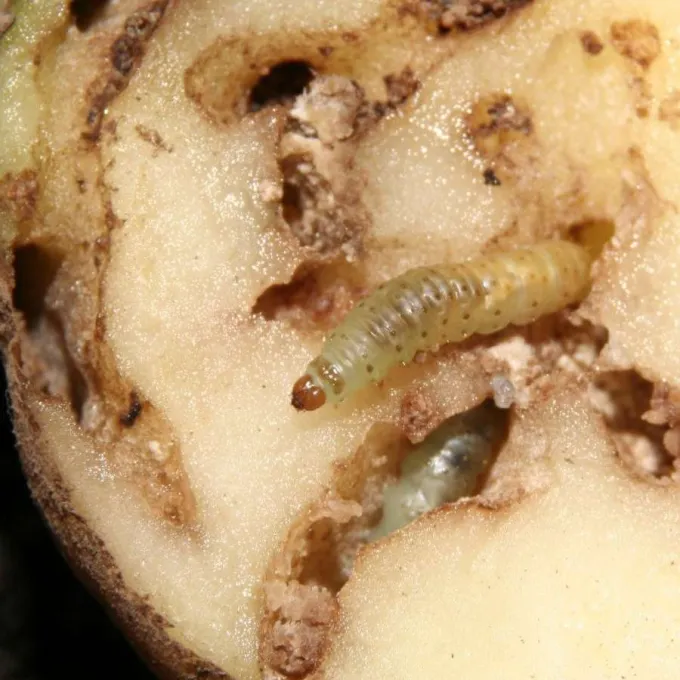
The larvae, or caterpillars, reach lengths of approximately 10–12 mm when fully developed. They are usually yellowish-white or pinkish with a distinct brown head capsule, which is a key trait for distinguishing them from other related species.
The life cycle involves four stages: egg, larva, pupa, and adult. Under favorable conditions, the developmental period is relatively short, allowing for multiple generations per year, especially in regions with mild climates.
Adult moths are nocturnal, remaining hidden during the day and becoming active at dusk. They are capable of flying over long distances, which facilitates the rapid colonization of new fields and production areas.
Pupation typically occurs in the soil, within plant debris, or in protected areas near stored products. The pupal stage is highly resilient, allowing the species to survive various environmental stresses during the off-season.
What it damages
This pest primarily attacks members of the Solanaceae family. Potatoes, tomatoes, and eggplants are the most economically significant hosts, though pepper and tobacco can also be affected by the larvae.
Besides agricultural crops, the pest finds suitable breeding grounds on wild solanaceous weeds. These plants act as reservoirs, sustaining the population even when primary crops are not present in the fields.
When it appears
Activity usually begins when temperatures rise above 10–12 degrees Celsius in the spring. As the season progresses into summer, the population density often peaks, leading to increased pressure on developing crops.
The intensity of infestation typically correlates with the increase in summer temperatures, which accelerate the life cycle of the insect. Late-season infestations are particularly dangerous as they can lead to contamination of harvested tubers.
Signs of infestation
Leaf mines are the earliest sign of infestation on foliage. Larvae feed inside the leaf tissue, creating visible tracks or blotches that eventually dry out, leading to premature leaf senescence and reduced photosynthesis.
On tubers, signs of damage include small holes, often near the eyes, with piles of frass visible on the surface. These internal tunnels weaken the structure of the tuber and introduce pathogens that cause secondary rotting.
For tomato fruits, the larvae often enter near the stem, causing internal destruction that is often not visible until the fruit begins to soften or display darkened sunken areas at the point of entry.
Control measures
Cultural control measures, such as the use of high-quality, pest-free seed stock, are paramount. Regular hilling of potato crops is essential to cover exposed tubers and prevent female moths from laying eggs on them.
Sanitation practices involve the complete removal and destruction of crop residues after harvest. This significantly reduces the overwintering population density and prevents the emergence of the first generation in the next season.
Chemical control should be guided by monitoring programs, including the use of pheromone traps. Targeted insecticide applications during the peak flight of adults can effectively curb population growth before larval damage becomes widespread.
In storage facilities, maintaining temperatures below 4 degrees Celsius effectively halts larval development. This is a crucial strategy for preventing the mass destruction of stored potatoes during the winter months.
Crop rotation remains a fundamental component of integrated pest management. Moving away from solanaceous crops for several seasons disrupts the local life cycle of the insect and forces the population to disperse.
Discussion
No discussions yet — be the first.