
Medlar mealybug
Phenacoccus mespili
Description
How to identify
The medlar mealybug (Phenacoccus mespili) is a member of the mealybug family (Pseudococcidae), belonging to the order Hemiptera.
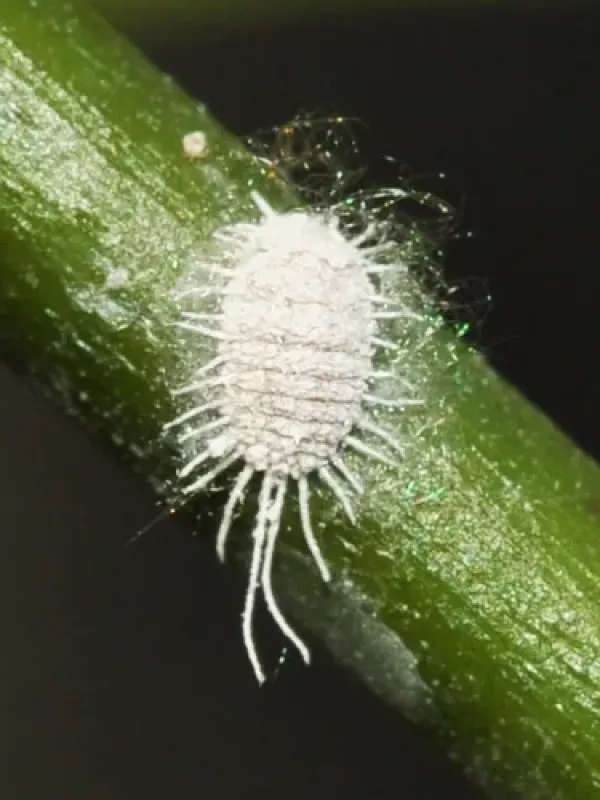
Adult females are characterized by an oval body covered with a powdery white waxy secretion, which acts as a protective shield against weather and predators.
The nymphs, known as crawlers, are extremely small and mobile, allowing them to rapidly spread across the host plant during the early stages of their life cycle.
This pest prefers sheltered environments, such as bark crevices, leaf axils, and near dormant buds, making early detection a significant challenge.
The species exhibits distinct sexual dimorphism, where females remain sedentary for most of their adult life, while the rare males possess wings.
What it damages
The primary hosts include medlar trees, but the pest also infests various other species within the Rosaceae family, including hawthorn and quince.
By using their piercing-sucking mouthparts, the insects extract vital sap from the plant's vascular system, causing systemic nutrient depletion.
This constant feeding process weakens the plant, making it more susceptible to drought, cold stress, and secondary infections by various pathogens.
The accumulation of honeydew secreted by the mealybugs creates a perfect substrate for sooty mold, which impairs photosynthesis by blocking sunlight.
Heavy infestations can result in stunted growth, leaf yellowing, distorted twigs, and a substantial reduction in the overall quality and quantity of the fruit crop.
When it appears
The activity cycle of the medlar mealybug initiates in early spring as temperatures rise, signaling the beginning of the tree's sap flow.
Overwintered females begin laying eggs inside specialized waxy ovisacs, which can contain hundreds of eggs, ensuring a high reproduction rate.
Crawler emergence typically coincides with the bud-burst stage, providing the young insects with immediate access to fresh, nutrient-rich growth.
Depending on local climate conditions, the pest can complete several overlapping generations throughout a single growing season.
As autumn temperatures drop, adults and late-stage nymphs seek refuge in crevices, preparing for diapause to survive the winter months.
Signs of infestation
The most visible indicator of infestation is the presence of white, cotton-like masses, especially concentrated on new shoots and leaf undersides.
- Honeydew secretion making leaves and branches sticky to the touch.
- Presence of black, sooty mold covering leaves and stems.
- Premature leaf drop and generalized yellowing of foliage.
- Deformation or curling of leaves and stunted shoot development.
Close inspection of the branch forks and bud scales often reveals clusters of the pest hidden within their white protective woolly coatings.
Control measures
Cultural control practices, such as removing dead bark and pruning infested branches, are essential to reduce overwintering sites.
Systemic insecticides are highly effective for managing mealybug populations, as they are absorbed by the plant and target insects feeding on sap.
Timing is critical when applying contact insecticides, as they are most effective against the crawler stage before the waxy protective layer develops.
Biological control methods, including the release of beneficial insects like ladybirds or lacewings, can help manage populations sustainably.
Regular monitoring of garden plants is recommended to detect small colonies early, preventing them from spreading across the entire orchard.
Discussion
No discussions yet — be the first.