
Grain mealybug
Phenacoccus graminosus
Description
How to identify
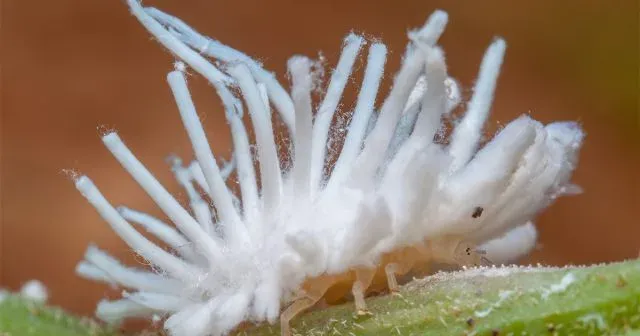
The grain mealybug (Phenacoccus graminosus) is a small insect belonging to the family Pseudococcidae. Adult females are oval-shaped, typically 3–4 mm long, and are characterized by a white waxy, mealy secretion covering their bodies.
These insects exhibit sexual dimorphism, where females are sedentary or slow-moving, while males are winged and short-lived. Reproduction frequently occurs through parthenogenesis, which allows the population to expand rapidly under favorable conditions.
Development proceeds through several nymphal stages. The first-instar nymphs, known as crawlers, are highly mobile and serve as the primary stage for dispersal, often carried by wind to new host plants.
The species overwinters as eggs or nymphs in protected environments, such as cracks in the soil, plant debris, or under the bark of nearby trees. This makes them resilient to cold winter temperatures.
Taxonomically, they are identified by specific morphological characteristics, including the number and arrangement of cerarii along the margin of the body, which requires microscopic examination for accurate field identification.
What it damages
The grain mealybug primarily targets cereal crops, including wheat, barley, and maize, as well as various wild grasses. It extracts phloem sap from the plant's vascular system, causing systemic stress.
Feeding usually occurs in concealed areas of the plant, such as leaf sheaths and near the stem nodes, which protects the colonies from direct sunlight and desiccation while providing access to nutrient-rich sap.
Significant infestations lead to stunted growth, yellowing of foliage, and reduced vigor. In severe cases, the entire plant can wither, leading to a marked decrease in biomass and grain production.
Beyond direct damage, the excretion of honeydew promotes the growth of sooty mold. This layer blocks light, reducing photosynthetic capacity and lowering the commercial quality of the grain.
The damage is often overlooked in early stages because the insects hide within leaf folds, leading to a delayed reaction by farmers until the colony density has reached high levels.
Signs of infestation
The most visible indicator of an infestation is the presence of white, cotton-like masses clustered around the leaf axils and stem bases. These secretions are easily identifiable during field scouting.
Premature leaf senescence and wilting are common symptoms as the plant loses vital nutrients and water to the feeding colonies. This often appears as localized yellow patches in the field.
Sticky honeydew deposits on the foliage provide a clear sign of sap-feeding insects. Over time, these deposits become black due to the colonisation of sooty mold fungi, which discolors the plant tissue.
Weakened, deformed stems and poor head formation are indicative of advanced infestation. Grain filling is often incomplete, resulting in shriveled seeds that significantly reduce the market value of the harvest.
Reduced vigor of the crop, especially during warm, dry weather, suggests that the sap-feeding pressure has exceeded the plant's ability to recover, necessitating immediate intervention.
Control measures
Integrated pest management (IPM) for the grain mealybug begins with sound cultural practices, such as deep plowing after harvest to bury infested crop residues and disrupt the overwintering cycle.
Maintaining clean field borders and eliminating grassy weeds is crucial, as these areas serve as primary reservoirs for the pest, allowing it to migrate into cereal fields during the growing season.
When economic thresholds are exceeded, the application of systemic insecticides is required. Products that are translocated throughout the plant are more effective against hidden colonies compared to contact-only sprays.
Biological control plays a supportive role; encouraging the presence of natural predators like lacewings, ladybird beetles, and parasitoid wasps can significantly dampen population spikes.
Regular monitoring during the spring and early summer is essential. Detecting early colonizers allows for localized spot treatments, which are far more economical and environmentally sustainable than field-wide applications.
Discussion
No discussions yet — be the first.