
Phaenobremia
Phaenobremia
Description
How to identify
Phaenobremia (often classified within the genus Aphidoletes) belongs to the family Cecidomyiidae (gall midges), order Diptera. These insects are essential predators known for their efficiency in reducing aphid populations.
The adult form is a delicate, long-legged midge, typically measuring 1.5 to 2 mm. It is nocturnal, and its primary activity involves locating aphid colonies to lay eggs.
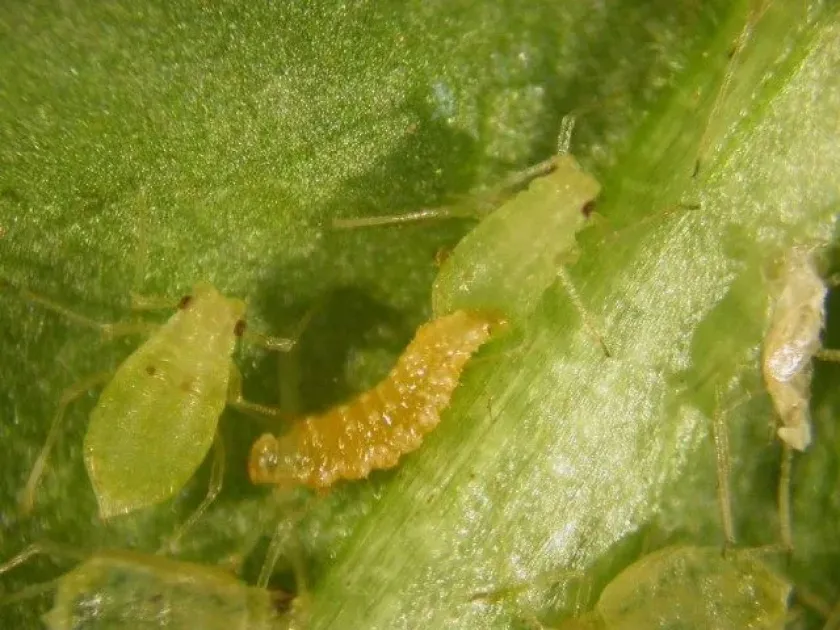
The larvae are legless and possess a characteristic bright orange or reddish color, making them easily identifiable among their prey. They are highly specialized predators.
The life cycle includes the egg, three larval stages, pupa, and adult. Each stage is adapted to the predatory habits of the species, ensuring a rapid response to aphid infestations.
Systematically, these midges are highly regarded in integrated pest management (IPM) due to their narrow host specificity and ability to suppress major aphid pests.
What it damages
Phaenobremia is not a plant pest; it is a highly beneficial predator. It provides ecological services by controlling aphids, which are destructive to numerous vegetable and ornamental crops.
Larvae consume various aphid species, including the melon aphid, peach-potato aphid, and green apple aphid, protecting crops from sap depletion and stunted growth.
By effectively preying on aphid colonies, these midges prevent the severe leaf curling, blossom drop, and viral disease transmission that aphids typically cause.
Unlike chemical pesticides, Phaenobremia targets only the specific pest population, preserving the balance of the ecosystem and minimizing damage to non-target species.
In farming practices, the presence of these larvae signifies a naturally occurring form of crop protection that helps maintain healthier plant development throughout the season.
When it appears
The activity of these midges typically begins in late spring, once temperatures become favorable for both the midges and their aphid prey, usually starting at 15–18°C.
Peak predatory activity occurs during the warmer summer months (June through August), when aphid populations often reach their maximum levels in agricultural settings.
Multiple generations can occur within a single growing season, provided that aphid density remains high enough to support larval development and subsequent adult emergence.
As autumn approaches and temperatures drop, the pupae enter a dormant state in the soil or leaf litter, overwintering until the next spring when the cycle begins anew.
Environmental conditions, particularly humidity, are crucial; high humidity encourages survival, while prolonged dry periods may hinder the activity of these beneficial insects.
Signs of infestation
Detection is best achieved by inspecting the underside of leaves for bright orange, mobile larvae crawling within or near aphid colonies.
Signs of successful predation include shriveled or empty aphid skins, indicating that the midges have successfully fed and moved on to other parts of the colony.
A reduction in the production of honeydew (the sticky residue left by aphids) is a strong indicator that a predatory population is actively suppressing the pest.
Small, translucent eggs may be visible near aphid clusters when viewed with a magnifying lens, indicating ongoing reproduction and effective predator presence.
Healthy, uncurled foliage and vigorous shoot growth, despite the initial presence of aphids, suggest that Phaenobremia is effectively managing the pest levels.
Control measures
The most effective strategy is to implement integrated pest management that avoids broad-spectrum insecticides which are toxic to these beneficial midges.
In greenhouse settings, managers can artificially introduce these predators by purchasing them from biological control suppliers to manage localized aphid outbreaks quickly.
Maintaining a balanced environment with sufficient moisture and shelter is vital for the pupation phase of the midge's life cycle.
Supporting local populations can be achieved by planting flowering nectary strips, which provide the adults with the energy sources needed for mating and dispersal.
- Avoid synthetic insecticides that harm beneficial insects.
- Perform regular monitoring of aphid hotspots.
- Use biological control releases during early infestation.
- Maintain adequate humidity levels in protected structures.
Discussion
No discussions yet — be the first.