
Many-plumed moths
Orneodes
Description
How to identify
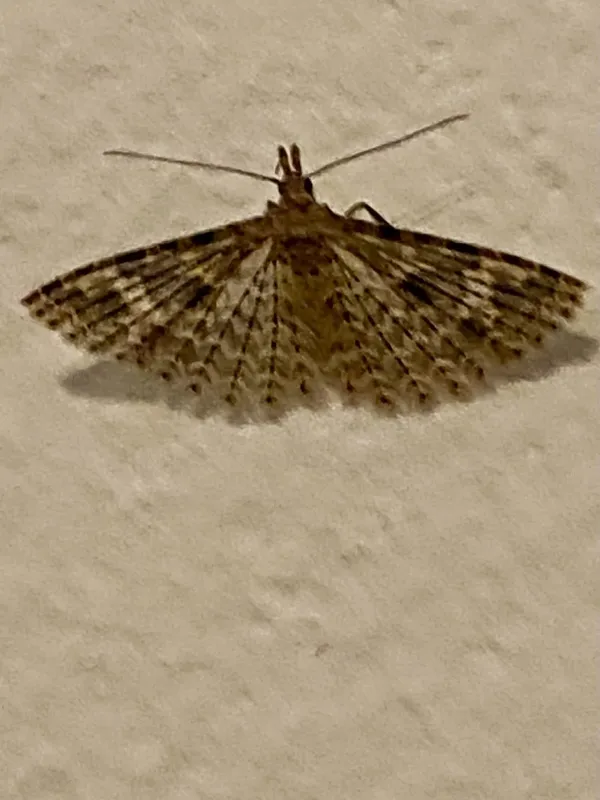
Many-plumed moths (family Alucitidae, formerly Orneodidae) are small moths easily recognized by their unique wing structure. Each wing is deeply cleft into six thin, feather-like plumes fringed with dense hair.
The wingspan of adults typically does not exceed 10–15 millimeters. The coloration is usually grayish, brownish, or yellowish with a blurred pattern, which provides excellent camouflage against tree bark and dry stems.
In a resting position, these insects hold their wings spread out, resembling miniature fans. They have thread-like antennae and a slender, fragile body typical for many members of the order Lepidoptera.
The larvae are small, usually whitish or cream-colored, with a dark head. They lead a concealed life, developing inside plant tissues or fruits, which makes them difficult to detect in the early stages of infestation.
Systematically, these pests belong to the order Lepidoptera and represent a highly specialized group whose development is closely tied to specific host plants.
What it damages
The primary damage is caused by the larvae, which bore into plant tissues. They can affect flower buds, ovaries, and sometimes young shoots, causing deformation and subsequent necrosis.
In agricultural practice, the most well-known species is the honeysuckle moth (Alucita hexadactyla), whose caterpillars cause significant damage to honeysuckle bushes by consuming the insides of flowers and young leaves.
Beyond honeysuckle, some species may infest various ornamental shrubs and wild plants. The severity of the damage depends on the population density and seasonal weather conditions.
Damaged plant parts cease to grow, turn yellow, and drop off. This leads to reduced berry yields and loss of aesthetic value for shrubs in gardens.
The pest also creates entry points for fungal and bacterial infections through damaged tissues, which can lead to the death of individual branches of the plant.
When it appears
The flight of adults typically occurs in late spring and the first half of summer, when egg-laying on host plants takes place. During this time, the insects are most active at dusk.
The development of one generation takes several weeks, depending on temperature. Under favorable conditions, multiple generations can occur within a single season.
Adults overwinter in hidden locations, such as under tree bark, in building crevices, or in dry leaf litter. They are among the first insects to appear in spring when temperatures stabilize.
The emergence of the second generation larvae often coincides with the active growth and flowering of host plants, which maximizes the risk of damage to young ovaries.
For monitoring, it is recommended to use pheromone traps or light traps, which effectively attract adults during the night.
Signs of infestation
The first sign of infestation is the appearance of curled or deformed leaves, inside which traces of larval activity can be found.
The presence of larval excrement (frass) on the leaf surface or inside damaged buds is a clear indicator of the pest's presence.
When inspecting flower clusters, premature wilting and drying without apparent reasons are often visible. Frequently, the interior of the bud is found to be completely hollowed out.
- Deformation of terminal shoots.
- Presence of entry holes in buds.
- Premature fruit drop.
- Signs of silk webbing or leaves fastened together.
Sometimes, the pest can only be noticed during a detailed examination of the underside of the leaves, where larvae often establish their temporary shelters.
Control measures
To control the population of many-plumed moths, it is recommended to implement cultural practices, including timely pruning and disposal of infested shoots along with the larvae.
During the mass flight of adults, treatments with systemic or contact insecticides are effective in suppressing the development of young caterpillars.
An important element of protection is encouraging natural enemies, such as insectivorous birds and beneficial predatory insects, to inhabit the garden to control populations at various life stages.
Preventive treatments with biological preparations based on Bacillus thuringiensis show high efficacy against early-instar larvae without harming beneficial pollinators.
Crop rotation and selecting resistant plant varieties help minimize the risk of mass outbreaks of these moths in garden settings.
Discussion
No discussions yet — be the first.