
Pine needle miner
Ocnerostoma piniariellum
Description
How to identify
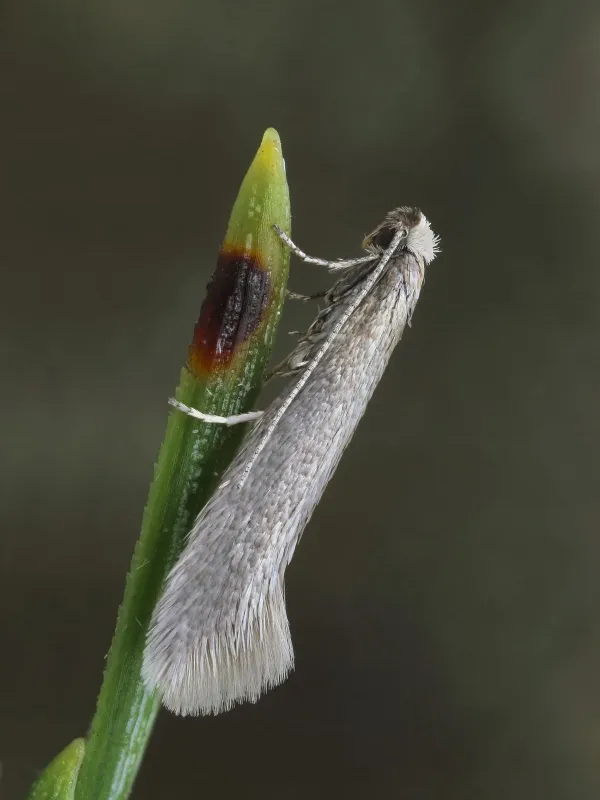
The pine needle miner (Ocnerostoma piniariellum) is a small moth species belonging to the Yponomeutidae family. It is a common pest found in coniferous forests throughout the northern hemisphere.
The adult moth is characterized by a wingspan of 10–12 mm. Its forewings have a greyish-silver sheen, while the hindwings are lighter and fringed with long hairs, which is a classic trait for the family.
The larva is the primary destructive stage, growing to about 6–8 mm in length. Its body color ranges from pale green to yellowish-grey, helping it blend into the pine needles.
It typically completes one generation per year. Larvae overwinter in the 2nd or 3rd instar, often protected inside the mines they have created within the pine needles.
Pupation occurs in spring, and the adult moths emerge in early summer. After mating, females lay eggs on the current year's needles, starting the cycle anew.
What it damages
The Scots pine (Pinus sylvestris) is the main host plant for this species. However, it can also infest other pine species, particularly in nursery environments where trees are grown in close proximity.
Damage is caused by the larvae mining the interior of the needles. They consume the photosynthetic tissue, leaving only the outer epidermis, which disrupts the tree's vital physiological processes.
Severe infestations result in needle discoloration and premature needle drop. This weakens the tree, making it susceptible to secondary pests like bark beetles and wood-boring insects.
For young saplings, the damage is particularly critical. Significant needle loss inhibits growth, stunts development, and can lead to the mortality of vulnerable young trees.
In mature stands, while rarely lethal, the loss of foliage reduces the overall health and ornamental value of the forest, creating a sickly appearance in the canopy.
Signs of infestation
The primary symptom is the appearance of yellowed or reddish-brown needles in early summer. These needles appear dry and hollow when inspected closely.
Careful observation reveals small, circular entry holes on the needles. The lack of excrement on the outside confirms that the larva is feeding internally.
If you pull on a discolored needle, it usually detaches easily. Cutting open such a needle will often reveal the larvae, signs of tunneling, or remnants of larval silk.
During the flight period in June, small silver-grey moths can be observed hovering around pine branches, especially at dusk or on cloudy days.
A general thinning of the canopy and a patchy, brownish look to the foliage are clear indicators that the infestation has reached a significant level.
Control measures
Systemic insecticides are the most effective method for controlling infestations. They are absorbed by the tree and reach the larvae inside the needles, providing high levels of control.
Timing is crucial; applications should ideally occur during the larval hatching period to ensure that the active ingredient is present when larvae begin feeding.
Biological control methods utilizing bacterial preparations (like Bacillus thuringiensis) are highly effective against larval stages of Lepidoptera and are safe for the surrounding environment.
Sanitation practices involve clearing and destroying fallen needles around the base of the trees to remove potential overwintering sites for the next generation.
- Monitor adult flight using pheromone traps.
- Encourage natural predators like parasitic wasps and birds.
- Maintain tree vigor through proper irrigation and soil care.
- Avoid over-fertilization, which can make trees more attractive to pests.
Discussion
No discussions yet — be the first.