
Hibiscus mealybug
Nipaecoccus viridis
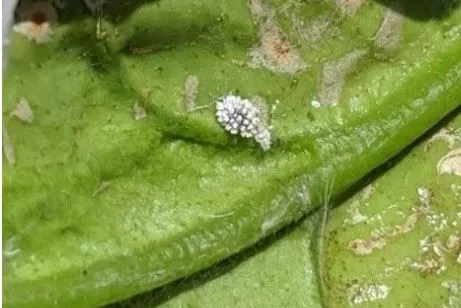
Description
How to identify
The hibiscus mealybug (Nipaecoccus viridis) is a destructive member of the Pseudococcidae family within the order Hemiptera. Adult females are oval-shaped and covered in a thick layer of white waxy powder, which acts as a shield.
Adult males are rare and winged, primarily focused on finding females for reproduction. In contrast, females are sedentary and spend their lives feeding on a specific host site once they have settled.
Reproduction involves the production of white, fluffy egg sacs. A single female can lay hundreds of eggs, typically situated in protected areas like crevices, leaf axils, or along the veins on the underside of leaves.
The first instar larvae, often called 'crawlers', are highly mobile and serve as the main dispersal stage. They can walk to new plant parts or be carried by wind to neighboring plants.
This species is a significant polyphagous pest, meaning it can thrive on a vast range of plant hosts, making it a major concern for both commercial agriculture and ornamental horticulture.
What it damages
The pest causes damage by inserting its stylet into plant tissues to extract phloem sap. This feeding process results in severe physiological stress and nutrient depletion for the host plant.
As the mealybugs feed, they excrete a sticky substance known as 'honeydew'. This liquid covers the leaves and provides a substrate for the rapid growth of sooty mold, which blocks light and impairs photosynthesis.
Visible damage includes the twisting and yellowing of leaves, stunting of shoot growth, and the premature shedding of buds, flowers, and immature fruits. In severe cases, entire branches may dry out.
The damage is particularly devastating to citrus and ornamental crops, where the cosmetic appearance is as important as the health of the plant. Fruit deformation is a common outcome in infected orchards.
In greenhouses and nurseries, the infestation can spread rapidly, potentially destroying entire crops if monitoring and intervention are not prompt and thorough.
When it appears
In tropical and subtropical environments, Nipaecoccus viridis breeds continuously throughout the year, with overlapping generations, which makes timing for chemical control challenging.
The pest thrives in warm, humid conditions, with optimal development occurring between 25°C and 30°C. In temperate climates, the activity peaks during the spring and summer months.
Migration and colonization are most frequent during periods of rising temperatures. During winter, the pest often seeks refuge in greenhouses or in protected spots on woody plants.
Effective management requires vigilance throughout the entire growing season, starting as early as spring when the first crawlers emerge from their overwintering sites.
Seasonal monitoring of new plant growth is essential, as the pest prefers the tender, succulent tissues found on young shoots and buds.
Signs of infestation
The most diagnostic sign is the appearance of white, cotton-like masses on the stems, leaves, and fruit stalks. These are the egg sacs created by the adult females.
A shiny, sticky layer on the foliage, followed by the appearance of dark, dusty sooty mold, indicates an active or previous presence of the pest.
An increased presence of ants is a strong indicator of a mealybug colony. Ants are attracted to the sugary honeydew and often aggressively defend the mealybugs from natural predators.
Chlorosis, or yellowing, combined with the curling and distortion of leaves, signifies that the plant is struggling to transport water and nutrients due to the infestation.
A general lack of vigor in the plant, accompanied by fruit drop or flower abortion, serves as a clear distress signal that the plant is under heavy pest pressure.
Control measures
Successful management relies on an Integrated Pest Management (IPM) strategy that targets the pest's vulnerability at different stages of its life cycle.
- Strict quarantine measures when introducing new plant material to prevent the accidental entry of eggs or crawlers.
- Systemic insecticides are the most effective chemical intervention, as they are absorbed by the plant and kill the mealybugs while they feed.
- Biological control using natural enemies, such as ladybird beetles (e.g., Cryptolaemus montrouzieri) or parasitoid wasps.
- Ant control to reduce the 'guarding' effect, which allows natural predators to access and feed on the mealybug colonies.
- Pruning and destroying heavily infested branches to reduce the total population density and limit the spread of the colony within the garden or field.
Discussion
No discussions yet — be the first.