
Coconut caterpillar
Nephantis
Description
How to identify
The coconut caterpillar (Opisina arenosella), formerly known as Nephantis serinopa, is a moth belonging to the family Xyloryctidae. The adult moth is small, with a wingspan of approximately 20–25 mm, and exhibits a grayish-brown coloration.
The larvae, known as coconut caterpillars, are characterized by their distinct black heads and pale, greenish-yellow bodies. When fully grown, the larvae can reach up to 25 mm in length.
The life cycle of the pest consists of four distinct stages: egg, larva, pupa, and adult. Depending on environmental conditions, such as temperature and humidity, the entire life cycle typically completes within 30 to 45 days.
Females deposit their eggs in small clusters on the underside of the palm leaves. A single female can lay over a hundred eggs during her short lifespan, leading to rapid population growth under favorable conditions.
Upon hatching, the larvae construct protective galleries using silk and their own excrement. These galleries serve as vital shelters where the larvae feed and eventually undergo pupation to emerge as adults.
What it damages
The primary host for this pest is the coconut palm (Cocos nucifera), although it has been documented on various other palm species, including date palms and several ornamental varieties widely used in landscaping.
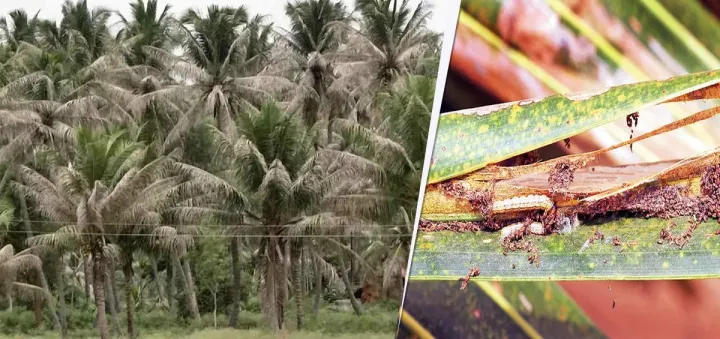
Damage is exclusively caused by the larval stage. The caterpillars feed on the chlorophyll-rich tissues of the leaves, effectively skeletonizing them by consuming the green parts while leaving the tougher veins intact.
Severe infestations result in extensive necrosis of the foliage, which compromises the tree's ability to perform photosynthesis. This energy deficit causes a significant reduction in the production of nuts and overall tree health.
In prolonged or heavy outbreaks, the entire canopy of the palm may turn brown and appear burnt. This not only destroys the aesthetic value of the plant but also puts the tree under extreme physiological stress.
Weakened trees are highly susceptible to secondary attacks from other pests and pathogens, which can ultimately lead to the death of the palm if no intervention measures are taken in time.
Signs of infestation
The most reliable sign of an infestation is the appearance of silken galleries on the abaxial (lower) surface of the leaves. These structures are often reinforced with larval frass and are clearly visible upon inspection.
Accumulation of black, granular larval droppings at the base of the tree or on lower leaves is a clear indicator of a high population density within the canopy.
As the larvae feed, the affected leaves turn from green to a straw-like brown color. This discoloration typically begins on older, lower leaves and gradually spreads upwards to the younger fronds.
In cases of heavy infestation, the structural integrity of the leaves is lost, leading to premature shedding. This exposure of the trunk and heart of the palm can accelerate the decline of the tree.
The presence of adult moths flying around the foliage during dusk or night hours indicates active egg-laying behavior, signaling the imminent arrival of a new generation of damaging larvae.
Control measures
Cultural control involves the immediate removal and destruction of heavily infested leaves. This practice is essential to reduce the total population of larvae and slow down the spread within the plantation.
Biological control is highly encouraged, utilizing indigenous parasitoids such as Goniozus nephantidis and Bracon brevicornis. These natural enemies effectively keep the caterpillar populations under threshold levels.
Chemical control should be employed with caution and only as a last resort. Use selective insecticides that do not harm beneficial predators or parasitoids, thus maintaining the ecological balance of the grove.
Pheromone-based monitoring systems are used to track moth activity. This data allows for the timing of interventions during the most susceptible larval stages, maximizing the efficacy of protective measures.
Integrated Pest Management (IPM) is the most sustainable approach, combining regular monitoring, release of natural enemies, and targeted interventions to ensure long-term health of the coconut groves.
Discussion
No discussions yet — be the first.