
Acorn woodpecker
Melanerpes formicivorus
Description
How to identify
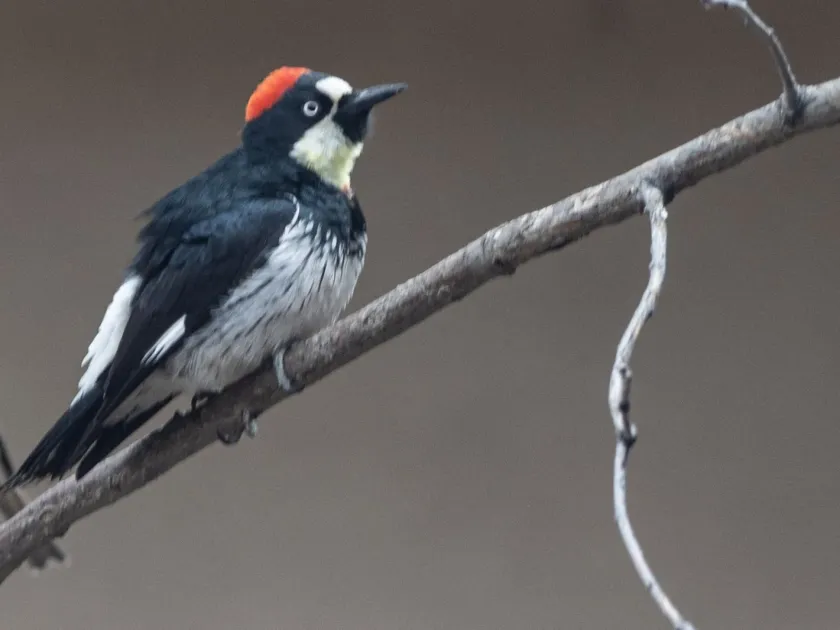
The acorn woodpecker is a medium-sized bird of the woodpecker family, known for its complex social behavior and habit of storing food. Adults have black plumage on their backs and wings, a white patch around the beak, and males display a distinctive bright red crown.
Taxonomically, the species belongs to the order Piciformes. These birds are highly organized and live in social groups, working collectively to create granary trees by drilling thousands of small holes to store acorns and nuts.
Sexual maturity is reached in the second year, after which they participate in the colony's communal activities. They are visually recognizable by their constant movement on tree trunks and the sound of repetitive drilling.
Their biological cycle is tightly linked to the seasonal availability of acorns. During autumn, their activity peaks as they prepare for winter, which often brings them into contact with human-managed orchards and plantations.
Known for their territorial nature, these birds maintain their granaries with great vigilance, often defending them aggressively from intruders, which contributes to their persistent activity on chosen trees.
What it damages
The primary damage occurs on oak trees, pines, and various orchard crops situated near woodland borders. The birds drill numerous holes into healthy trunks to insert acorns for long-term storage.
Repeated drilling disrupts the bark's integrity, interfering with the tree's nutrient transport system. This stress can lead to the wilting of branches, reduced yields, and, in severe cases, the death of the tree.
The extensive drilling creates entry points for fungal infections and wood-boring insects. This structural compromise weakens the tree, making it susceptible to wind damage and secondary pest infestations.
In agricultural settings, the woodpecker's activity significantly degrades the health of fruit trees. The mechanical destruction caused by thousands of holes makes the wood susceptible to cracking and limb breakage.
The damage is cumulative; as a colony grows, the number of holes increases, leading to a rapid decline in the tree's physiological health. Protecting valuable timber and fruit trees from this specific type of physical destruction is essential.
Signs of infestation
The most prominent sign is a trunk heavily perforated with small, uniform holes, each sized to hold an acorn or a nut. These holes are typically arranged in dense, orderly patterns.
Finding acorns or nuts wedged tightly into the bark is an unmistakable indicator of this woodpecker species' presence. Fresh wood shavings at the base of the tree often accompany their active drilling.
Auditory signs include loud, rhythmic tapping and sharp, harsh vocalizations as birds interact with their granary. Their territorial behavior makes them quite conspicuous during the autumn months.
Damaged bark often shows signs of sap flow or discoloration around the holes. In older granaries, the bark may begin to flake off, and the tree might show signs of distress or canopy thinning.
Monitoring for signs of canopy stress, such as yellowing leaves or premature shedding in specific areas of the tree, can help identify trees that are being heavily utilized as granaries.
Control measures
Effective control involves using sonic deterrents that mimic the calls of predatory birds. It is crucial to deploy these devices before the woodpeckers begin their seasonal storage activities in late summer.
Physical protection is highly effective; wrapping trunks with fine-mesh metal hardware cloth or slick plastic sheeting prevents the birds from finding a grip to drill into the bark.
Visual deterrents, including reflective tape, rotating mirrors, or scare-eye balloons, can help discourage birds from landing. Rotating the placement and types of these devices is necessary to prevent habituation.
Good orchard management, including the removal of deadwood and the treatment of diseased trees, reduces the number of attractive sites for woodpeckers. Keeping trees healthy makes them less susceptible to initial colonization.
In cases of high-value trees, applying non-toxic repellent coatings or bird-proofing barriers is recommended. Coordination with wildlife services may be required depending on local regulations regarding protected species.
Discussion
No discussions yet — be the first.