
Firebug
Lygaeus saxatilis
Description
How to identify
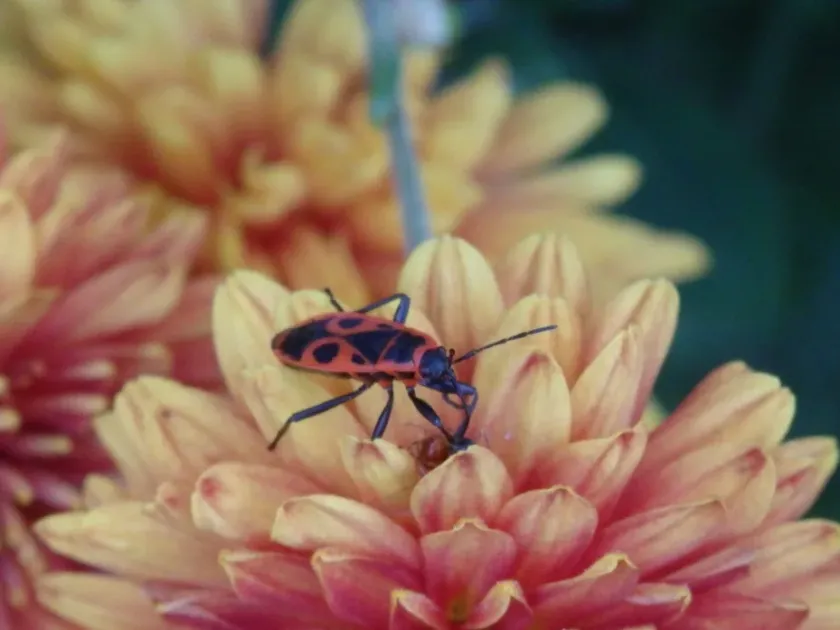
The firebug (Lygaeus saxatilis), also known as the red-and-black bug, belongs to the family Lygaeidae. It is characterized by a striking pattern on its hemelytra, featuring vibrant red spots against a black background, which serves as a warning coloration.
Adult insects reach a body length of 10-12 millimeters. The head, scutellum, and legs are primarily black. This species is often distinguished from the common Pyrrhocoris apterus by the specific layout of its patterns and the structure of its antennae.
Nymphs undergo several molting stages, gradually developing the bold coloration that defines the adult stage. During these stages, they are frequently found in groups, making them easy to observe on foliage and stems.
The species overwinters as an adult, seeking refuge in dry leaf litter, cracks in tree bark, or sheltered areas near soil surfaces. As temperatures rise in spring, they resume their activity and mating cycles.
Firebugs prefer sunny, dry environments. They are often seen basking on walls, stumps, and the stems of plants, where they feed in small to large aggregations.
What it damages
Firebugs are sap-sucking insects that utilize their rostrum to pierce plant tissues. They primarily feed on the seeds, stems, and fruits of various plants, extracting nutrients and disrupting the internal circulation of the plant.
The pest often infests plants within the Asteraceae and Apiaceae families. In agricultural and horticultural settings, they can cause damage to ornamental plants, vegetables, and medicinal herbs by weakening the overall plant structure.
The introduction of digestive enzymes into the plant tissue during feeding causes localized necrosis, which leads to spots, wilting, and deformation of the affected leaves or stems.
When present in high populations, firebugs significantly reduce the yield and quality of seeds. For ornamental growers, the cosmetic damage to flowers and fruits is a major concern, as it ruins the aesthetic value of the crop.
Persistent feeding can lead to stunted growth and reduced vigor in plants, making them more susceptible to secondary stressors, including drought or opportunistic fungal infections.
When it appears
Active life for the firebug begins in the second half of spring. As soon as the soil and ambient air temperatures provide enough warmth, the bugs emerge from their overwintering sites to forage and reproduce.
The population density peaks during June and July, coinciding with the maturation of the nymphs. During this time, they are most conspicuous, often clustering on the lower parts of plants or on sunny surfaces near host plants.
As summer draws to a close and days become shorter, the adult population begins to decline in activity. By early autumn, they actively search for sheltered hibernation spots to survive the upcoming winter months.
Environmental conditions play a critical role in their lifecycle. A mild winter followed by a warm, dry spring typically results in a higher survival rate and a larger population for the subsequent summer months.
Gardeners and farmers should monitor their crops regularly from mid-spring through summer to identify early colonization and prevent mass outbreaks of the pest.
Signs of infestation
The most immediate sign of an infestation is the appearance of small, pale or necrotic spots on leaves and fruits where the bugs have pierced the surface to feed. These spots may enlarge if feeding persists.
Visual confirmation of the insects is straightforward due to their distinct red-and-black pattern. They are rarely elusive and usually congregate on the stems or flowers, making them visible even at low densities.
Visible deformation or curling of leaves and shoots indicates significant physiological stress caused by the insects. This often happens after prolonged feeding periods on the same plant or cluster.
The presence of fine, dark excrement droplets on plant surfaces is a sign of an active colony. This residue can attract other opportunistic pests or facilitate the growth of soot mold, further degrading plant health.
Premature fruit drop or the failure of flowers to fully open are common indirect consequences of firebugs damaging the delicate peduncles and stalks, effectively starving the bloom of vital nutrients.
Control measures
The most effective cultural practice for firebug management is the systematic removal of garden debris, such as leaf litter and dead wood, which serves as essential overwintering habitat for the bugs.
Manual collection is a viable option for small gardens. Because these insects tend to aggregate, they can be easily knocked into a container with soapy water, which provides immediate control without chemicals.
Maintaining a weed-free area around crops is vital, as wild host plants often act as a breeding reservoir for the bugs. Eliminating these nearby sources prevents the insects from migrating to your primary crops.
In cases of severe infestation, contact insecticides can be employed. Always select products labeled for use on your specific crops and adhere strictly to the recommended application rates and harvest waiting periods.
Biological control agents, such as specialized predatory insects or botanically derived pesticides like neem oil, offer safer alternatives for managing firebug populations while minimizing impact on beneficial pollinators.
Discussion
No discussions yet — be the first.