
Latrodectus schuchi
Latrodectus schuchi
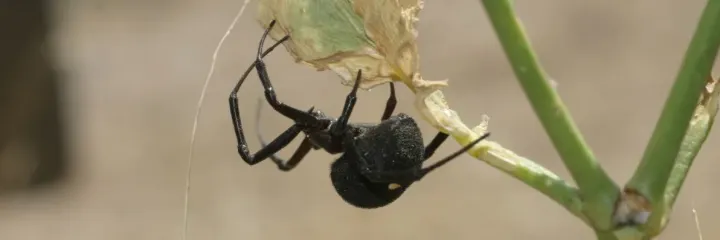
Description
How to identify
Latrodectus schuchi is a species of the Theridiidae family, known for its distinct venomous nature. It is widely distributed in arid and semi-arid agricultural environments.
The female spiders are identifiable by their black body, sometimes marked with specific patterns. Males are significantly smaller and pose less of a risk due to their smaller size and mouthparts.
These spiders are elusive, typically building their webs in low-lying crevices, cracks in the soil, or protected areas under agricultural debris and dry vegetation.
Their life cycle involves the production of egg sacs, which the female guards within her web. Young spiders disperse via silk strands, a process facilitated by wind currents.
Correct identification is vital for field management to ensure the safety of agricultural workers who may encounter these spiders during standard farming operations.
What it damages
Latrodectus schuchi is not a plant-feeding pest and does not cause direct damage to agricultural crop tissues, such as stems, leaves, or fruit.
The damage they cause is primarily related to human safety, as their presence on farms poses a significant risk to field crews involved in harvesting or maintenance.
Bites from this species are painful and potentially hazardous, causing work interruptions, medical costs, and reduced productivity due to safety protocols requiring work to be stopped.
The presence of webs and nesting sites can also hinder the maintenance of irrigation systems and machinery, leading to indirect operational complications.
In essence, the threat posed by this species is socio-economic, directly impacting the well-being and efficiency of agricultural labor forces.
When it appears
Spider activity is closely linked to the temperature, with the highest levels of mobility observed during the peak summer months, typically June through August.
Spring marks the emergence of spiderlings from overwintered egg sacs, initiating a period of growth and establishment of new webbing within the fields.
Late summer represents the breeding season, during which female spiders become particularly territorial and active in defending their nests, increasing the chance of human-spider contact.
As temperatures decline in autumn, spiders seek shelter for overwintering, significantly reducing their presence in open field areas.
Agricultural managers should monitor seasonal patterns to plan field operations effectively, minimizing the risk of exposure during the most active months.
Signs of infestation
The primary sign of a spider presence is the observation of characteristic, messy-looking webs stretched at ground level or across small crevices.
Evidence of predatory activity, such as the dried remains of insects caught in the web, is a strong indicator of an active nest nearby.
These spiders favor areas that provide cover, such as piles of wood, stone borders, or abandoned agricultural equipment where they can remain undisturbed.
- Messy, irregular silk webs found near soil cracks or underneath debris.
- Presence of yellowish or off-white egg sacs attached to hidden surfaces.
- Accumulations of insect carapaces located at the base of the spider's web.
When inspecting fields, workers should be wary of any dense, dry ground cover, as this environment provides the perfect conditions for nesting.
Control measures
The most effective strategy is the maintenance of field hygiene, which involves clearing away crop debris and eliminating piles of wood or trash that provide habitats.
Deep tillage after the harvest season is a key agronomic practice that destroys nests and crushes egg sacs, drastically reducing the population density for the next year.
Application of insecticides around the perimeter of the property can serve as a temporary barrier to limit spider movement into active work areas.
Ensuring that all field workers are provided with appropriate personal protective equipment, such as gloves and sturdy boots, is essential for safety.
When nests are discovered, they should be cleared using appropriate tools, and workers should always be trained to recognize and avoid contact with these spiders.
Discussion
No discussions yet — be the first.