
California lady beetle
Hippodamia californica
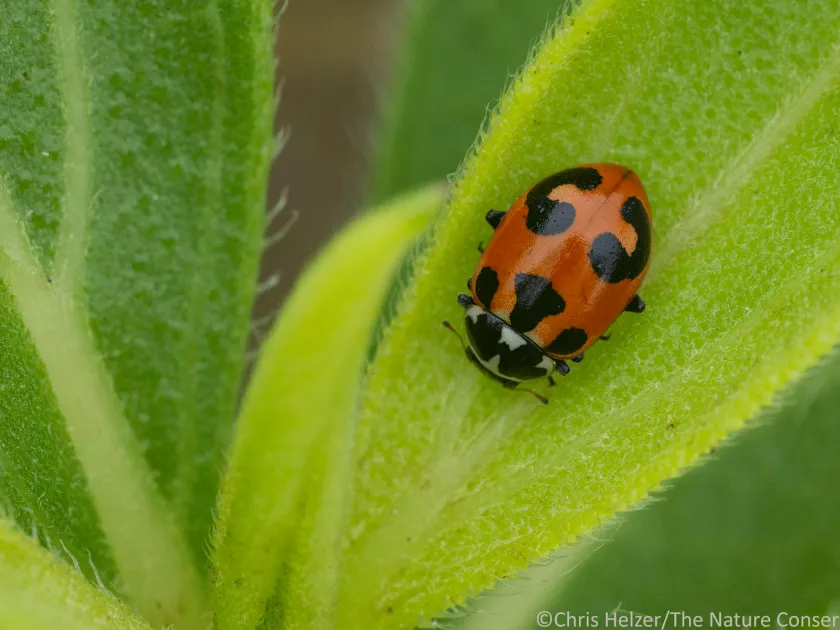
Description
How to identify
The California lady beetle (Hippodamia californica) is a member of the order Coleoptera and the family Coccinellidae. While many members of this family are beneficial predators, this specific species can exhibit phytophagous behavior, causing damage to agricultural crops in certain environments.
The adult beetle is small and oval-shaped. Its elytra color ranges from orange to reddish with characteristic black spots, although the number and pattern of these spots can vary significantly between individuals within the population.
The life cycle encompasses four developmental stages: egg, larva, pupa, and adult. This complete metamorphosis allows the insect to adapt efficiently to the changing environmental conditions during the growing season.
The larvae are active and possess an elongated body with a distinct dark pattern. During this stage, they are particularly voracious, making them the most significant threat to young plant growth and tender leaves.
The pupae are typically attached to the undersides of leaves or stems. This stage of development is crucial for the beetle, as it undergoes its final transformation while protected by its coloration and choice of location.
What it damages
The primary damage caused by Hippodamia californica involves the consumption of leaf tissues and succulent shoots. When natural prey is scarce, these beetles may shift their feeding habits to consume parts of the host plant.
Commonly affected crops include potatoes, tomatoes, cucumbers, and legumes. Feeding results in reduced leaf surface area, which impairs photosynthesis and hinders the plant's overall development and vigor.
Damage to apical growth points is particularly concerning, as it can cause stunted growth, stem deformation, and significant delays in the plant's physiological maturation process.
In professional agronomy, this species is considered a secondary pest. However, massive infestations can lead to substantial reductions in crop marketability and overall yield quality.
Wounds left by the feeding insects create entry points for secondary pathogens, including bacteria and fungi, which can exacerbate the damage and lead to plant disease outbreaks.
When it appears
The activity of Hippodamia californica is highly dependent on ambient temperatures. Emergence from overwintering sites occurs as soon as consistent spring warmth arrives.
The peak period for egg-laying occurs from late spring through early summer. This timeframe is critical for the development of the first generation of larvae on emerging vegetable crops.
The summer months see the highest intensity of adult feeding behavior. This is when agronomists typically observe the most significant foliar damage across various cultivated vegetable fields.
As the season progresses toward autumn, the population density often decreases due to environmental stress and the transition of adults toward overwintering habitats.
Overwintering occurs in sheltered areas such as plant debris, leaf litter, or crevices in the soil, where the insects remain in a state of diapause until the following spring.
Signs of infestation
An initial sign of an infestation is the presence of uneven, jagged holes along the edges of leaves. Unlike caterpillars, the feeding patterns of these beetles are often localized.
Clutches of eggs on the undersides of leaves serve as a key diagnostic marker. These eggs are usually deposited in small, tight clusters and are bright orange or yellow in color.
The presence of larvae on tender shoots is a reliable indicator of active infestation. Larvae often gather in groups to feed on the most succulent parts of the plant's growth points.
Yellowing or chlorosis of the plant tips indicates that the beetle has damaged the plant's vascular tissues, significantly weakening the plant and restricting nutrient flow.
Visible traces of frass or dried tissue exudate on the leaves act as a secondary indicator that the beetles have been feeding on the plant, often leading to potential fungal growth.
Control measures
Standard agronomic practices such as weed management are essential, as weeds often provide alternative hosts and overwintering sites for the beetles. Deep tillage after harvest helps disrupt these habitats.
Biological control focuses on conserving natural enemies, such as parasitic wasps and predatory bugs, which effectively suppress beetle populations. Reducing broad-spectrum insecticide use is key to this approach.
Chemical control should only be implemented when the economic threshold is exceeded. Targeted, low-toxicity insecticides should be applied according to label instructions to minimize environmental impact.
Implementing crop rotation is highly effective in preventing the buildup of beetle populations. Choosing vigorous, pest-resistant plant varieties can further minimize damage from seasonal infestations.
Monitoring the field using sticky traps allows for early detection of the beetles, enabling precise and localized treatments that save time and reduce the need for widespread pesticide application.
Discussion
No discussions yet — be the first.