
Alder leafhopper
Erythroneura alneti
Description
How to identify
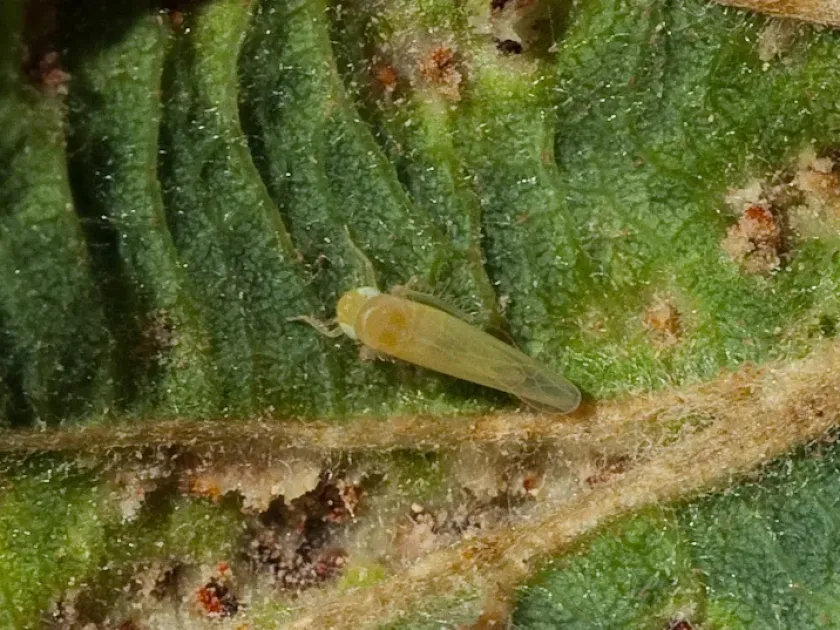
The alder leafhopper (Erythroneura alneti) is a small insect belonging to the order Hemiptera and the family Cicadellidae. Adults typically measure 3 to 4 mm in length and possess a slender, wedge-shaped body.
Their coloration is generally pale yellow or greenish, often featuring translucent wings with a slight pearlescent sheen. They are highly mobile insects, characterized by their ability to jump quickly when disturbed.
Nymphs resemble smaller versions of adults but lack fully developed wings. They tend to reside primarily on the underside of leaves, maintaining a cryptic existence throughout their development stages.
The life cycle involves several nymphal instars. Fertilized females lay eggs directly into the plant tissue, such as leaf veins or young shoots, ensuring the safety of the offspring during early growth.
Overwintering occurs primarily at the egg stage. These eggs are embedded within the bark or leaf stems, making them resistant to harsh winter conditions and difficult to spot during routine inspections.
What it damages
As the name suggests, the alder leafhopper primarily feeds on alders (Alnus species). However, in dense planting environments, they can also infest birches and hazel trees.
Trees subjected to environmental stress, particularly those growing in dry conditions or locations with poor air circulation, are significantly more susceptible to heavy infestation.
The insects feed by inserting their piercing-sucking mouthparts into the leaf epidermis to extract cell sap. This continuous extraction causes localized tissue damage and disrupts the plant's nutrient transport.
Heavy feeding pressure results in reduced vigor and slowed growth rates, as the tree must divert resources away from structural development to compensate for the lost sap.
Prolonged or severe infestations can lead to a decline in the tree's health, making it more vulnerable to secondary infections or environmental stressors throughout the growing season.
When it appears
The first generation of nymphs emerges in the spring, synchronized with the budding and leaf expansion of host trees, providing immediate access to essential nutrients.
Depending on regional climatic conditions, the alder leafhopper can complete one or two generations per year, which significantly impacts the intensity of the damage observed.
Adult activity peaks during the mid-summer months, during which time they disperse across the canopy to feed and deposit eggs for the subsequent generation.
As autumn approaches and temperatures begin to drop, the adult activity tapers off. Females then focus on finding suitable sites to lay their overwintering eggs.
Monitoring the population density during late summer is essential to determine the likelihood of infestation levels in the following spring season.
Signs of infestation
The primary symptom of infestation is the appearance of distinct, minute white or pale yellow spots on the upper leaf surface, often referred to as stippling.
Inspecting the underside of the leaves reveals the presence of nymphs, cast skins (exuviae) left behind after molting, and sticky excrement known as honeydew.
The honeydew provides an ideal substrate for sooty mold growth, which coats the leaves in a black fungal layer, severely impeding the plant's ability to photosynthesize.
In cases of severe infestation, leaves may yellow prematurely and drop, resulting in a sparse canopy and an unhealthy appearance for the affected trees.
This leaf damage is often misidentified as early autumn dormancy, but the presence of insect remains and honeydew confirms the activity of the alder leafhopper.
Control measures
Cultural management starts with the removal and destruction of fallen leaves, which significantly reduces the number of overwintering sites for the next generation.
Encouraging biological control by protecting natural predators such as lady beetles, lacewings, and parasitic wasps can help maintain population levels below harmful thresholds.
Chemical control should be reserved for high-infestation scenarios, utilizing systemic insecticides that are applied when the nymphs are at their most vulnerable early stages.
Proper irrigation and fertilization help improve tree health and resilience, making them less attractive and better equipped to withstand leafhopper feeding.
- Regular inspection of canopy foliage for stippling patterns.
- Use of yellow sticky cards to track adult flight activity.
- Ensuring adequate tree spacing to promote air flow and decrease humidity.
Discussion
No discussions yet — be the first.