
Cyrtopeltis
Cyrtopeltis novicus
Description
How to identify
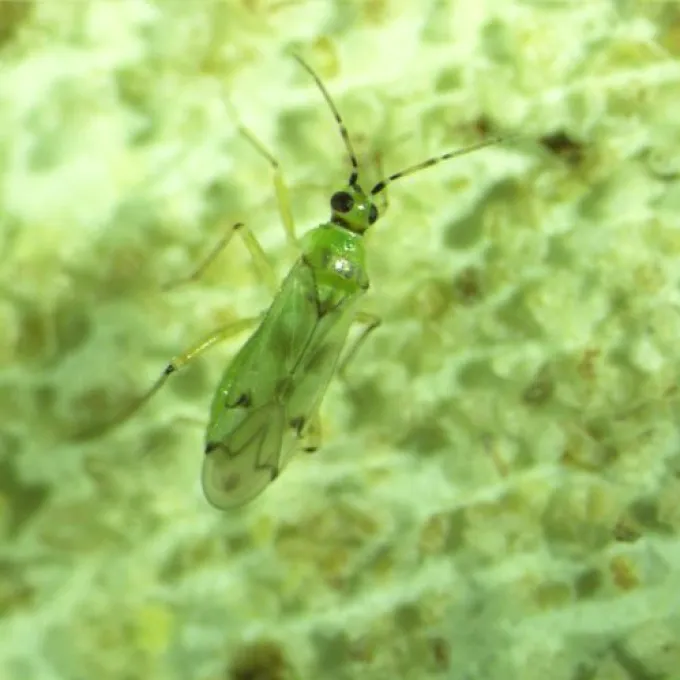
Cyrtopeltis (Cyrtopeltis novicus) is a tiny but highly destructive insect belonging to the Miridae family, commonly known as plant bugs. The adult bug is elongated, measuring roughly 3-4 mm in length, and possesses a slender body, long legs, and long antennae that facilitate its movement across plant surfaces.
The insect is predominantly light green or yellowish-green, which allows it to camouflage effectively against the foliage of host plants. This cryptic coloration often makes it difficult to detect during the early stages of infestation, leading to delayed interventions.
The nymphs closely resemble the adults but lack wings and are generally smaller. They are highly active and can move rapidly when disturbed, often jumping or hiding within the crevices of the plant structure to escape detection.
This species thrives in high humidity and warm temperatures, making greenhouses and similar protected growing environments ideal for their population growth. They can complete multiple generations in a single season if conditions remain favorable.
The insects are primarily nocturnal or crepuscular, though they may remain active during the day in shaded areas. Their high mobility makes them difficult to track without specific monitoring tools like yellow sticky traps.
What it damages
Cyrtopeltis is a specialized pest that primarily attacks Solanaceous crops, including tomatoes, peppers, and eggplants. They feed by piercing the plant tissue with their specialized mouthparts to extract sap, which causes systemic stress to the host.
Damage to the leaves manifests as chlorotic spots, which eventually coalesce into larger necrotic areas. This process reduces the plant's photosynthetic capacity, leading to weaker growth and reduced vigor over the entire crop cycle.
The most significant impact occurs when the bugs feed on developing flowers and small fruits. This often leads to flower abortion, fruit malformation, and scarring, which severely degrades the market value of the produce.
As the bugs feed, they inject saliva into the plant, which may contain enzymes that cause tissue localized death and cellular disruption. This damage can also act as an entry point for various secondary pathogens, including bacteria and fungi.
In cases of heavy infestation, the entire plant may show signs of wilting or stunted development. Such damage is particularly devastating in high-value vegetable production where yield quality is paramount for commercial success.
Signs of infestation
Early symptoms of Cyrtopeltis infestation include the presence of numerous small, white, or pale-green dots on the leaf surface. These are the direct results of sap-sucking activity by both nymphs and adults.
Careful observation of the underside of leaves usually reveals small, black, pin-prick-sized dots, which are the excrement of the insects. The presence of these marks is a reliable diagnostic feature of an active colony.
Deformed growth of terminal buds and leaf curling are common signs of physiological stress caused by the pest. Additionally, farmers may notice that buds are dropping prematurely, which is a classic, though often misdiagnosed, symptom of heavy bug pressure.
The insects themselves can be found by shaking the foliage over a white tray or simply by inspecting the plant's axils with a magnifying glass. Their movement is usually quick and erratic, setting them apart from less active pests.
Sticky traps placed near the upper canopy of the plants are effective for monitoring the arrival and population density of these bugs. Detecting them early is essential to prevent large-scale crop losses.
Control measures
Integrated Pest Management (IPM) is the most effective approach for managing Cyrtopeltis. This includes strict sanitation practices, such as removing weeds and old crop debris, which serve as alternate hosts and refuges for the bugs.
Biological control agents, particularly predatory mirid bugs or other generalist predators, can be released in greenhouses to keep population levels below the economic threshold. These natural enemies provide sustainable long-term control.
Chemical control should only be used as a last resort and must be carefully selected to minimize impacts on beneficial organisms. Systemic insecticides can be effective, but applications should be rotated to prevent the development of resistance.
Regular scouting and threshold-based decisions are vital for effective control. Farmers should monitor the population density and apply treatments only when necessary, focusing on the most infested areas of the facility.
- Deployment of yellow sticky traps for monitoring.
- Elimination of Solanaceous weeds around the greenhouse.
- Use of compatible biological control agents.
- Timely removal and disposal of heavily infested plant materials.
Discussion
No discussions yet — be the first.