
Rastrococcus mealybug
Rastrococcus rubellus
Description
How to identify
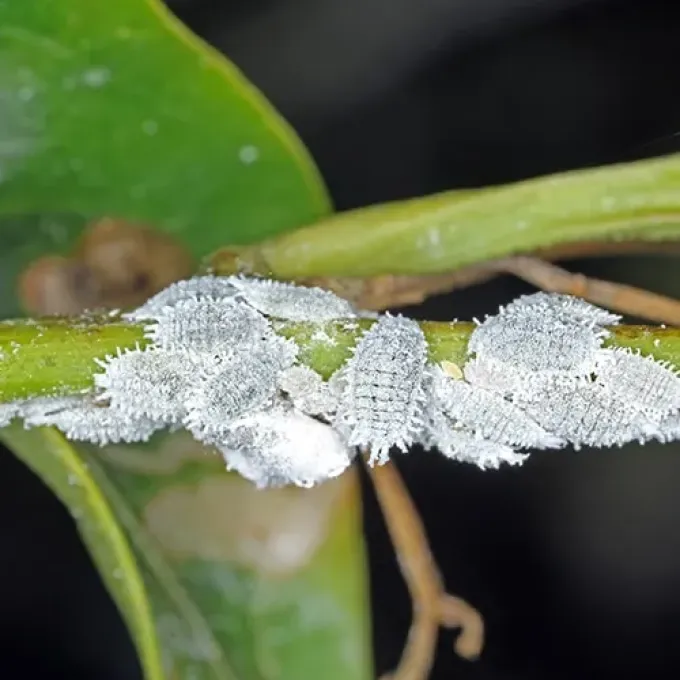
The mealybug Rastrococcus rubellus belongs to the Pseudococcidae family within the order Hemiptera. These are small, sap-sucking insects covered in a white or pinkish waxy secretion that acts as a robust shield against external environment factors and moisture.
Adult females are generally sessile, possessing an oval body structure often characterized by lateral filaments. Males, by contrast, are winged and active, though they have a short lifespan dedicated solely to locating and mating with females.
The nymphs, known as crawlers, are the most mobile stage of the life cycle. They are responsible for the dispersal of the pest across the plant or to neighboring hosts, often assisted by wind or contact with other insects.
Identification is primarily based on the presence of waxy filaments and cotton-like secretions surrounding the colonies. These formations are unique diagnostic markers that distinguish this species from other common mealybugs.
Due to their preference for secluded environments, these insects are most commonly found in the axils of leaves, along the veins on the underside of foliage, and in the crevices of bark or fruit stems.
What it damages
This pest is a notable polyphage, capable of causing significant damage to a wide range of tropical and subtropical plants, including citrus, mango, and various ornamental species in greenhouse and field settings.
The primary damage is caused by the extraction of phloem sap from plant tissues. This constant feeding drains the host plant of essential nutrients, leading to chlorosis, leaf curling, stunted growth, and premature drop of fruit and flowers.
A secondary issue is the secretion of honeydew, a sugary byproduct of the insect's feeding. This honeydew serves as a substrate for the development of sooty mold, which creates a dark film on the leaf surface, inhibiting photosynthesis.
Severe infestations can lead to dieback of young shoots and branches. Over time, the host plant becomes severely weakened, making it highly susceptible to secondary pathogens and other environmental stressors.
In high-density populations, the accumulation of wax and sooty mold significantly reduces the market value of horticultural crops, making them unsuitable for harvest or sale.
Signs of infestation
The earliest symptom is the appearance of white, cotton-like fluffy masses on stems and leaves. These are the protective ovisacs where eggs are deposited, signaling an active reproductive colony.
Leaves will begin to turn yellow and display signs of stress, such as wilting or drooping. A sticky film on the foliage is a telltale sign of honeydew accumulation, which often attracts ants that protect the mealybugs.
The onset of sooty mold, appearing as a thick black layer on the leaves, indicates a well-established infestation that has been present on the plant for a significant period.
Noticeable reduction in the emergence of new growth and widespread bud abscission are strong indicators that the plant is struggling to survive the intense sap-sucking pressure.
Close inspection reveals the insects themselves: sedentary females attached firmly to the plant structure, surrounded by their offspring, the minute and highly active crawlers moving across the surface of the plant.
Control measures
Effective management of Rastrococcus rubellus requires an integrated approach. Early detection followed by immediate intervention is critical to preventing large-scale crop loss.
Cultural control practices include the pruning and proper disposal of infested plant material. Maintaining optimal plant health through balanced fertilization and appropriate irrigation helps plants withstand stress.
Biological control methods involve the introduction or conservation of natural enemies, such as predatory beetles (coccinellids) and parasitic wasps, which are known to reduce mealybug populations naturally.
Chemical control may be necessary in severe cases, involving the use of systemic insecticides. These agents are absorbed by the plant and ingested by the insects, overcoming the protection provided by their waxy coat.
The addition of horticultural surfactants to spray solutions is highly recommended. These adjuvants help break through the waxy, water-repellent layer of the pest, significantly improving the efficacy of the insecticide application.
Taxonomy
- Latin name
- Rastrococcus rubellus
- Order
- Hemiptera (bugs, aphids, leafhoppers)
- Family
- Pseudococcidae
- EPPO code
- RASTRU
Discussion
No discussions yet — be the first.