
Rastrococcus
Rastrococcus
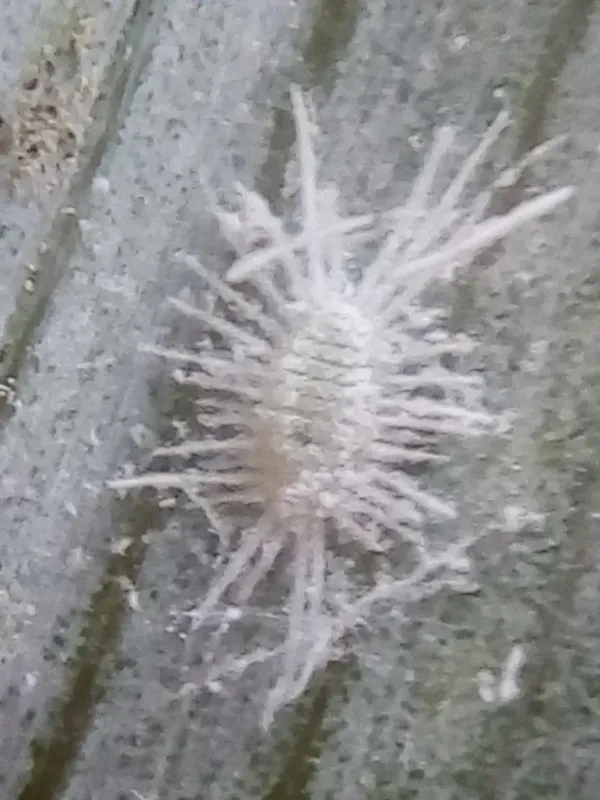
Description
How to identify
Rastrococcus is a genus of mealybugs (family Pseudococcidae) known for being serious agricultural pests. These insects are characterized by a waxy, white, or mealy secretion that covers their bodies, providing protection against environmental stress.
They belong to the order Hemiptera. Many species within this genus possess long, conspicuous wax filaments extending from the margins of their bodies, which are a key diagnostic feature for field identification.
Their life cycle consists of eggs, nymphal stages, and adults. Reproduction is often parthenogenetic, allowing for rapid population growth even in the absence of males within a colony.
The first instar nymphs, commonly referred to as "crawlers," are the primary stage responsible for dispersal, moving to new parts of the host plant or being carried by wind to nearby vegetation.
Due to their small size and the similarity between related species, precise identification often requires microscopic examination of the adult female's morphological structures.
What it damages
Rastrococcus species are highly polyphagous, attacking a vast array of economically important crops including mango, citrus, coffee, bananas, and various ornamental plants.
The pests feed by inserting their stylets into plant tissues to extract phloem sap, which causes severe physiological stress, stunted growth, and loss of vigor in the host plant.
A major indirect impact of their feeding is the excretion of large amounts of honeydew. This substance serves as a substrate for sooty mold, which coats the leaves and severely restricts photosynthesis.
Heavy infestations lead to leaf yellowing, chlorosis, and premature defoliation. In fruit-bearing trees, the damage directly affects fruit quality, causing deformity and reducing market value.
If left unmanaged, the infestation can lead to the death of young plants or significant canopy dieback in mature trees, causing substantial economic losses for farmers.
When it appears
The seasonal activity of Rastrococcus is heavily influenced by temperature and humidity levels. In tropical regions, these pests can reproduce continuously throughout the entire year.
Population spikes typically occur during warm, humid periods when plant growth is vigorous, providing an abundance of young shoots and leaves for the insects to colonize.
The developmental rate is temperature-dependent; higher temperatures within the optimal range significantly shorten the generation time, leading to rapid population explosions.
Wind and rainfall act as key dispersal mechanisms for the mobile crawler stages, allowing the infestation to spread rapidly across orchards and nurseries.
Natural enemies, including various parasitoid wasps and ladybird beetles, play a significant role in regulating population dynamics throughout the growing season.
Signs of infestation
The most visible sign of infestation is the presence of white, cotton-like masses of wax on the undersides of leaves, along the veins, and in the crotches of branches.
Leaves often become sticky due to the honeydew secretion, and the subsequent growth of black sooty mold creates a dirty, darkened appearance on the foliage and stems.
Yellowing, curling, and premature dropping of leaves are common physiological indicators that the plant is under severe sap-sucking pressure.
The presence of ants is a strong indicator of a mealybug infestation, as ants are often observed tending the colonies to feed on the sweet honeydew produced by the pests.
Close inspection of the plant architecture often reveals dense colonies hidden under bark crevices, near fruit bases, or at the junction of leaves and twigs.
Control measures
Management strategies require an Integrated Pest Management (IPM) approach to minimize chemical use and encourage natural biological regulation.
- Pruning and removing infested branches to reduce the initial population load.
- Using systemic insecticides that are effective against sap-sucking insects, especially during the crawler stage.
- Releasing specific biological control agents, such as parasitoid wasps, to suppress mealybug numbers.
- Washing the canopy with high-pressure water to remove honeydew and physical debris.
- Implementing strict quarantine protocols to prevent the movement of infested plant material.
Chemical control must be timed carefully; targeting the crawler stage is crucial because the waxy coating of adult females and ovisacs makes them highly resistant to most contact pesticides.
Long-term success depends on maintaining healthy soil and tree nutrition, which increases the host plant's tolerance and resilience against pest feeding damage.
Taxonomy
- Latin name
- Rastrococcus
- Order
- Hemiptera (bugs, aphids, leafhoppers)
- Family
- Pseudococcidae
- EPPO code
- RASTSP
Discussion
No discussions yet — be the first.