
Cypress mealybug
Puto cupressi
Description
How to identify
The cypress mealybug (Puto cupressi) is a destructive pest belonging to the family Pseudococcidae, order Hemiptera.
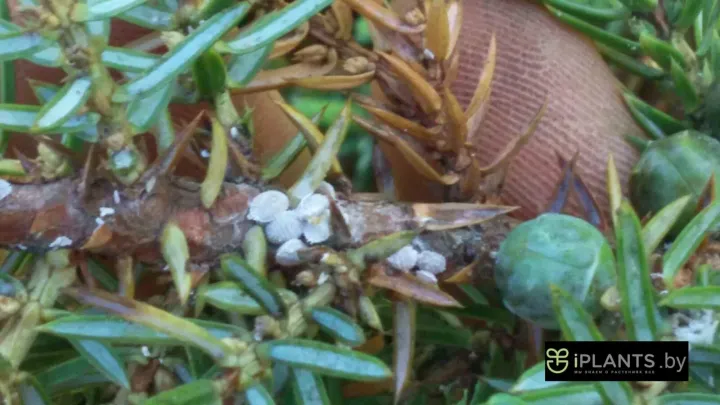
Adult females are recognized by their oval-shaped bodies covered in a white, waxy substance that resembles mealy powder or cotton wool.
These insects tend to aggregate in protected areas of the tree, such as needle bases, twig crotches, and rough bark crevices.
The winged males are rarely seen, as their primary function is to locate and fertilize the sedentary females within the colony.
Nymphs, specifically in the crawler stage, are tiny and mobile, allowing them to spread across the plant or even migrate to neighboring trees.
What it damages
This pest specifically targets members of the Cupressaceae family, causing significant damage to cypresses, junipers, and arborvitae.
By piercing and sucking the plant sap, the mealybug depletes the energy reserves of the tree, leading to stunted growth and general decline.
Feeding often results in yellowing needles, premature needle drop, and in severe cases, the dieback of entire branch sections.
The honeydew excreted by the bugs serves as a substrate for sooty mold, which blocks sunlight and hinders the photosynthesis process.
Economic damage is particularly high in nurseries and landscape settings, where tree aesthetics are the primary value.
When it appears
The life cycle of the cypress mealybug is driven by temperature, with peak activity occurring during the warmer months of spring and summer.
Overwintering typically happens in the nymphal stage or as fertilized females tucked away in bark crevices.
As spring temperatures rise, the insects become active and relocate to succulent, young growth to initiate feeding and reproduction.
Multiple generations can occur per season in favorable climates, which leads to exponential population growth if left unmonitored.
During autumn, the insect populations seek out sheltered spots within the tree canopy to prepare for the dormant winter period.
Signs of infestation
White, fluffy cotton-like patches found in the foliage axils are the most definitive visual sign of a mealybug infestation.
A shiny, sticky residue known as honeydew on the needles often indicates that a large colony is present on the tree.
The development of black sooty mold on the foliage and branches is a strong indicator of an established mealybug colony.
Yellowing, thinning, or flagging branches indicate that the plant is struggling due to sap loss caused by the pests.
If the tree appears generally unthrifty and dusty, a close inspection of the branch junctions is required to confirm the presence of the mealybugs.
Control measures
Good horticultural practices, such as proper irrigation and tree spacing, are essential to maintain vigor and reduce infestation risk.
For minor infestations, the physical removal of the pests using a soapy water spray or a soft brush can be very effective.
Systemic insecticides are generally recommended for larger trees, as they are absorbed into the plant sap to reach the hidden pests.
Control timing should focus on the crawler stage, as they lack the thick waxy layer that protects the adults from chemical contact.
- Regular monitoring of the canopy and bark.
- Application of horticultural oils to suffocate the insects.
- Encouraging natural predators such as lady beetles.
Taxonomy
- Latin name
- Puto cupressi
- Order
- Hemiptera (bugs, aphids, leafhoppers)
- Family
- Pseudococcidae
- EPPO code
- PUTOCU
Discussion
No discussions yet — be the first.