
Puto
Puto
Description
How to identify
The genus Puto is a group of sap-sucking insects belonging to the family Putoidae, formerly associated with the mealybug family (Pseudococcidae).
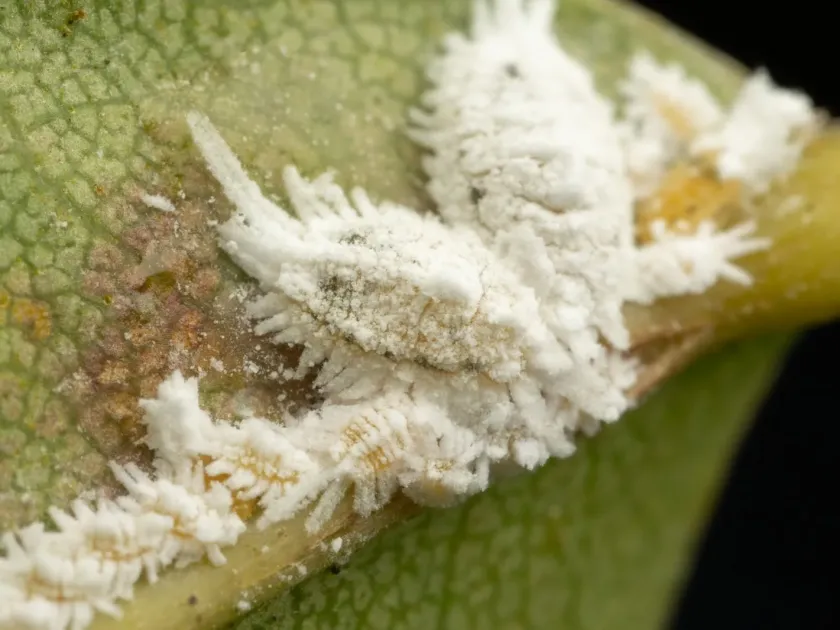
Adult females are typically oval-shaped and covered with a white, powdery, or cottony wax secretion. A distinguishing feature of this genus is the presence of numerous long, glassy wax filaments around the body margin.
Unlike many other scale insects, male Puto are winged and capable of flight. They do not possess mouthparts and have a very short lifespan, focused entirely on mating.
Identification of specific species within the genus requires microscopic analysis of the dorsal and ventral cuticle, specifically focusing on the arrangement of pores, ducts, and setae.
The first instar larvae, often referred to as "crawlers," are the primary dispersal stage of the pest, capable of migrating across the host plant or being dispersed by wind currents.
What it damages
Species of Puto are known as polyphagous pests, capable of attacking a wide variety of woody plants, shrubs, and even some herbaceous crops.
They are particularly problematic for coniferous trees, including spruce and fir, where their feeding activities weaken the host and cause needle drop.
By constantly extracting plant sap, these insects cause significant physiological stress, leading to stunted growth, leaf deformation, and bud necrosis.
In nurseries and commercial forest plantations, heavy infestations can cause severe aesthetic damage and physical loss, resulting in significant financial impacts.
Furthermore, the persistent feeding makes plants more susceptible to secondary infections by various pathogens and environmental stress factors.
When it appears
The lifecycle and seasonal activity of Puto depend heavily on local climate, with many species showing high activity levels during the cooler months of spring and autumn.
Overwintering typically occurs as first or second instar larvae, often tucked away in bark crevices, bud scales, or protected areas of the foliage.
As temperatures rise in the spring, the larvae emerge from their overwintering sites, move to suitable feeding positions, and begin rapid development.
Depending on the specific species and environmental conditions, there may be one or more generations produced throughout the growing season.
The movement of crawlers is most intense during the early stages of plant growth, coinciding with the availability of succulent, nutrient-rich tissues.
Signs of infestation
The most obvious symptom of a Puto infestation is the presence of white, woolly, or waxy masses on stems, branches, and within the foliage of the host plant.
Heavily infested plants often exhibit yellowing of the needles or leaves, followed by wilting and premature abscission of the foliage.
The accumulation of honeydew, a sugary byproduct of the pest, frequently leads to the growth of sooty mold, appearing as a black, dusty coating on the plant surface.
Coniferous hosts may show localized resinosis, where the tree produces excess sap as a defensive response to the persistent feeding of the insect colonies.
Careful observation will reveal the presence of adult insects or their molted skins, particularly in secluded spots like needle bases or bark cracks.
Control measures
Management of Puto populations often requires the use of systemic insecticides that are absorbed by the plant and ingested by the insects during feeding.
Timing is critical; applications are most effective when directed at the crawler stage, as the waxy covering of adult females provides significant protection against contact pesticides.
Good agricultural practices, such as removing infested plant parts and ensuring proper plant spacing, help minimize the spread and severity of infestations.
Biological control agents, including lady beetles (Coccinellidae) and various species of parasitoid wasps, can be highly effective in reducing pest density in a sustainable manner.
- Use of horticultural oils to disrupt the waxy layer and cause desiccation
- Regular monitoring and inspection of new nursery stock for early detection
- Implementing quarantine measures for infested material to prevent movement
Taxonomy
- Latin name
- Puto
- Order
- Hemiptera (bugs, aphids, leafhoppers)
- Family
- Pseudococcidae
- EPPO code
- PUTOSP
Discussion
No discussions yet — be the first.