
Obscure mealybug
Pseudococcus viburni
Description
How to identify
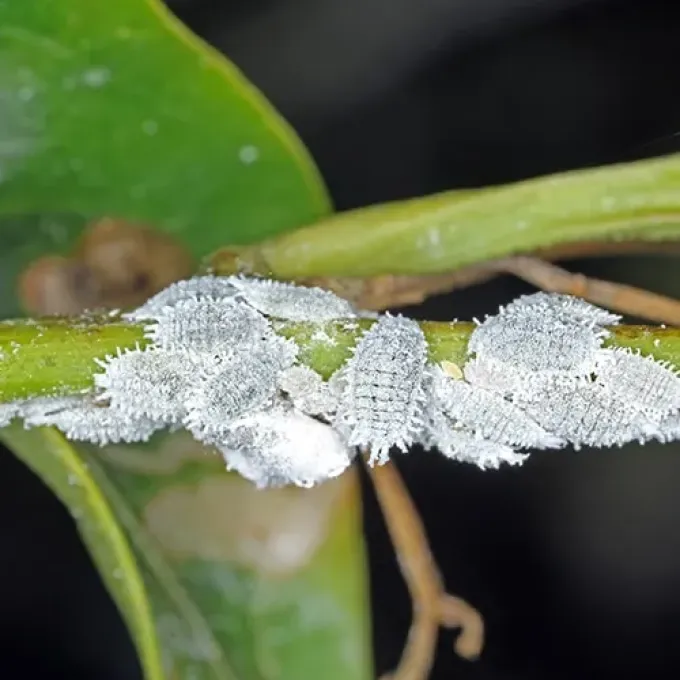
The Obscure mealybug (Pseudococcus viburni) is a member of the Pseudococcidae family, belonging to the order Hemiptera. Adult females are oval-shaped, 3 to 5 mm long, and covered with a characteristic white waxy secretion.
The edges of the female's body are lined with short waxy filaments, with the posterior pair being noticeably longer. Males are winged and smaller, but they do not feed and their lifespan is very short.
First-instar nymphs, often called "crawlers," are highly mobile and yellowish. As they grow and molt, they secrete more wax, which provides them with a protective covering against environmental stressors.
Females deposit their eggs into soft, cotton-like masses known as ovisacs. These masses are usually found in protected areas and contain numerous eggs, keeping them safe from predators and chemical sprays.
Correct identification is essential because this pest hides in crevices, leaf axils, and under loose bark. The white, fluffy appearance is the most common diagnostic feature for gardeners.
What it damages
This mealybug is a polyphagous pest, meaning it attacks a wide variety of plants, including citrus, grapes, ornamental flowers, succulents, and various greenhouse crops.
By inserting their mouthparts into the plant tissue, they suck out essential sap. This feeding process causes leaves to yellow, growth to stunt, and general plant vitality to decline significantly.
The excretion of honeydew is a major issue, as it promotes the growth of sooty mold. This black fungus covers the leaf surface, effectively blocking sunlight and reducing the plant's ability to perform photosynthesis.
Severe infestations often result in the premature dropping of flower buds and young fruit, leading to significant yield loss in agricultural and horticultural settings.
Over time, the cumulative effect of tissue damage and secondary infections can lead to the death of small or stressed plants if management practices are not implemented promptly.
When it appears
In indoor environments like homes or commercial greenhouses, the Obscure mealybug can reproduce throughout the year, as the stable temperatures provide optimal conditions for multiple generations.
In outdoor settings, activity increases during spring and summer. The number of generations per year depends on the local climate and how long the warm season lasts in a specific region.
Crawlers can be dispersed by wind, water splashing, or by hitchhiking on tools, clothing, and infested plant materials moved between different areas.
They survive colder periods by overwintering in protected spots such as bark fissures, soil debris, or deep within the crown of hardy plants, resuming activity as soon as temperatures rise.
Plants are most susceptible during their active growth phases, as the tender new shoots provide a rich source of nutrients that the mealybugs prioritize for their colony development.
Signs of infestation
The most visible sign of an infestation is the presence of white, cottony masses on stems, leaf undersides, and at the base of plants. These masses house the female populations and eggs.
Sticky honeydew on foliage is a classic indicator. This substance is sweet and often attracts ants, which may protect the mealybugs from natural enemies in exchange for the honeydew.
General symptoms include leaf yellowing, distorted or curled foliage, and a noticeable decrease in the plant's growth rate. The plant may appear wilted even if the soil is adequately watered.
Root-infesting populations can be harder to spot. If a plant seems to be declining without signs of surface pests, checking the root zone might reveal colonies thriving in the soil.
- white, cotton-like wax clusters;
- sticky honeydew residue on leaves;
- sooty mold growth on stems and leaves;
- stunted plant growth and yellowing;
- premature shedding of buds and blossoms.
Control measures
The first line of defense is strict sanitation and inspection of new plants. Quarantine any incoming specimens for several weeks to ensure no pests are introduced to existing collections.
For small-scale infestations, mechanical removal using a cotton swab dipped in rubbing alcohol is very effective for dislodging the mealybugs and their egg masses manually.
In professional or larger settings, systemic insecticides are often required. These products are absorbed by the plant and kill the mealybugs when they feed on the plant sap.
Biological control agents, such as the predatory beetle Cryptolaemus montrouzieri, can be introduced to consume all life stages of the mealybug, offering an eco-friendly management option.
Proper cultural practices, such as maintaining healthy plant vigor, proper watering, and regular cleaning, create a less hospitable environment for these pests and help plants recover faster.
Taxonomy
- Latin name
- Pseudococcus viburni
- Order
- Hemiptera (bugs, aphids, leafhoppers)
- Family
- Pseudococcidae
- EPPO code
- PSECOB
Discussion
No discussions yet — be the first.