
Tea mealybug
Pseudococcus theaecola
Description
How to identify
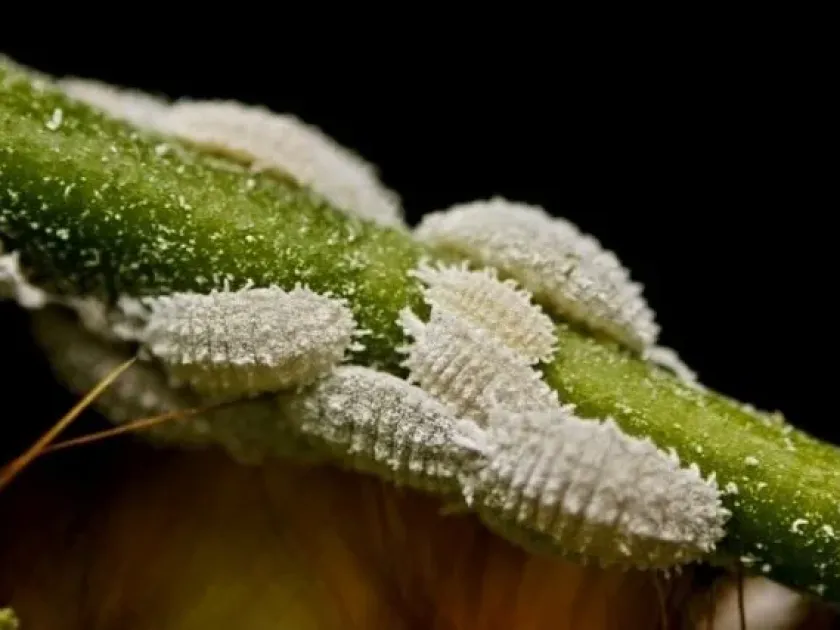
The tea mealybug (Pseudococcus theaecola) is a member of the Pseudococcidae family, known for the white, waxy, mealy-like secretion that covers the body of adult females.
These insects are characterized by their oval-shaped bodies and the presence of waxy filaments along the margin of the body, which help in species differentiation.
While adult females are relatively sedentary, adult males possess wings and are capable of flight, facilitating the spread of the population across the plantation.
The first instar nymphs, commonly referred to as "crawlers," are highly active and are the primary stage responsible for the dispersal of the pest to new host plants.
Identification is typically performed by examining the morphology of the cuticle and the arrangement of glandular pores, which often requires a microscope.
What it damages
The tea plant is the primary host, but the mealybug can also infest various other ornamental and woody crops, often leading to severe economic losses in tea production.
The insects tend to cluster in protected areas such as leaf axils, buds, and young tender stems, where they insert their stylets to extract plant sap.
Direct damage includes the wilting and deformation of young leaves, stunted growth of shoots, and overall loss of plant vigor, which directly impacts tea leaf yield.
As a byproduct of feeding, the mealybug excretes honeydew, which serves as a medium for the growth of sooty mold, blocking photosynthesis and lowering leaf quality.
Chronic infestations can lead to the death of small branches and weaken the plant, making it more susceptible to secondary pathogenic infections and environmental stress.
When it appears
The population growth of the tea mealybug is strongly influenced by ambient temperature and relative humidity, with warm and moist conditions being ideal.
In tropical and subtropical regions, the pest can reproduce continuously throughout the year, with multiple overlapping generations occurring in a single season.
The spring season typically marks the period when nymphs begin to migrate to new growth, coinciding with the flush of young tea leaves which are the most vulnerable.
The lifecycle duration is relatively short, allowing for rapid population explosions under favorable climatic conditions, necessitating vigilant monitoring.
Overwintering usually occurs in crevices of the bark or deep within the plant structure where the insect finds protection against colder temperatures.
Signs of infestation
The presence of white, cotton-like masses, which are actually the ovisacs containing hundreds of eggs, is the most visible sign of an active infestation.
A shiny, sticky layer on the leaf surface, known as honeydew, indicates the presence of a mealybug colony and often attracts ants that protect the pests.
The development of a black, dusty coating on leaves, identified as sooty mold, is a clear indicator that sucking insects have been active for some time.
Yellowing, curling, and curling of tender leaves are typical physiological responses to the stress caused by the persistent feeding of the mealybugs.
General plant decline, including the lack of vigor and dieback of young twigs, often points to a severe infestation that requires immediate attention.
Control measures
Integrated Pest Management (IPM) is the most effective approach to control the tea mealybug, combining cultural, biological, and chemical strategies.
Cultural methods include rigorous monitoring, pruning of heavily infested branches, and maintaining proper plant nutrition to help the plant recover from damage.
Biological control, utilizing natural enemies like ladybird beetles (such as Cryptolaemus montrouzieri) and parasitoid wasps, is highly effective for sustainable control.
Chemical control should be timed to target the "crawler" stage, as adult females are well-protected by their waxy coating and are resistant to contact insecticides.
- Regular inspection of the canopy, especially during the flushing season.
- Application of systemic insecticides that are absorbed by the plant for long-lasting protection.
- Use of horticultural oils to physically coat and suffocate the mealybugs, which is an environmentally friendlier alternative.
Taxonomy
- Latin name
- Pseudococcus theaecola
- Order
- Hemiptera (bugs, aphids, leafhoppers)
- Family
- Pseudococcidae
- EPPO code
- PSECTH
Discussion
No discussions yet — be the first.