
Sorghum mealybug
Pseudococcus sorghiellus
Description
How to identify
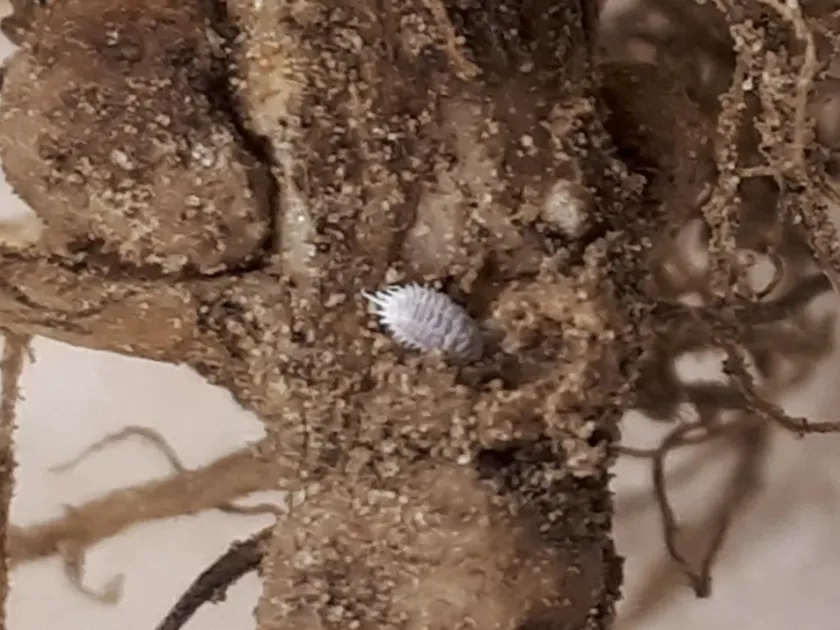
The sorghum mealybug (Pseudococcus sorghiellus) belongs to the order Hemiptera and the family Pseudococcidae. Adult insects are characterized by an oval body covered in a white, powdery wax secretion.
Females are generally sedentary and form colonies in protected areas of the plant, such as leaf sheaths or near the root system, making them difficult to detect early on.
The life cycle involves several nymphal stages, with the first instar nymphs, known as crawlers, being the most active phase responsible for spreading across the field.
Environmental factors like temperature and soil moisture significantly influence the duration of each generation and the overall reproductive potential of the pest population.
These insects reproduce both sexually and, in some populations, parthenogenetically, which allows for rapid population increases during favorable growing conditions.
What it damages
The pest primarily targets cereal crops, especially sorghum, maize, and various wild grass species, feeding by inserting its mouthparts into plant tissues and extracting sap.
Feeding activity on roots and stems causes stunted growth, nutrient deficiency, and reduced vigor in young plants, which often leads to significant yield losses.
Mealybugs excrete honeydew, a sticky substance that promotes the growth of sooty mold, which blocks sunlight and hampers photosynthesis, further stressing the plant.
Severe infestations can lead to leaf yellowing (chlorosis), deformation of plant organs, and even the premature death of the plant in cases of extreme density.
The economic impact is particularly pronounced in water-stressed environments, where plants already struggling for resources succumb more quickly to mealybug pressure.
Signs of infestation
The primary visual indicator of an infestation is the presence of white, cottony, wax-like masses found on the base of the stems or within leaf sheaths.
The presence of honeydew on foliage is a common secondary sign, often attracting ants that protect the mealybug colonies from predators in exchange for food.
Plants affected by the pest exhibit general yellowing, stunted height, and a visible lack of development compared to unaffected surrounding plants in the field.
A closer inspection of the base of the stalk or the upper root zone often reveals dense clusters of mealybugs protected by their waxy, powder-like secretions.
In cases of heavy infestation, specific patches of the field may show significant signs of decline, with entire clusters of plants appearing dry or sickly.
Control measures
Cultural control practices include crop rotation and the rigorous removal of weeds from field margins, which often act as alternative hosts for the pest.
Deep fall plowing can significantly reduce pest populations by disturbing their overwintering sites in the soil or crop residue.
Chemical control involving systemic insecticides is effective, as these agents travel through the plant's vascular system to reach the feeding insects.
Scouting is critical; farmers should monitor fields regularly to apply treatments exactly when the crawler stage is most susceptible to control measures.
Maintaining a healthy environment for natural predators such as lady beetles and parasitic wasps can help keep mealybug populations below economic injury levels.
Taxonomy
- Latin name
- Pseudococcus sorghiellus
- Order
- Hemiptera (bugs, aphids, leafhoppers)
- Family
- Pseudococcidae
- EPPO code
- PSECSG
Discussion
No discussions yet — be the first.