
Japanese mealybug
Pseudococcus kraunhiae
Description
How to identify
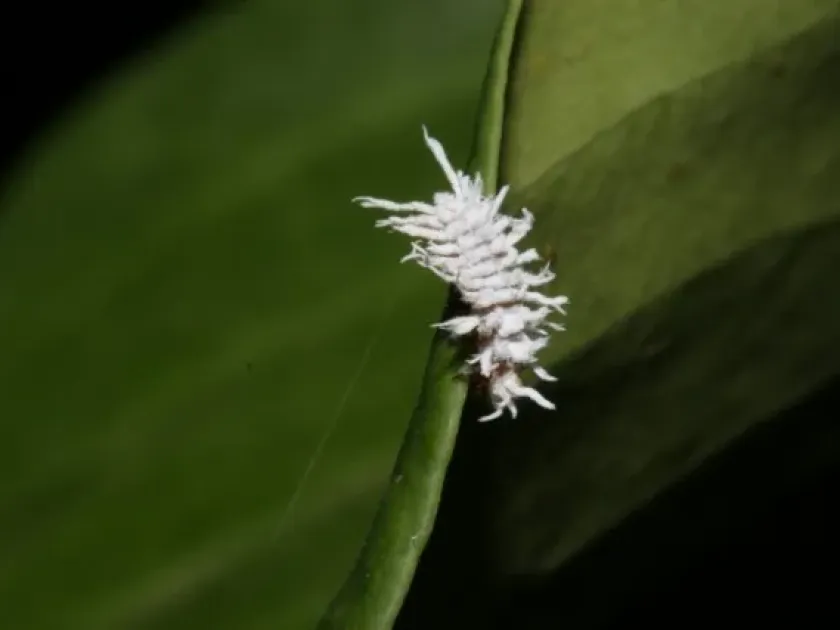
The Japanese mealybug (Pseudococcus kraunhiae) is a member of the family Pseudococcidae. Adult females are oval-shaped and covered with a white, waxy secretion that gives them a distinct mealy appearance.
A key diagnostic feature of this species is the presence of short, waxy filaments around the perimeter of their body, which helps distinguish them from other common mealybug species.
Adult females are relatively sedentary, spending most of their lifecycle feeding on the host plant, while males are winged, small, and highly mobile to facilitate mating.
The females produce fluffy, white ovisacs (egg sacs) made of waxy fibers, which serve as a protective housing for their eggs against environmental stressors and predators.
First-instar nymphs, known as "crawlers," are very active. This is the primary stage for dispersal, as they can travel to new parts of the plant or be carried by wind to nearby hosts.
What it damages
This pest is a polyphagous insect that attacks a wide range of plants, including citrus, ornamental shrubs, and various greenhouse crops, causing significant agricultural damage.
Mealybugs feed by sucking sap from the phloem of young shoots, petioles, and fruits, which significantly depletes the plant's resources and disturbs its normal metabolic processes.
Severe infestations lead to stunted growth, leaf deformation, chlorosis, and premature leaf drop, which weakens the overall health and productivity of the host plant.
During feeding, they excrete honeydew, a sugary substance that coats leaves and stems. This creates an ideal substrate for the growth of sooty mold, which blocks sunlight and reduces photosynthesis.
In fruit-bearing crops, the presence of mealybugs can lead to fruit scarring and deformation, significantly reducing the market value and quality of the harvest.
When it appears
The activity of the Japanese mealybug is highly dependent on climate. In outdoor environments, they become active in the spring when temperatures begin to rise consistently.
They thrive in warm, humid conditions, which facilitate rapid population growth and the overlapping of multiple generations throughout the growing season.
In temperate regions, they typically overwinter as nymphs or adults in protected niches, such as bark crevices, leaf axils, or root systems, waiting for spring to emerge.
In greenhouses or interior plantscapes where the temperature is controlled, the mealybug can complete its lifecycle continuously, making it a persistent year-round problem.
Monitoring should be most intense during the warmer months, as this is when the crawler stage is most abundant and susceptible to initial colonization of new plant tissues.
Signs of infestation
The presence of white, cotton-like masses on stems, leaf joints, and the undersides of leaves is the most visible sign of an established Japanese mealybug infestation.
Sticky honeydew residues on the foliage indicate active feeding. This substance often attracts ants, which may farm the mealybugs for their honeydew and protect them from predators.
Plants may show symptoms of general decline, such as yellowing, loss of turgor (wilting), and an overall failure to thrive, even when water and nutrient levels are adequate.
Deformed or curling new growth is a common indicator of sap-sucking insects that have targeted the most nutrient-rich parts of the plant, such as developing shoots.
The presence of a black, powdery coating (sooty mold) on leaves confirms that the infestation has been present for a significant period and is severely impacting plant health.
Control measures
Control is challenging due to the protective waxy covering on the insects, which makes them highly resistant to many standard contact insecticides used in agriculture.
Systemic insecticides, which are absorbed into the plant's vascular system, are highly effective as they poison the sap that the mealybugs feed upon, bypassing the waxy barrier.
Integrated pest management (IPM) strategies, including the use of biological controls like predatory lady beetles (Cryptolaemus montrouzieri), are highly recommended.
Regular monitoring and physical removal of small, localized colonies can help prevent a full-scale outbreak, especially in protected environments or home gardens.
- Use systemic insecticides that target the vascular system of the plant.
- Introduce natural predators to manage population levels biologically.
- Prune and destroy heavily infested plant parts to reduce the source of infection.
- Control ant populations to stop them from protecting mealybugs from natural enemies.
Taxonomy
- Latin name
- Pseudococcus kraunhiae
- Order
- Hemiptera (bugs, aphids, leafhoppers)
- Family
- Pseudococcidae
- EPPO code
- PSECKR
Discussion
No discussions yet — be the first.