
Jack Beardsley mealybug
Pseudococcus jackbeardsleyi
Description
How to identify
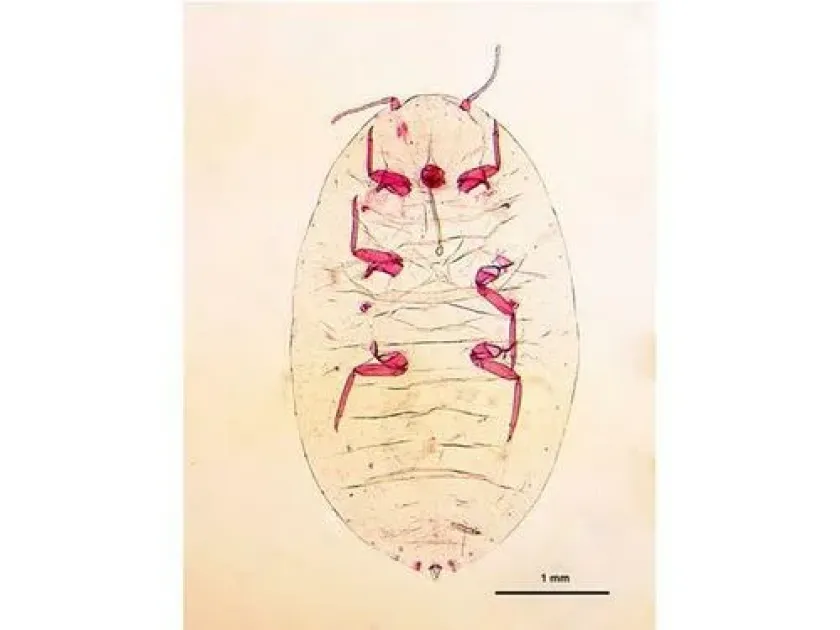
The Jack Beardsley mealybug (Pseudococcus jackbeardsleyi) is a member of the Pseudococcidae family within the order Hemiptera. Adult females are oval-shaped and covered in a mealy, white waxy secretion that provides protection from environmental stressors.
A key identifying feature is the presence of 17 pairs of thin, waxy lateral filaments. The pair located on the posterior end of the body is significantly longer than the others, which is a diagnostic trait for distinguishing this species from other mealybugs.
Biological development is highly dependent on temperature. Optimal growth occurs between 25 and 30 degrees Celsius, allowing the pest to complete multiple generations within a single season under favorable greenhouse conditions.
Reproduction is sexual, and females deposit their eggs into loose, fluffy ovisacs made of wax. These structures protect the eggs from desiccation and physical damage, ensuring high survival rates for the emerging nymphs.
Nymphs, or crawlers, are the most mobile stage and are responsible for the dispersal of the pest to adjacent plants. Once they settle, they insert their piercing-sucking mouthparts into the plant tissue to extract sap.
What it damages
This species is highly polyphagous, attacking a wide range of vegetable, fruit, and ornamental crops. Common hosts include peppers, tomatoes, eggplants, papaya, and various succulent plant species.
Economic damage is caused by both direct sap extraction and the transmission of plant pathogens. Plants infested by large populations exhibit stunted growth, wilting, and reduced yields, often rendering the crop unmarketable.
Signs of infestation
The most recognizable sign is the presence of white, cotton-like masses, especially in protected areas such as leaf axils, near veins, and on the undersides of leaves where the insects aggregate.
Infested plants often develop a sticky residue known as honeydew, which is excreted by the mealybugs. This substance attracts ants and promotes the growth of sooty mold, appearing as a dark black film on leaves and stems.
As the infestation progresses, leaves may become chlorotic, curl, and eventually drop off prematurely. The overall health of the plant declines, resulting in poor fruit development and potential death in severe cases.
Control measures
Effective management requires an integrated approach. Early detection via visual monitoring is crucial, especially when bringing new plant materials into a greenhouse or garden environment.
Chemical control focuses on the use of systemic insecticides that are absorbed into the plant's vascular system. It is essential to rotate products to prevent the development of pesticide resistance in mealybug populations.
- Implement strict quarantine procedures for new plants.
- Release beneficial insects like Cryptolaemus montrouzieri.
- Prune and destroy heavily infested plant parts immediately.
- Maintain proper sanitation to remove potential hiding spots for nymphs.
- Avoid over-fertilization, as high nitrogen levels encourage population booms.
Taxonomy
- Latin name
- Pseudococcus jackbeardsleyi
- Order
- Hemiptera (bugs, aphids, leafhoppers)
- Family
- Pseudococcidae
- EPPO code
- PSECJB
Discussion
No discussions yet — be the first.