
Dendrobium mealybug
Pseudococcus dendrobiorum
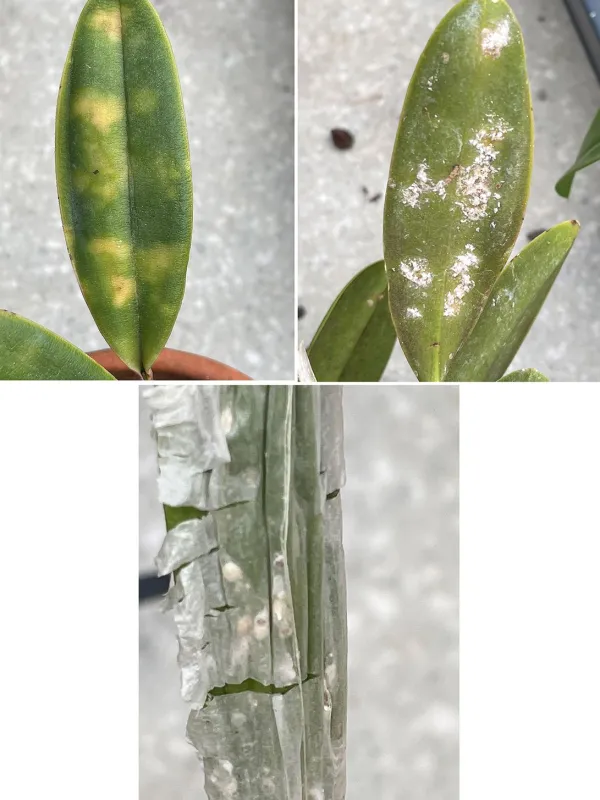
Description
How to identify
The Dendrobium mealybug (Pseudococcus dendrobiorum) is a member of the Pseudococcidae family. Adult females are small, oval-shaped insects typically measuring 2 to 4 mm in length, characterized by a white, powdery wax coating that provides effective protection against various contact insecticides.
Their bodies range from pinkish to grayish-white. While males are winged and short-lived, the wingless females are the primary life stage found on the plants. They prefer to stay in stationary, protected areas where they can feed undisturbed for long periods.
The lifecycle begins with the production of eggs, which are deposited in protective, cotton-like masses called ovisacs. These masses are usually tucked away in plant crevices, leaf axils, or underneath the bracts of pseudobulbs, keeping them safe from environmental stress and external predators.
Upon hatching, the young nymphs, known as crawlers, are highly mobile. This stage is critical for the infestation of neighboring plants, as they can easily crawl onto new surfaces or be transported via air currents, maintenance tools, or human contact.
Environmental conditions significantly influence their population growth. In typical greenhouse or indoor home temperatures (around 25°C), the generation time is remarkably short, allowing for rapid colonization if the pest is not identified and managed promptly.
What it damages
These mealybugs primarily target the Orchidaceae family, with Dendrobium, Cattleya, and Phalaenopsis being the most frequent hosts. They utilize specialized piercing-sucking mouthparts to feed directly on the plant's vascular sap.
The feeding process leads to severe physiological stress for the orchid. Infested plants show signs of stunted growth, leaf deformation, and a significant loss of vigor. The depletion of plant nutrients often results in the failure of buds to open or the premature dropping of flowers.
A major byproduct of mealybug activity is the secretion of honeydew. This sticky substance covers the leaves and provides an excellent medium for the growth of sooty mold, a fungus that covers the plant in a black coating, severely inhibiting photosynthesis.
The pests often congregate in hidden areas, including the base of the stems and even within the potting medium near the roots. This hidden feeding makes early diagnosis difficult until the plant begins to show systemic symptoms of decline.
Advanced infestations often pave the way for secondary infections, such as bacterial or fungal soft rots, which can be fatal to the orchid. The combined pressure of the pest and secondary disease often leads to the rapid collapse of the plant.
Signs of infestation
The most distinctive indicator of a Pseudococcus dendrobiorum infestation is the presence of white, fluff-like patches. These appear as small, cottony deposits in tight spaces such as leaf junctions, floral sheaths, and beneath dried scales on pseudobulbs.
Sticky residue on leaves or nearby surfaces is another common warning sign. This honeydew is easily recognizable by its shiny appearance and sticky texture when touched, often indicating a well-established colony nearby.
Plants affected by these mealybugs frequently exhibit a loss of turgidity. Even with sufficient watering, the orchid may appear dehydrated, with limp or yellowing leaves caused by the impairment of the plant's water and nutrient transport systems.
Careful inspection with a magnifying glass can reveal the presence of small, static clusters of mealybugs. These clusters may be found hiding along the stem or under the edges of leaves where the skin is thin and nutrient-rich.
If the root system is affected, the plant may show general malaise and poor development. Any unexplained loss of vigor in an orchid should prompt a thorough check of the root zone and the lower parts of the plant's structure.
Control measures
Initial control efforts should focus on physical removal. Quarantine the plant and carefully wipe away any visible mealybug clusters using a cotton swab dipped in rubbing alcohol or a mild soapy solution, which helps break down their waxy protective coating.
Systemic insecticides are the most effective way to combat an established infestation. Products containing active ingredients like imidacloprid or acetamiprid are absorbed into the plant tissue, effectively targeting the pests as they feed on the sap.
A consistent treatment schedule is essential. Because the waxy coating of the adult females provides some protection, apply the chosen insecticide at least three times at 7–10 day intervals to ensure that newly hatched nymphs are eradicated before they reach reproductive maturity.
- Maintain strict quarantine protocols for all new plant additions for at least 3–4 weeks.
- Regularly clean leaves with a damp cloth to remove dust and provide opportunities for early pest detection.
- Ensure optimal humidity and air circulation to keep plants healthy and less susceptible to infestations.
- Utilize biological control agents, such as predatory beetles, in large greenhouse settings to manage populations naturally.
Once the treatment is complete, repot the orchid in fresh, sterile media. Discard the old substrate and disinfect the pot thoroughly to eliminate any dormant eggs or nymphs that could trigger a re-infestation of the healthy plant.
Taxonomy
- Latin name
- Pseudococcus dendrobiorum
- Order
- Hemiptera (bugs, aphids, leafhoppers)
- Family
- Pseudococcidae
- EPPO code
- PSECDN
Discussion
No discussions yet — be the first.