
Oriental mealybug
Pseudococcus cryptus
Description
How to identify
The Oriental mealybug (Pseudococcus cryptus) is a significant insect pest belonging to the Pseudococcidae family, known for its extensive damage to woody plants and fruit crops.
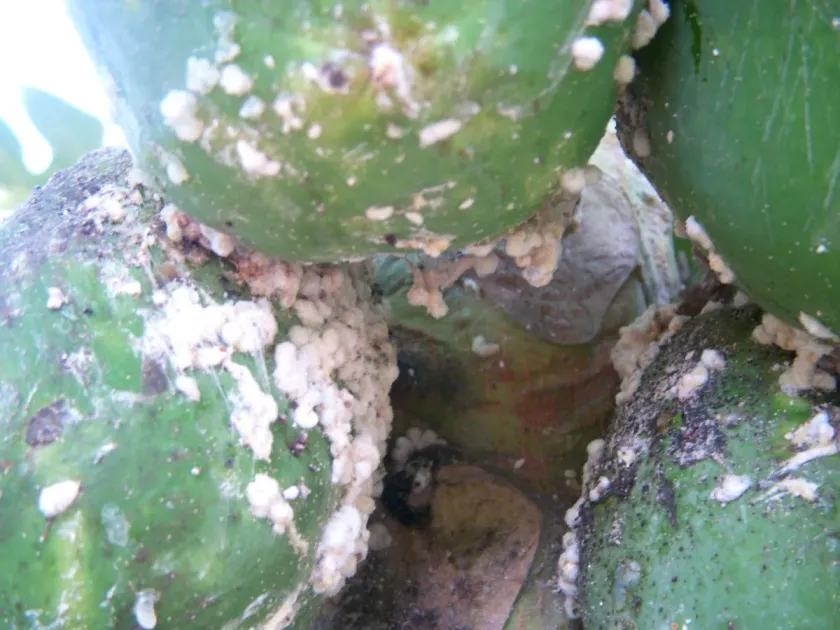
Adult females are characterized by an oval body covered in a white, powdery wax secretion, which gives them a distinctive woolly appearance. They typically reach sizes between 3 and 4 mm.
The edges of their bodies bear short waxy filaments, which is a key diagnostic feature for distinguishing this species. Males are smaller, winged, and do not feed, focusing solely on reproduction.
First-instar larvae, often called "crawlers," are highly mobile and yellowish, lacking the thick waxy coating. They are responsible for the spread of the pest within and between orchards.
As a thermophilic species, the Oriental mealybug thrives in subtropical and tropical climates, though it has become a major concern for greenhouse growers in cooler regions.
What it damages
This species is highly polyphagous, attacking a vast range of plants including major fruit trees like citrus (oranges, lemons, mandarins) and diverse ornamentals.
Other common hosts include persimmons, grapes, pomegranates, figs, and numerous greenhouse ornamentals like hibiscus and oleander, with over 100 recorded host species.
Damage is caused by both nymphs and adults piercing plant tissues and sucking out phloem sap. This results in nutrient depletion, causing leaves to yellow and drop prematurely.
The extraction of sap leads to the stunting of young shoots and the deformation of growing fruit, significantly reducing both the quality and quantity of the harvest.
Besides direct damage, the mealybug is a vector for several plant viruses, which can lead to rapid decline and mortality in heavily infested orchards.
When it appears
The life cycle of the Oriental mealybug is highly dependent on environmental temperature. In optimal conditions (25–28°C), a full generation can develop in less than a month.
Under favorable climate conditions, the insect can produce multiple overlapping generations per year, making it difficult to target a specific stage with chemical treatments.
Overwintering typically occurs as larvae or adult females, hiding in crevices of bark, leaf axils, or under dormant buds, emerging as soon as temperatures rise in the spring.
Population levels usually peak during mid-to-late summer, coinciding with the most vigorous growth of host plants, which provides the abundance of nutrients required by the colonies.
Dispersal occurs via the "crawler" stage, which is easily carried by the wind, rainwater runoff, or through the movement of infested nursery stock by human activity.
Signs of infestation
The most obvious indication of an infestation is the appearance of white, cotton-like masses on the undersides of leaves, along twigs, and around the calyx of the fruit.
Colonies excrete large amounts of honeydew, a sticky substance that falls onto the foliage, creating the perfect substrate for the growth of sooty mold fungus, which turns the plant black.
Infested plants show signs of chlorosis, stunted development, and deformed shoot growth. In severe cases, the entire plant may appear withered due to chronic sap loss.
Fruit infestation is particularly problematic as it ruins marketability and leaves the plant susceptible to secondary fungal infections that thrive in the sticky honeydew residue.
- White, woolly waxy deposits on stems and leaves.
- Sticky honeydew coating on the plant surface.
- Black sooty mold growth on leaves and fruit.
- Premature yellowing and leaf drop.
Control measures
Effective management begins with strict quarantine measures and the inspection of all new nursery stock before introduction into a production environment.
Pruning and removal of heavily infested branches, followed by the clearing of old bark, can significantly reduce the overwintering population of the pest.
Biological control methods include the introduction of natural enemies, such as the predatory ladybird beetle Cryptolaemus montrouzieri, which is highly effective against mealybugs.
Chemical control requires systemic insecticides that penetrate plant tissues, as the waxy coating of the mealybug provides an effective barrier against contact-based sprays.
The application of horticultural oils, often in combination with insecticides, is recommended to dissolve the waxy protection of the insect, thereby increasing the efficacy of the treatment.
Taxonomy
- Latin name
- Pseudococcus cryptus
- Order
- Hemiptera (bugs, aphids, leafhoppers)
- Family
- Pseudococcidae
- EPPO code
- DYSMCR
Discussion
No discussions yet — be the first.