
Citrophilus mealybug
Pseudococcus calceolariae
Description
How to identify
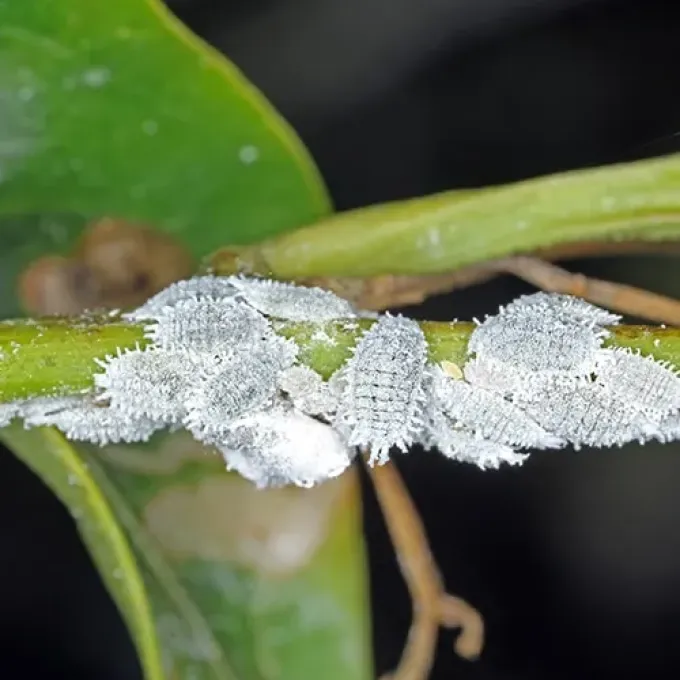
The Citrophilus mealybug (Pseudococcus calceolariae) is a significant pest within the Pseudococcidae family. Adult females are oval-shaped, typically 3–4 mm long, and are covered with a white, powdery waxy secretion that protects them from environmental stressors and pesticides.
Males of this species are winged, much smaller than females, and do not feed; their only role is to locate females for reproduction. The crawlers (first-instar nymphs) are highly mobile, yellowish, and actively disperse across the host plant, facilitating rapid infestation of new foliage.
These insects are highly prolific, with a single female capable of laying hundreds of eggs into a protective waxy ovisac. Development is strongly influenced by temperature, with 20–25°C being the optimal range for the rapid completion of multiple generations throughout the year.
A key identifying feature is the long waxy filaments protruding from the edges of their bodies, giving them a fringed appearance. They prefer sheltered locations such as leaf axils, fruit stems, and cracks in the bark, making them difficult to spot during initial inspections.
The life cycle encompasses the egg, several nymphal stages, and the adult stage. In controlled environments like greenhouses, they can breed continuously, necessitating ongoing monitoring to prevent population explosions.
What it damages
This pest affects a wide range of hosts, including citrus trees, ornamental plants, and grapevines. Being a polyphagous insect, it easily transitions between different plant species, which complicates eradication in diverse garden or greenhouse settings.
Mealybugs feed by inserting their piercing-sucking mouthparts into plant tissues and extracting sap. While feeding, they inject toxic saliva that disrupts plant physiology, leading to stunted growth, leaf yellowing, and general plant decline.
They produce large quantities of honeydew, a sticky sugary substance. This honeydew serves as a perfect substrate for sooty mold growth, which coats the leaves in a black, powdery fungus that interferes with photosynthesis and reduces the plant's overall vigor.
Severe infestations result in deformed fruits, premature leaf drop, and bud abortion. For commercial citrus growers, this leads to significant yield losses and lower fruit quality, rendering the harvest unmarketable.
In addition to direct physical damage, mealybugs can act as vectors for various plant viruses. By weakening the host's immune system, they also pave the way for secondary infections caused by other opportunistic pathogens.
Signs of infestation
The most prominent sign of infestation is the presence of white, cotton-like masses in leaf axils, along the veins, or at the base of fruits. These masses are the protective ovisacs where the eggs are kept and protected.
The presence of sticky honeydew on the leaves, which eventually turns black due to the accumulation of sooty mold, is a strong indicator that the mealybug population has reached a level where direct intervention is required.
Early-stage infestations are often difficult to detect because the tiny crawlers blend in with the plant tissue. Signs of stress, such as loss of leaf luster or subtle wilting despite adequate watering, are often the first warnings of an underlying infestation.
Stunted development of new shoots and the sudden dropping of buds or flowers should alert the grower to check the plant more closely. Inspecting the undersides of leaves and sheltered stem areas with a magnifying glass is essential.
A high level of ant activity on the plant often signals the presence of mealybugs, as ants are known to tend and protect these insects to collect their sweet honeydew secretions, essentially acting as their guardians.
Control measures
Effective control of the Citrophilus mealybug requires an integrated pest management (IPM) approach. Because the waxy coating acts as a shield against contact sprays, systematic treatment is usually necessary for success.
Systemic insecticides, particularly those containing neonicotinoids or similar active ingredients, are highly effective as they are absorbed by the plant and kill the pests as they feed on the sap. Multiple applications are necessary to kill newly hatched nymphs.
Biological control using natural enemies is an excellent option for enclosed spaces. Predatory beetles, such as Cryptolaemus montrouzieri or specialized parasitic wasps, can significantly reduce mealybug populations without the need for synthetic chemicals.
Preventative measures, such as strict quarantine for all new plants, are the most effective way to avoid infestations. Keeping new plants in isolation for at least 3–4 weeks allows time for any hidden pests to emerge and be treated.
Good horticultural practices, including regular plant hygiene and the removal of heavily infested parts, help suppress the population. Additionally, managing ant populations in the growing area is crucial to preventing them from shielding the mealybugs from natural predators.
Taxonomy
- Latin name
- Pseudococcus calceolariae
- Order
- Hemiptera (bugs, aphids, leafhoppers)
- Family
- Pseudococcidae
- EPPO code
- PSECGA
Discussion
No discussions yet — be the first.