
Coffee mealybug
Planococcus lilacinus
Description
How to identify
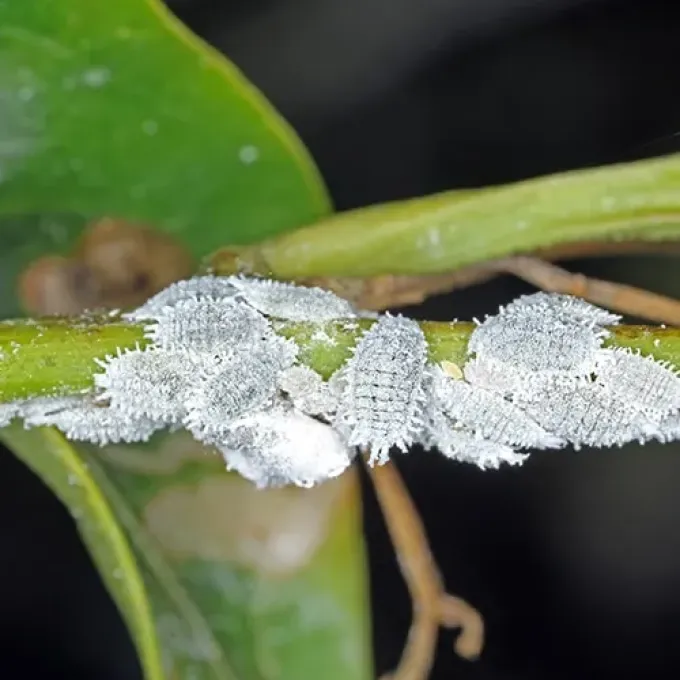
The coffee mealybug (Planococcus lilacinus) is a sap-sucking insect belonging to the order Hemiptera and the family Pseudococcidae. Adult females are oval in shape and coated with a characteristic white, waxy, mealy secretion that provides protection from environmental stress.
Typically, adult females measure between 2 and 4 mm in length. Their bodies are fringed with short waxy filaments, and a dark longitudinal stripe often appears on the back. Males are significantly smaller, winged, and do not feed; their only purpose is reproduction.
The life cycle encompasses egg, nymph, and adult stages. Females lay eggs inside loose, cottony ovisacs constructed from wax filaments, which serve as a nursery for the offspring. A single female can produce several hundred eggs during her lifespan.
The pest thrives in warm, humid conditions. Dispersal mainly occurs through the movement of infested plant material, wind currents, and human handling, making quarantine measures essential for preventing its spread in nurseries.
Due to their preference for hiding in sheltered areas such as leaf axils, bark crevices, and root zones, these insects are often difficult to detect until the infestation has reached a significant level.
What it damages
As a highly polyphagous insect, the coffee mealybug attacks a wide range of agricultural and ornamental crops, including coffee trees, citrus, mango, grapes, and various indoor plants like orchids and hibiscus.
The damage is caused by the insect inserting its mouthparts into the plant tissue to suck phloem sap. This feeding process results in severe nutrient depletion, leading to stunted growth and a general decline in the plant's health.
Heavy infestations lead to the yellowing and distortion of leaves, wilting of young shoots, and premature flower and fruit drop. This significantly reduces yield quality and quantity, causing major economic losses in commercial plantations.
The excretion of honeydew by the mealybugs serves as a substrate for the growth of sooty mold. This black fungus covers the leaf surface, obstructing photosynthesis and further weakening the plant's physiological capacity.
When the root system is attacked, the plants exhibit symptoms such as reduced vigor and eventual wilting. If left uncontrolled, severe infestations can lead to the death of the host plant.
Signs of infestation
The most recognizable sign of an infestation is the appearance of white, cotton-like masses on the stems, leaf axils, and undersides of leaves. These wax deposits act as a clear indicator of the presence of a colony.
Presence of sticky, shiny honeydew on the foliage or stems is another key diagnostic sign. This substance often attracts ants, which frequently protect the mealybugs from natural predators to maintain their supply of honeydew.
The accumulation of black sooty mold on the leaves is a secondary sign that typically indicates a well-established and long-standing colony of mealybugs nearby.
Leaves may show chlorosis (yellowing), curling, or stunting. In advanced stages of infestation, the plants may lose their luster, appear dehydrated, and experience significant leaf fall, even with adequate water supply.
- Cottony white wax masses on plant tissues.
- Sticky honeydew secretions on foliage.
- Development of black sooty mold.
- Distorted, curled, or yellowing leaves.
- Reduced plant growth and vigor.
Control measures
Effective control of the coffee mealybug requires an integrated approach. Physical control, such as wiping or washing affected areas with a mild soap solution or an alcohol-soaked swab, can be successful for minor infestations.
Systemic insecticides are generally the most effective chemical method. Products containing neonicotinoids like imidacloprid or acetamiprid are absorbed by the plant and kill the sap-feeding insects over a prolonged period.
Biological control methods are increasingly popular in greenhouses. The predatory ladybird beetle Cryptolaemus montrouzieri is highly efficient at consuming all life stages of the mealybug and can keep populations below economic injury levels.
Maintaining a clean cultivation environment is crucial. Avoid over-fertilization with nitrogen, as this encourages succulent growth that attracts mealybugs. Regular inspections of new plants before introducing them to the garden are vital.
Consistent treatment is necessary, as eggs are often protected by the waxy ovisac. Multiple applications of insecticides at 7 to 10-day intervals are required to eliminate newly hatched nymphs before they become reproductive adults.
Taxonomy
- Latin name
- Planococcus lilacinus
- Order
- Hemiptera (bugs, aphids, leafhoppers)
- Family
- Pseudococcidae
- EPPO code
- PLANLI
Discussion
No discussions yet — be the first.