
Kenyan mealybug
Planococcus kenyae
Description
How to identify
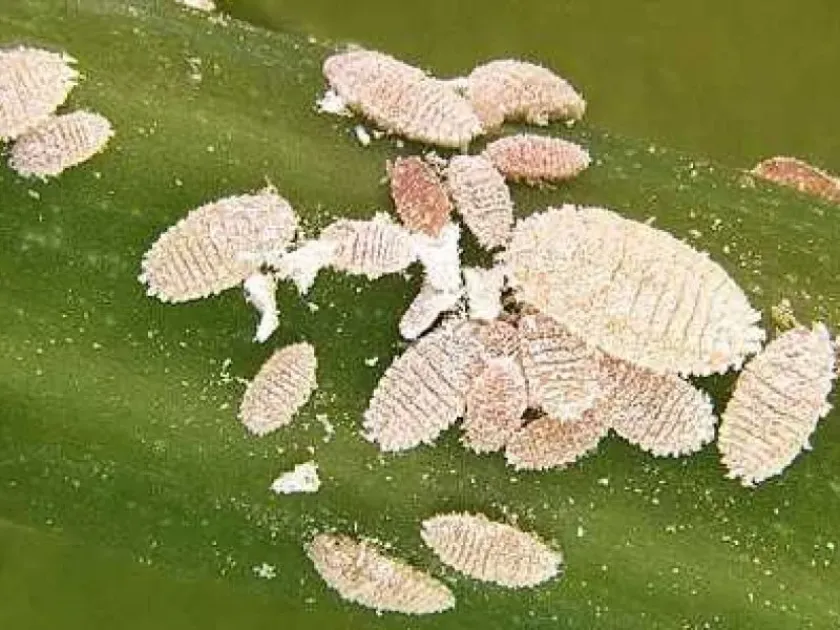
The Kenyan mealybug (Planococcus kenyae) belongs to the Hemiptera order and the Pseudococcidae family. This pest is characterized by an oval-shaped body covered in a white, powdery wax secretion that gives it a distinct appearance.
Adult females are typically 2-4 mm long and generally sessile, attaching themselves firmly to plant tissues. Males are rarely seen, smaller in size, and possess wings for mobility.
The life cycle consists of eggs, nymphal stages, and adults. Females lay eggs in loose, waxy sacs called ovisacs, which provide essential protection against environmental stressors.
The pest spreads rapidly through natural movement of crawlers, wind dispersal, and human activity such as the transport of infested plant materials between plantations.
Due to its high reproductive rate, the Kenyan mealybug can establish dense colonies within a short period, leading to severe economic losses if left untreated.
What it damages
This polyphagous pest attacks a wide variety of plants, including coffee, citrus, cocoa, mango, and various ornamental species. It primarily feeds on succulent plant parts.
By using its piercing-sucking mouthparts, the mealybug extracts essential plant sap. This feeding process results in general stunting and a significant decrease in the vigor of the host plant.
Heavy infestations lead to leaf drop, fruit deformation, and loss of flower buds. In coffee production, this leads to a direct reduction in yields as the plant struggles to develop fruit.
The feeding activity results in the secretion of honeydew, which promotes the growth of sooty mold. This layer of fungus blocks sunlight, severely inhibiting the plant's photosynthesis process.
In addition to direct physical harm, the mealybug acts as a vector for various plant viruses, further complicating the management and recovery of affected orchards.
Signs of infestation
The primary symptom is the presence of white, cottony masses on stems, leaf undersides, and fruit stalks. These masses consist of adult females, nymphs, and their egg sacs.
A sticky residue on the leaves, known as honeydew, is a strong indicator of an active mealybug population. Over time, this substance becomes colonized by black sooty mold.
Plants affected by the pest often show signs of chlorosis, leaf curling, and overall decline. Growth is restricted, and the plant appears weak despite regular irrigation and fertilization.
The presence of ants patrolling the plant is a critical sign. Ants tend to protect the mealybugs from natural predators in exchange for the sweet honeydew secreted by the pests.
Visual inspection of fruits frequently reveals necrosis, shriveling, and irregular patches, rendering them unfit for market and significantly decreasing the overall value of the crop.
Control measures
Integrated pest management strategies often focus on the release of biological control agents, such as parasitoid wasps or predatory ladybird beetles, which are highly effective.
Good agricultural practices involve pruning and destroying heavily infested plant parts. Maintaining healthy soil conditions and avoiding excessive nitrogen fertilization helps keep plants resistant.
Chemical control should be implemented using systemic insecticides during the crawler stage when the pest is most vulnerable to external applications of pesticides.
Managing ant populations is essential to ensure that natural predators can access and consume the mealybugs. Controlling weeds in the vicinity also eliminates alternate host sites.
- Monitoring for early detection of infestation sites.
- Use of horticultural oils to break down the waxy covering.
- Application of systemic pesticides targeting the nymph stage.
- Strict quarantine enforcement for all imported plant material.
Taxonomy
- Latin name
- Planococcus kenyae
- Order
- Hemiptera (bugs, aphids, leafhoppers)
- Family
- Pseudococcidae
- EPPO code
- PLANKE
Discussion
No discussions yet — be the first.