
Peruvian mealybug
Phenacoccus peruvianus
Description
How to identify
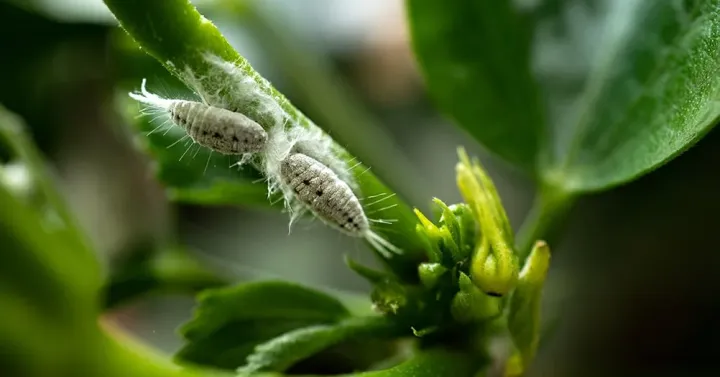
The Peruvian mealybug (Phenacoccus peruvianus) is a small insect species belonging to the Pseudococcidae family. It is easily recognized by the white, mealy waxy secretion that covers its entire body, serving as a protective shield.
Adult females are typically oval-shaped and measure approximately 2–3 mm in length. Males are rarely observed in the field; they are winged, significantly smaller, and their lifespan is extremely short compared to females.
The nymphs, often called "crawlers," are highly mobile and yellowish-white in color. This stage is crucial for the dispersal of the pest across the plant and to adjacent hosts through wind or direct contact.
Identification of the species often requires morphological analysis of the female's microscopic features, as they closely resemble other species within the same genus visually.
They thrive in warm, stable environments, which allow them to complete multiple life cycles rapidly, often leading to severe infestations if left unchecked.
What it damages
The primary host for Phenacoccus peruvianus in Europe is the Japanese spindle tree (Euonymus japonicus). The pests usually cluster in high-density colonies on stems and leaf axils.
By inserting their piercing-sucking mouthparts into the plant tissues, they extract essential sap, which causes stunted growth, yellowing of the leaves, and eventually leaf drop.
The insects secrete large amounts of honeydew, a sticky substance that promotes the growth of sooty mold. This fungus blocks sunlight and hinders photosynthesis, further weakening the plant.
Heavy infestations can cause significant damage to the plant structure, leading to distorted young shoots and, in severe cases, the death of young or weakened specimens.
- Yellowing and wilting of the foliage.
- Distorted and deformed shoot development.
- Sticky residue on leaves leading to sooty mold growth.
- Premature leaf drop reducing plant vigor.
- Loss of aesthetic value in ornamental landscapes.
When it appears
The Peruvian mealybug is most active during the spring and summer months when warm temperatures accelerate their metabolic rate and shorten the developmental stages.
In greenhouses or Mediterranean-like climates, the reproduction cycle can continue throughout the year without a significant dormant phase, allowing for multiple overlapping generations.
Peak infestation levels typically occur during mid-summer, as the population exponentially increases, colonizing every available space on the host plant.
As temperatures decline in autumn, the activity slows down; however, females seek refuge under bark or in deep crevices to survive the winter and restart the cycle in early spring.
Early season scouting, starting as soon as the weather warms, is essential to detect the presence of overwintering populations before they begin to multiply on fresh foliage.
Signs of infestation
The most distinctive sign of a mealybug infestation is the presence of white, cotton-like masses found in the leaf axils and along the stems of the plant.
The presence of honeydew, which makes the leaves feel sticky to the touch, is a strong indicator of an active sucking insect population feeding on the plant sap.
A thick, black, powdery layer of sooty mold developing on the leaves confirms that the infestation has reached a level where honeydew accumulation is significant.
General plant decline, including yellowing leaves, lack of vitality, and reduced growth rate, is often the first visible symptom noticed by gardeners before a detailed inspection.
Closer inspection reveals the white waxy bodies of the adult females, which often remain stationary while feeding, protected by their own waxy secretions.
Control measures
Effective control requires the use of systemic insecticides, as these products are absorbed into the plant tissues, making the sap toxic to the feeding mealybugs.
Contact insecticides often fail because the thick, waxy coating of the mealybug acts as an effective physical barrier against most spray applications.
Manual removal using a cotton swab dipped in rubbing alcohol is a feasible approach for light infestations on small plants, ensuring that all visible insects are wiped away.
Pruning and destroying heavily infested branches can significantly reduce the pest load and prevent the spread to the rest of the plant or neighboring shrubs.
Biological control, utilizing predatory ladybirds or parasitic wasps, is a viable strategy in controlled environments like greenhouses to maintain population levels below economic damage thresholds.
Taxonomy
- Latin name
- Phenacoccus peruvianus
- Order
- Hemiptera (bugs, aphids, leafhoppers)
- Family
- Pseudococcidae
- EPPO code
- PHENPR
Discussion
No discussions yet — be the first.