
Grape mealybug
Phenacoccus pergandei
Description
How to identify
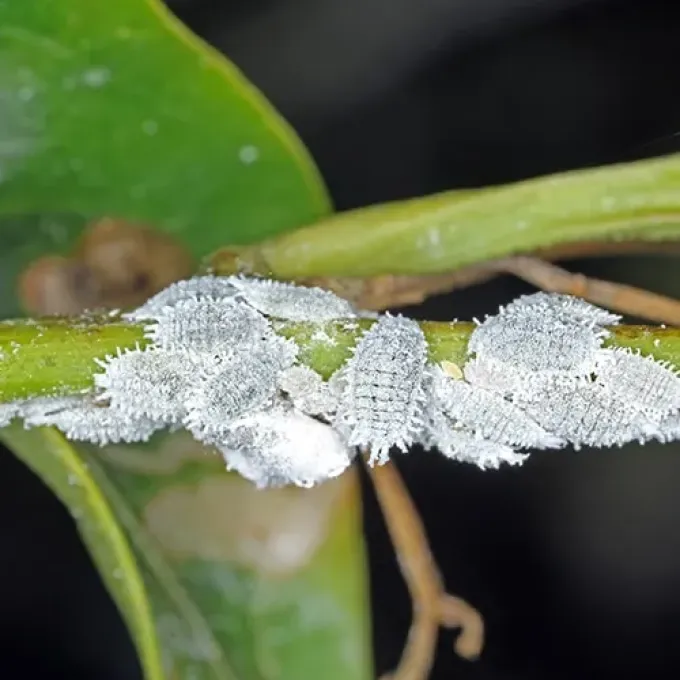
The grape mealybug (Phenacoccus pergandei) belongs to the Pseudococcidae family, which includes numerous sap-sucking pests. It is characterized by its soft, oval body covered in a white, powdery wax secretion.
Adult females are wingless and typically measure 3–5 mm in length. They are protected by waxy filaments around their bodies, which provide a defensive barrier against environmental stress.
The juvenile stage, known as "crawlers," is the most active. These tiny, mobile nymphs are responsible for the dispersal of the pest across the host plant and between neighboring vines.
Egg masses are deposited in loose, white waxy ovisacs. These structures protect the eggs from desiccation and many topical contact insecticides, complicating manual control efforts.
Identification often requires careful inspection of bark crevices, leaf axils, and grape clusters, as the insects are cryptic and prefer protected, hidden spaces during their development.
What it damages
This pest infests a wide range of hosts, including grapevines, citrus, and various deciduous trees. It acts by inserting its piercing-sucking mouthparts into the plant tissue to extract sap.
As they feed, they excrete honeydew, a sticky substance that coats leaves and berries. This honeydew serves as a primary substrate for the growth of sooty mold, a fungus that discolors the plant.
Severe infestations lead to reduced plant vigor, stunted growth, and potential dieback of young shoots. The presence of sooty mold on the fruit significantly reduces the market value and quality of the harvest.
Beyond direct feeding damage, the grape mealybug is a known vector for grapevine leafroll-associated viruses, which cause long-term decline in vineyard productivity.
Continuous sap extraction weakens the vine's ability to store carbohydrates, which may result in poor winter hardiness and reduced yields in the following season.
When it appears
The grape mealybug typically overwinters as nymphs or adult females hidden within the bark of the vine trunk or under protective debris at the base of the plant.
Activity begins in the spring when temperatures rise, prompting the insects to migrate from their overwintering sites toward the succulent, newly emerging growth of the grapevine.
Summer months provide ideal conditions for rapid development, often resulting in multiple generations per year depending on the specific climate and regional warmth.
The crawler stage is most frequently observed during late spring and summer, coinciding with the peak metabolic activity of the grapevine and the expansion of the pest population.
As temperatures drop in autumn, the insects complete their final reproductive cycles and seek refuge under the bark to survive the upcoming winter dormancy.
Signs of infestation
Visible signs of infestation include the presence of white, cotton-like masses on the stems, under the exfoliating bark, or attached to the grape clusters.
A shiny, sticky residue on the foliage is a primary indicator of mealybug activity. This substance is the honeydew produced by the nymphs and females during their feeding.
The development of black sooty mold on leaves and clusters serves as a visual alert that the population of sap-sucking insects has reached a significant level.
An unusual accumulation of ants on the vines is a reliable sign, as ants farm mealybugs, feeding on their honeydew and protecting them from natural predators.
Leaf yellowing, curling, and the premature shedding of fruit are symptomatic of heavy infestation, indicating that the plant is under significant physiological stress.
Control measures
Cultural practices such as removing loose bark from trunks during the dormant season are highly recommended to eliminate the primary overwintering habitats of the mealybug.
Systemic insecticides, particularly those containing neonicotinoids, are effective tools for managing populations, though they should be applied strategically to protect beneficial insects.
Timing is critical: applications should coincide with the emergence of the crawler stage, as these nymphs are much more susceptible to control products than protected adults.
Biological control using introduced parasitoids or generalist predators, such as lady beetles, can be very effective in sustainable vineyard management programs.
Regular monitoring using pheromone traps or visual inspections helps track population dynamics, allowing for timely interventions before the infestation causes severe economic loss.
Taxonomy
- Latin name
- Phenacoccus pergandei
- Order
- Hemiptera (bugs, aphids, leafhoppers)
- Family
- Pseudococcidae
- EPPO code
- PHENPE
Discussion
No discussions yet — be the first.