
Mealybug Phenacoccus parvus
Phenacoccus parvus
Description
How to identify
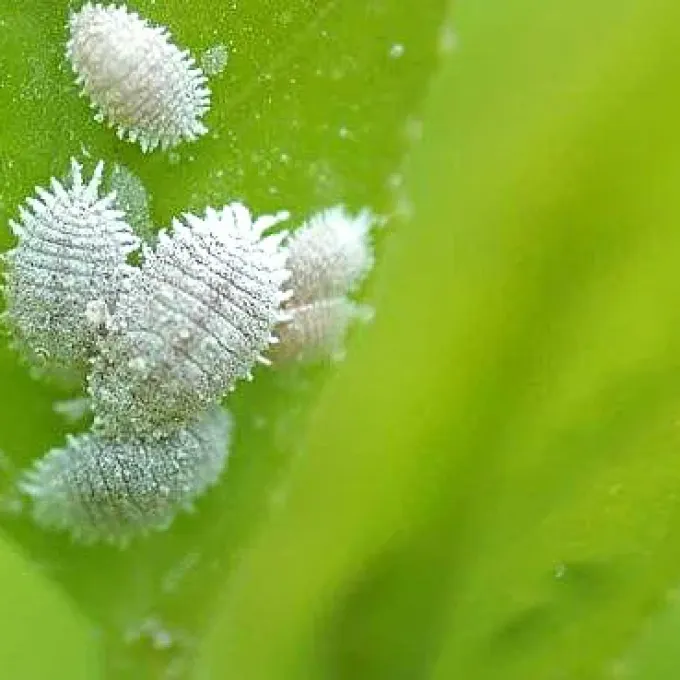
The mealybug Phenacoccus parvus belongs to the Pseudococcidae family, order Hemiptera. It is characterized by a distinctive white, powdery, or cotton-like waxy secretion covering its body.
Adult females are sedentary, oval-shaped insects that remain fixed on plant tissues to feed. Their bodies are well-protected by waxy filaments which act as a shield against environmental stressors.
The crawler stage represents the first-instar nymphs, which are highly mobile. These crawlers are the primary vectors for dispersing the infestation to surrounding plants.
Males are rare in this species; they are winged and short-lived, with the sole purpose of fertilizing the females to continue the reproductive cycle.
This species is a known polyphage, capable of adapting to a wide variety of host plants, including tropical fruits, vegetables, and ornamental nursery crops.
What it damages
Phenacoccus parvus causes damage to a diverse range of crops, including legumes, solanaceous plants, and various succulents, by draining vital nutrients.
In greenhouse settings, this pest can multiply rapidly, leading to significant economic losses if not managed promptly through regular monitoring.
The primary harm is caused by the extraction of phloem sap, which deprives the plant of necessary energy and leads to a weakened physiological state.
Heavy infestations result in severe leaf deformation, stunted shoot growth, and premature abscission of flowers and fruit buds, drastically reducing overall yields.
Furthermore, the pest produces honeydew, which serves as a substrate for sooty mold growth, effectively shading the leaves and inhibiting the plant's photosynthetic capacity.
When it appears
The life cycle of Phenacoccus parvus is highly sensitive to temperature; under optimal conditions (25–30°C), a full generation can be completed in approximately 3 to 4 weeks.
In tropical and subtropical regions, the pest can remain active year-round, continuously producing overlapping generations that maintain the population density.
High humidity combined with warm temperatures creates the perfect environment for the rapid expansion of colonies, making the pest particularly difficult to manage.
Dispersal is primarily facilitated by wind, as well as the transport of infested plant material between different agricultural areas or greenhouse sectors.
In enclosed environments, the absence of seasonal limitations means that the population must be monitored strictly and managed throughout the entire production year.
Signs of infestation
The most common sign of infestation is the presence of white, cottony, or fuzzy masses located on the undersides of leaves, along stems, and in leaf axils.
A sticky, shiny residue on leaves, often darkening due to sooty mold accumulation, is a major indicator that mealybugs are present and feeding on the plant.
Plants suffering from severe infestations exhibit chlorosis (yellowing), wilting, and overall stunted development compared to healthy, uninfested specimens.
An increased presence of ants on the plant is a strong indicator of an infestation, as ants farm the mealybugs for their honeydew and protect them from predators.
Twisted shoots and the inability of buds to open correctly are critical warning signs that the physiological development of the plant is being compromised by the pest.
Control measures
Preventive measures are essential; always inspect incoming plant stock carefully and implement strict quarantine procedures to avoid introducing the pest into new areas.
Cultural control includes the physical removal and destruction of infested plant parts, as well as maintaining proper spacing to ensure adequate air circulation.
Biological control methods involve the introduction of beneficial insects like predatory beetles (e.g., Cryptolaemus) or parasitic wasps that specifically target mealybug populations.
Chemical control should be applied using systemic insecticides when infestation thresholds are exceeded, ensuring coverage reaches deep into leaf axils and crevices.
It is vital to rotate different chemical classes to minimize the risk of the mealybug population developing resistance to commonly used pesticides.
Taxonomy
- Latin name
- Phenacoccus parvus
- Order
- Hemiptera (bugs, aphids, leafhoppers)
- Family
- Pseudococcidae
- EPPO code
- PHENPA
Discussion
No discussions yet — be the first.