
Multicerate mealybug
Phenacoccus multicerarii
Description
How to identify
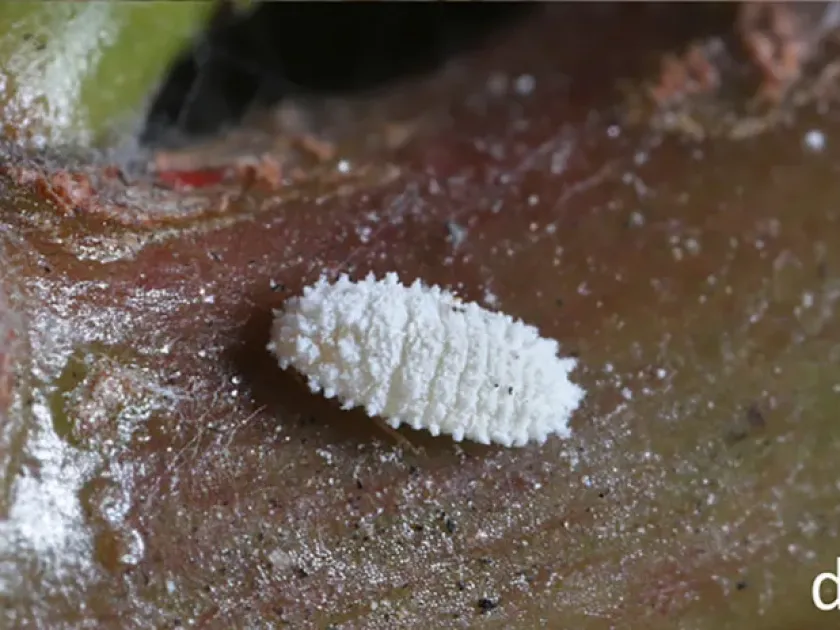
The multicerate mealybug (Phenacoccus multicerarii) belongs to the order Hemiptera and the family Pseudococcidae. Adult females have an oval body covered with abundant white wax deposits that form characteristic filaments or a powdery layer.
This species is characterized by high fecundity and the ability to colonize host plants rapidly. Males are rarely seen; they are winged and serve only a reproductive function, whereas females remain sedentary for most of their life cycle.
Agronomists use a hand lens to identify the pest by examining body segments and wax secretions. A key diagnostic feature is the presence of ovisacs, in which females lay hundreds of small eggs protected from external environmental factors.
The taxonomic position of this species suggests a close relationship with other sap-sucking pests, as it uses specialized piercing-sucking mouthparts to feed on plant phloem sap. High densities are typically observed in leaf axils and on young shoots.
The biology of the species is strongly linked to temperature; under favorable conditions, the development of a single generation can take about a month. In greenhouse environments, the multicerate mealybug is capable of breeding throughout the year.
What it damages
The pest affects a wide range of crops, including ornamental houseplants and essential agricultural species such as citrus and vegetables. It prefers environments with high humidity and limited air movement.
The primary damage occurs due to plant exhaustion caused by the continuous extraction of sap. This results in stunted growth, leaf deformation, and the eventual senescence of specific plant parts or the entire crop.
During feeding, the mealybug secretes honeydew, which serves as an excellent substrate for the growth of sooty mold. The resulting black fungal coating interferes with photosynthesis, further stressing the infested plant.
Significant economic losses occur in greenhouses where the absence of natural enemies allows the pest population to reach critical levels quickly. Plants lose their commercial value and overall biological productivity.
In cases of heavy infestation, the mealybug can completely destroy young plantings, making regular monitoring of crop health during early growth stages critically important.
Signs of infestation
The first sign of infestation is the appearance of white, cotton-like masses on stems, leaf undersides, and internodes. These represent the pest’s waste products and its protective waxy secretions.
Leaves of infested plants begin to yellow, curl, and drop prematurely. In areas where colonies congregate, plant tissues may change color due to necrotic processes induced by the toxic enzymes in the mealybug's saliva.
A sticky residue on the surface of leaves and stems is a clear indicator of active mealybug feeding. The subsequent development of black sooty mold confirms the prolonged presence of the pest.
Deformation of young shoots and buds is another hallmark symptom. Buds may fail to open, and fruits damaged by mealybugs often become stunted and lose their quality and marketability.
Visual inspection of the root collar is also essential, as some species of mealybugs colonize the base of the plant, which makes them difficult to detect during standard foliage surveys.
Control measures
Mechanical control involves the removal and destruction of heavily infested plant parts. Additionally, washing plants with insecticidal soap or alcohol-based solutions helps destroy the protective waxy layer of the pest.
Biological control strategies rely on the use of natural enemies, such as the mealybug destroyer beetle (Cryptolaemus montrouzieri) or specialized parasitic wasps, which effectively reduce population numbers.
Chemical control involves the application of systemic insecticides that translocate within the plant vascular system. It is vital to rotate different chemical classes to prevent the development of pesticide resistance in the pest population.
An important preventive measure is strict adherence to phytosanitary protocols when introducing new plant material. Quarantine procedures help prevent the introduction of the pest into greenhouses and nursery facilities.
- Maintaining optimal relative humidity levels.
- Regular pruning of dense foliage to improve air circulation.
- Using yellow sticky traps for adult monitoring.
- Applying horticultural mineral oils to manage surface infestations.
Taxonomy
- Latin name
- Phenacoccus multicerarii
- Order
- Hemiptera (bugs, aphids, leafhoppers)
- Family
- Pseudococcidae
- EPPO code
- PHENMU
Discussion
No discussions yet — be the first.