
Bristly mealybug
Phenacoccus hystrix
Description
How to identify
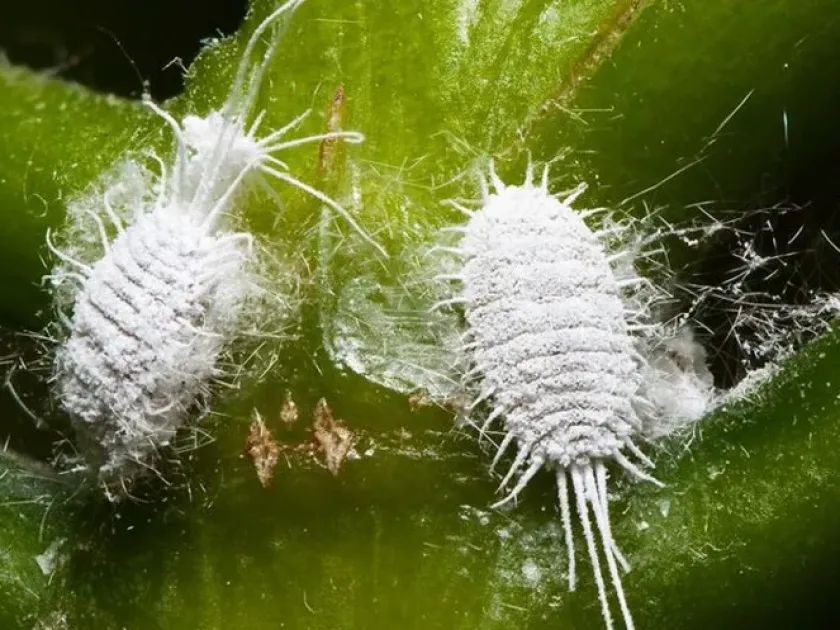
The bristly mealybug (Phenacoccus hystrix) is a small, sap-sucking insect belonging to the family Pseudococcidae. It is widely recognized for the white, waxy, cotton-like substance that covers its body.
Adult females are oval-shaped, measuring approximately 3–4 mm in length. They are characterized by distinct lateral waxy filaments and bristles along the edges of their bodies, which give them their common name.
Males are rarely observed; they are winged and do not feed, focusing solely on reproduction. The first-instar nymphs, known as crawlers, are highly mobile, light yellow in color, and represent the primary dispersal stage.
Accurate identification of Phenacoccus hystrix often requires microscopic examination of the pores and setae on the body to distinguish it from other related mealybug species.
These pests are secretive, often hiding in crevices, leaf axils, underneath bark, or at the base of the plant near the soil surface, making them difficult to detect in early stages.
##damage##The bristly mealybug is a polyphagous pest, meaning it attacks a wide variety of plant species, including ornamentals, citrus, and various greenhouse crops.
By inserting their mouthparts into the plant tissue, both nymphs and adults extract vital nutrients, causing yellowing of leaves, stunting, and overall weakening of the host plant.
A major indirect impact of their feeding is the production of honeydew. This sticky substance serves as an ideal medium for sooty mold, which blocks sunlight and hinders photosynthesis.
Severe infestations can lead to leaf drop, floral abortion, and, if left unchecked, the eventual death of the plant, especially in high-stress environments.
In addition to physical damage, these insects are known vectors for various plant viruses, posing a significant risk to nursery health and commercial cultivation.
##season##In indoor environments and greenhouses, the bristly mealybug can reproduce year-round, as constant temperatures support the continuous development of multiple generations.
During spring and summer, warmer temperatures accelerate the life cycle, leading to rapid population explosions that can quickly overwhelm a collection of plants.
Females lay hundreds of eggs within a protective waxy ovisac. This structure shields the eggs from environmental stress and even some chemical applications.
Winter does not necessarily stop development if the host plants are kept in heated areas, although the overall metabolic rate of the population may slow down slightly.
Infestations typically spread via crawlers carried by air currents, water splashes during irrigation, or through the movement of infested plant material and contaminated tools.
##signs##The first visual indicator is the presence of white, cottony masses concentrated in leaf axils, along stems, and near the crown of the plant.
Sticky, shiny honeydew on the foliage is a telltale sign of an active infestation, often followed by the appearance of dark, powdery sooty mold.
As the infestation progresses, the plant will show signs of nutrient deficiency, including yellowing leaves, drooping, and a general lack of vigor despite regular watering.
Young buds and tender shoots may become stunted or deformed as the mealybugs congregate in these nutrient-rich areas to feed.
- White, fluffy patches on leaves and stems.
- Sticky residue on foliage surfaces.
- Leaf curling and yellowing.
- Growth of black sooty mold on the leaves.
Effective management requires a combination of physical removal, biological control agents, and, when necessary, targeted insecticide applications.
Physical control involves manually wiping away infestations with a cotton swab dipped in alcohol or mild soapy water to remove both insects and their egg masses.
Biological control is highly effective in greenhouses, utilizing predators such as the mealybug destroyer beetle (Cryptolaemus montrouzieri) to suppress populations.
Chemical control should focus on systemic insecticides that are translocated through the plant tissue, providing a longer-lasting deterrent to sap-sucking pests.
Strict quarantine protocols for new plant arrivals are essential to prevent the accidental introduction of the bristly mealybug into clean growing environments.
Taxonomy
- Latin name
- Phenacoccus hystrix
- Order
- Hemiptera (bugs, aphids, leafhoppers)
- Family
- Pseudococcidae
- EPPO code
- PHENHY
Discussion
No discussions yet — be the first.