
Phenacoccus mealybug
Phenacoccus
Description
How to identify
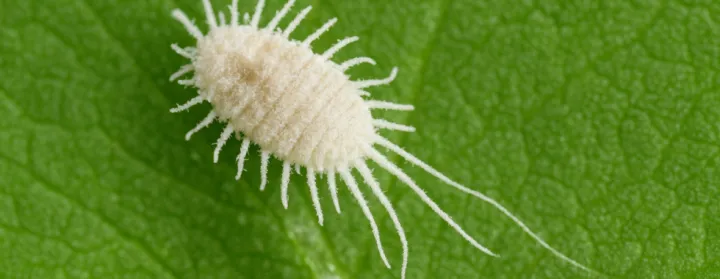
The mealybug of the genus Phenacoccus belongs to the order Hemiptera and the family Pseudococcidae. Adult females have an oval body covered with a characteristic white mealy coating made of waxy secretions.
For identification, it is important to note the presence of long waxy filaments along the body perimeter. Unlike other genera, Phenacoccus members often form dense colonies on the underside of leaves and in the leaf axils.
The mealybugs themselves are quite mobile in the early stages of development, which facilitates their rapid spread through greenhouses or gardens. The body color usually varies from grayish-pink to yellowish under the waxy layer.
Males of this genus are rarely seen; they possess wings and are significantly smaller than the females. The primary damage to plants is caused by females and nymphs actively sucking sap from plant tissues.
Identifying the species to a specific member of the genus often requires microscopic examination of the cuticle structure and the arrangement of glandular pores by an entomology specialist.
What it damages
This pest affects a wide range of crops, including fruit trees, citrus, grapes, and numerous indoor ornamental plants. It poses a particular danger to greenhouse facilities, where high humidity facilitates rapid reproduction.
With mass infestation, the mealybug damages young shoots, buds, flower stalks, and even the root systems of some plant species. The plant experiences an acute nutrient deficit due to continuous sap loss.
Affected plant parts often become deformed, internode growth slows down, and leaves begin to turn yellow and drop prematurely. In the areas of the pest's feeding punctures, tissues may develop necrosis.
Mealybugs secrete honeydew—a sweet, sticky liquid upon which sooty molds grow intensely. This further suppresses the plant's photosynthetic activity by blocking light from reaching the leaf surface.
In outdoor conditions, the pest often attacks vegetable crops such as tomatoes or peppers, significantly reducing the marketability and overall yield of the produce.
When it appears
In indoor environments, the reproduction of Phenacoccus occurs year-round, as the temperature in greenhouses is favorable for the development of all insect life stages. Generations succeed one another continuously.
In natural habitats, the pest becomes active with the onset of the warm spring period. Optimal conditions for a rapid life cycle include high air humidity and temperatures above +20°C.
The population peak usually occurs in the second half of summer when weather conditions become maximally comfortable for nymph metamorphosis.
Overwintering stages of the pest can survive in bark crevices, plant debris, or soil if temperatures do not drop to critical levels. In regions with mild climates, mealybugs can reproduce throughout the entire winter.
The spread of the pest during the season occurs both independently and via wind, water, or through infested nursery stock when brought from external sources.
Signs of infestation
The primary signal of the mealybug's presence is a white, cotton-like deposit resembling snow clumps that concentrate in leaf axils and on young growth.
A sticky film on leaves and stems, known as honeydew, is a clear sign of pest activity. Colonies of black sooty mold quickly settle on this film, making the plant look dirty.
- Yellowing and curling of apical leaves.
- Stunted growth and failure of buds to develop.
- Presence of small mobile nymphs on stems.
- The appearance of ants, which feed on the sweet secretions of the mealybug.
Under heavy infestation, plants look weak, their development halts, and without intervention, the specimen may die within a single growing season.
Upon inspecting the root collar, waxy secretions can be found, indicating the pest has moved into the root zone, which is especially dangerous for young seedlings.
Control measures
The primary protective measure is strict quarantine when introducing new plants. It is recommended to thoroughly inspect the undersides of leaves and leaf axils for any signs of waxy secretions.
The biological control method includes the use of entomophages, such as the predatory ladybird Cryptolaemus montrouzieri, which actively feeds on mealybug nymphs and adults.
Chemical protection requires the use of systemic insecticides capable of penetrating the plant's vascular system. This is necessary because the waxy coating on the mealybug's body protects it from contact-based pesticides.
It is important to rotate products with different modes of action to prevent the formation of resistant pest populations. Treatments should be applied systematically, with intervals that account for the insect's life cycle.
Agronomic practices include regular sanitary pruning of infested parts, removal of weed reservoirs, and maintaining an optimal nutrition regime, which increases plant resistance to pest attacks.
Taxonomy
- Latin name
- Phenacoccus
- Order
- Hemiptera (bugs, aphids, leafhoppers)
- Family
- Pseudococcidae
- EPPO code
- PHENSP
Discussion
No discussions yet — be the first.