
Papaya mealybug
Paracoccus marginatus
Description
How to identify
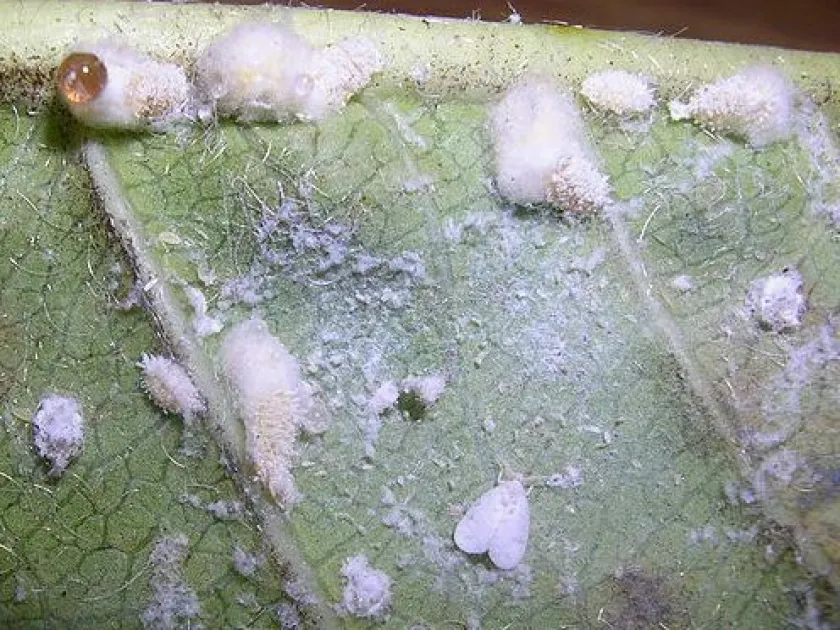
The Papaya mealybug (Paracoccus marginatus) is a significant agricultural pest belonging to the Pseudococcidae family. Adult females are small, oval-shaped insects typically covered in a white, waxy, mealy-like secretion that protects them from environmental stressors.
Measuring roughly 2-3 mm in length, the females are largely sedentary throughout their life cycle, while the winged males are highly mobile, facilitating reproduction and spread across the host area.
The life cycle typically spans about 30 days under optimal tropical conditions. A single female produces an ovisac—a white, cottony egg mass—capable of containing up to 600 eggs, ensuring high reproductive success.
First-instar nymphs, known as crawlers, are the primary dispersal stage. They move actively across plant surfaces or are disseminated by wind currents, which allows for rapid colonization of new host plants.
Due to their preference for hiding in sheltered areas such as leaf axils, underneath leaves, and around fruit calyces, detection can often be difficult until the population has reached a damaging density.
What it damages
This pest is highly polyphagous, attacking a wide range of commercially important plants, including papaya, citrus, avocado, hibiscus, and various leguminous species. It poses a severe threat to tropical horticulture.
By feeding on plant phloem, the mealybug extracts essential nutrients, which leads to stunted growth, severe chlorosis, and the premature shedding of leaves and fruit, causing significant yield losses.
During the feeding process, the mealybug excretes large amounts of honeydew. This sticky substance encourages the growth of sooty mold, a black fungal layer that obstructs photosynthesis and diminishes the aesthetic value of ornamental plants.
Severe infestations cause heavy deformation of fruits and shoots. In cases where the infestation is unchecked, it can lead to the systemic decline of the plant, potentially resulting in the death of young trees or seedlings.
The pest's ability to thrive on diverse hosts makes it an extremely difficult challenge in mixed-cropping systems, as it can easily migrate between different plant species in a single orchard.
Signs of infestation
The most distinctive symptom is the presence of white, fluffy, cotton-like masses on the undersides of leaves, along the stems, or clustered around the base of fruits and flowers.
Plants exhibiting symptoms will often show signs of stress, such as yellowing, curling, and drooping of terminal leaves. A shiny, sticky film on the leaves is a common indicator of honeydew accumulation.
Ant activity is a strong visual clue; ants are often found tending to mealybug colonies to harvest the nutritious honeydew, and they actively defend the pests from natural predators and parasitoids.
The development of black sooty mold on leaf surfaces is a secondary indicator of prolonged infestation that further damages the health and vigor of the plant.
Frequent flower and fruit drop in susceptible species like papaya or citrus should trigger an immediate and thorough inspection of the plant canopy to detect hidden colonies.
Control measures
Biological control is the most successful management strategy, particularly the release of specific parasitoid wasps such as Acerophagus papayae, which have proven highly effective in reducing mealybug populations.
Chemical control should rely on systemic insecticides, which translocate within the plant vascular system to reach the mealybugs. These treatments are often more effective than contact sprays due to the pest's waxy, protective covering.
Cultural management includes the systematic pruning and burning of heavily infested branches to reduce the pest load. Proper sanitation is essential to prevent the spread of the colony to healthy parts of the orchard.
Strict quarantine protocols for the movement of nursery stock are vital to prevent the unintentional introduction of Paracoccus marginatus into pest-free zones or regions with favorable climates.
Continuous monitoring using sticky traps and periodic field scouting allows for early detection, which is critical for implementing sustainable control measures before the population reaches an uncontrollable level.
Taxonomy
- Latin name
- Paracoccus marginatus
- Order
- Hemiptera (bugs, aphids, leafhoppers)
- Family
- Pseudococcidae
- EPPO code
- PACOMA
Discussion
No discussions yet — be the first.