
Berner's mealybug
Paracoccus burnerae
Description
How to identify
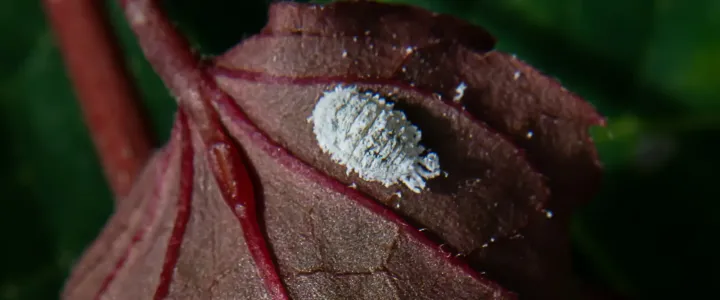
Berner's mealybug (Paracoccus burnerae) is a member of the Hemiptera order and the Pseudococcidae family. The adult females are characterized by an oval-shaped body covered in a white, waxy secretion that resembles flour, which is a signature of this group.
The larvae, known as crawlers, are highly mobile in their first instar, allowing them to disperse efficiently across the host plant. Conversely, adult males possess wings, are significantly smaller than females, and do not feed, as their primary role is reproduction.
Identifying this pest requires a meticulous inspection of leaf axils, new shoots, and the root collar of the plant. Underneath the white, cottony wax, the segmented body of the insect can be found, often releasing fluids if disturbed.
The biological life cycle consists of an egg stage, several larval instars, and the adult stage. Females are capable of laying large numbers of eggs, which are protected within a dense, white ovisac that shields the eggs from desiccation and chemical treatments.
Field identification is often challenging due to the pest's cryptic nature; therefore, using a hand lens to scan hidden areas of the canopy for egg masses is a standard practice for agronomists.
What it damages
This pest attacks a wide range of agricultural and horticultural crops, including citrus trees, various fruits, decorative shrubs, and greenhouse plants. It represents a significant threat to commercial orchards in warmer climates.
Mealybugs feed by inserting their stylets into plant tissues to extract sap. This feeding process results in a general decline in plant vigor, stunted growth of shoots, and a measurable decrease in overall crop yields.
In cases of heavy infestation, the leaf tissue suffers severe damage. Leaves turn yellow, curl, and eventually drop off prematurely, which significantly hinders the plant's ability to perform photosynthesis and maintain health.
During their feeding, mealybugs secrete honeydew—a sugary, sticky substance. This substance serves as a substrate for the growth of sooty mold, which creates a dark layer on leaves, further obstructing sunlight and reducing plant productivity.
Beyond direct nutrient depletion, Paracoccus burnerae can act as a vector for various viral infections that spread rapidly across a plantation as the mobile larvae move between host plants.
When it appears
The activity of Berner's mealybug is heavily influenced by ambient temperature and humidity. Warm and dry conditions are most conducive to the rapid development of multiple generations throughout the year.
In greenhouse or indoor environments, this pest can maintain continuous reproduction cycles because the stable climate prevents the typical seasonal dormancy periods seen in nature.
In open-field conditions, peak infestation usually occurs during mid-spring and summer months. The combination of warmth and plant development provides ideal conditions for larval development and rapid population growth.
As temperatures drop in the autumn, the activity of the insects decreases significantly, and they migrate to sheltered areas of the plant, such as bark crevices or root zones, to survive the colder season.
Understanding these seasonal patterns is essential for effective monitoring: inspection schedules should be timed with the peak emergence of crawlers, which typically correlates with periods of active sap flow.
Signs of infestation
The primary sign of an infestation is the appearance of white, cottony clusters on the underside of leaves, in stem nodes, and at leaf attachment points. These are the visual manifestations of the female's waxy secretion.
The presence of sticky honeydew on foliage and branches is a key indicator of an active mealybug population. If this stickiness is accompanied by black sooty mold growth, it indicates a severe and long-standing infestation.
The deformation of young shoots and curling of leaves are classic symptoms of mealybug activity. Affected plants will show signs of being stunted or distressed, with shoots appearing weak or withered.
Severe infestations can lead to poor fruit quality or premature fruit drop. The presence of ants on the plant is another indirect sign, as ants are known to tend to mealybugs to feed on the excreted honeydew.
If any of these signs are detected, a closer examination of the plant's crevices and hidden leaf parts will likely reveal the presence of the mealybugs themselves, confirming the need for control.
Control measures
Management of Paracoccus burnerae requires an Integrated Pest Management (IPM) approach that combines cultural, biological, and chemical strategies.
- Pruning the canopy to improve air circulation.
- Mechanical cleaning of tree bark to remove refuges.
- Application of systemic insecticides that reach hidden pests.
- Releasing natural predators like parasitic wasps or lady beetles.
- Regular monitoring and strict quarantine of newly infested plants.
Systemic insecticides are the most effective chemical tool, as they move through the plant's sap to reach the insects sheltered by their waxy coverings. Success depends on timely applications to target different life stages.
Biological control methods involve the introduction of natural enemies, such as specific species of coccinellids (ladybugs) or parasitoid wasps, which can be highly successful in controlled environments like greenhouses.
Cultural control practices, such as ensuring proper irrigation and balanced fertilization, help maintain plant immunity, making the crop more resilient and less attractive to the pests.
Taxonomy
- Latin name
- Paracoccus burnerae
- Order
- Hemiptera (bugs, aphids, leafhoppers)
- Family
- Pseudococcidae
- EPPO code
- PACOBU
Discussion
No discussions yet — be the first.