
Paracoccus
Paracoccus
Description
How to identify
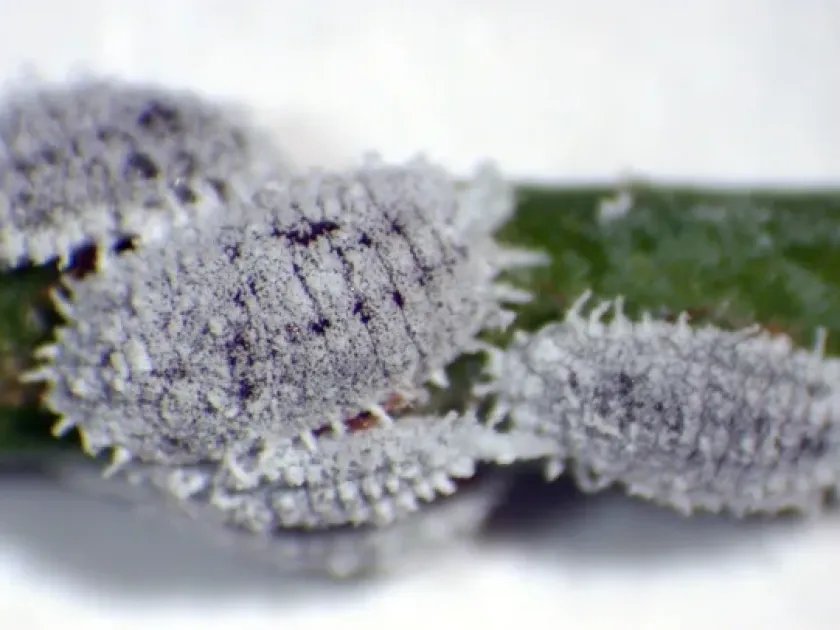
Paracoccus is a genus of mealybugs (Pseudococcidae) within the order Hemiptera. These small, sap-sucking insects are characterized by their sedentary adult females, which are covered in a protective white waxy coating that often resembles flour or fine cotton wool.
Visually, adult Paracoccus females can be identified by their oval bodies and the presence of waxy filaments along the segments. These insects prefer to hide in leaf axils, along young shoots, and at stem junctions, making early detection quite difficult.
Adult males differ significantly, as they are winged, capable of flight, and much smaller than females. Their lifecycle is primarily focused on reproduction, meaning they do not feed on plant sap and have a very short lifespan.
Females lay their eggs within specialized, loose ovisacs made of waxy secretions. This structure serves as a robust defense mechanism, protecting the offspring from harsh environmental conditions and many common contact insecticides.
The first-instar nymphs, commonly called "crawlers," are highly mobile. During this life stage, Paracoccus actively disperses across the plant and can be easily spread by wind, irrigation water, or agricultural tools to neighboring crops.
What it damages
This pest affects a wide range of agricultural, ornamental, and fruit crops. Citrus trees, tropical fruits, and various greenhouse or indoor plants are particularly susceptible to Paracoccus infestations.
The damage is caused by the insect feeding on phloem sap from young shoots, leaves, and buds. While feeding, Paracoccus injects specific enzymes into the plant tissue, which disrupt physiological processes and lead to significant weakening of the host plant.
Affected areas are often colonized by sooty mold fungi, which thrive on the honeydew (sticky excrement) produced by the mealybugs. This inhibits photosynthesis, causing yellowing of leaves and the premature shedding of fruits or flower buds.
Massive infestations result in noticeable leaf deformation, shoot distortion, and stunted growth. Without appropriate control measures, heavy pressure can kill young seedlings or drastically reduce the yield and quality of mature plants.
In greenhouses, Paracoccus represents a major threat due to its ability to reproduce year-round. Many species are also recognized as vectors for various plant-pathogenic viruses, which poses a severe risk to plant health and breeding programs.
When it appears
In greenhouse environments and tropical climates, Paracoccus reproduction occurs continuously, with multiple generations developing throughout the year. The optimal conditions for their survival include high humidity and temperatures ranging from 22 to 28 degrees Celsius.
In outdoor settings, pest activity is tied to the spring and summer months when stable, warm temperatures prevail. This period corresponds with active plant growth, providing the most nutritious plant tissues for the mealybugs to exploit.
Overwintering in temperate climates typically occurs in the egg or adult female stage, tucked away in bark crevices or soil substrates. As sustained warmth returns, the crawlers emerge and begin their cycle of colonization.
Population dynamics are strongly influenced by weather. Prolonged heavy rainfall can reduce crawler density, whereas hot, dry conditions tend to trigger outbreaks due to the faster developmental cycles of the insects.
Seasonal migrations within a tree's canopy are common as pests search for the most succulent tissues. While activity may taper off by late summer, the population density often remains high until the late autumn if conditions remain favorable.
Signs of infestation
The first and most obvious sign of an infestation is the presence of cottony white patches on leaves and stems. These are masses of waxy secretions housing adult female colonies and their eggs.
A second symptom is the accumulation of sticky honeydew on the surface of leaves located below the mealybug colonies. Over time, this honeydew turns black due to the growth of sooty mold, damaging the plant's aesthetic and vitality.
In the early stages, one may notice general plant decline, including yellowing and curling at the edges of young leaves. Even if no colonies are immediately visible, any retardation in shoot growth warrants a thorough inspection of the leaf axils.
The presence of large numbers of ants on a plant is often a strong indirect indicator of Paracoccus. Ants are known to "tend" to mealybugs, protecting them from predators in exchange for their sugary honeydew, and may physically carry crawlers to new plant parts.
Under severe pressure, plants exhibit premature leaf drop, bud abortion, and dieback in fruit crops. The host becomes increasingly vulnerable to secondary infections and environmental stress factors.
Control measures
A robust management strategy for Paracoccus must be integrated, utilizing both cultural and chemical methods. It is essential to perform regular sanitation, such as pruning infested branches, and maintaining proper air circulation and humidity levels.
- Application of systemic insecticides that can be translocated within plant tissues.
- Use of horticultural oils to suffocate the pests by disrupting their waxy protective coating.
- Biological control using natural enemies, such as the predator beetle Cryptolaemus montrouzieri.
- Strict phytosanitary inspections of all new plant material before introducing it to the main collection.
- Manual removal of minor infestations using alcohol-soaked swabs or soapy water solutions.
Chemical control requires alternating products to prevent the development of insecticide resistance. Special attention must be given to spraying difficult-to-reach areas, including leaf axils, the undersides of leaves, and the root collar zone.
Biological control programs are highly effective in confined environments, provided the natural enemies are released at the correct time. Managing ant populations on the premises is also crucial, as ants interfere with the natural biological control agents.
Regular monitoring is the key to successful prevention. The efficacy of any treatment is significantly higher if applied during the crawler stage, as these young nymphs are the most susceptible to environmental changes and chemical applications.
Taxonomy
- Latin name
- Paracoccus
- Order
- Hemiptera (bugs, aphids, leafhoppers)
- Family
- Pseudococcidae
- EPPO code
- PACOSP
Discussion
No discussions yet — be the first.